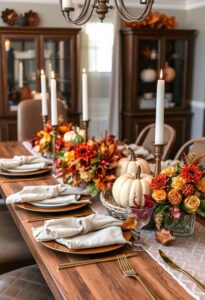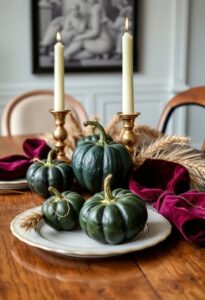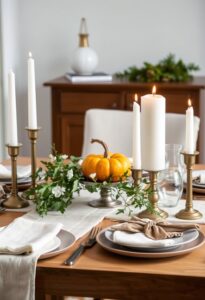
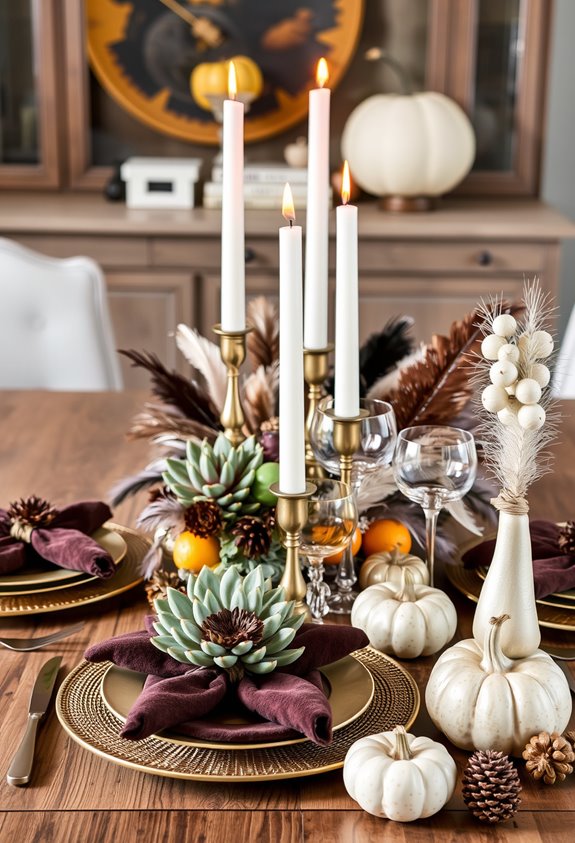
When you mix unpressed linen, asymmetrical branches, layered textures, organic accents, odd-numbered groupings, fruit-as-decor, candles at varied heights, a restrained color palette, and white plates — something surprising happens. The table stops looking decorated and starts looking intentional. None of these elements are flashy alone. But together, they create rhythm, depth, and a relaxed elegance that actually holds up when the food arrives. Each of the nine elements has a specific job, and knowing that job changes everything.
How to Build a Thanksgiving Table Before You Add Any Decor
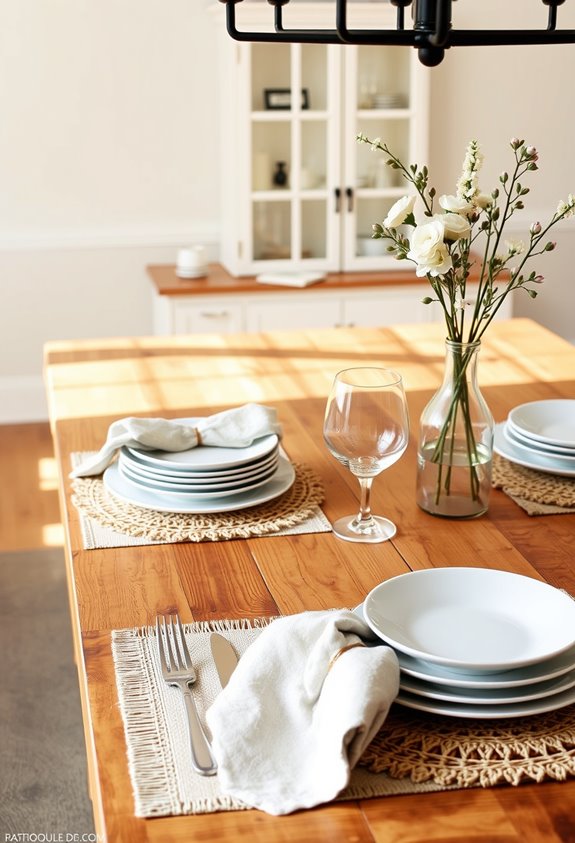
Before you touch a single candle or gourd, get your table right. Measure your dining area first. Seriously. A table that doesn’t fit your room will ruin the whole setup before anyone sits down. You need clearance for chairs and people moving around, not just bodies crammed into seats.
Before the candles come out, get your table right. Measure first. A bad fit ruins everything.
Next, stabilize your base. A wobbly table is a disaster waiting to happen. If you’re short on space, temporary add-ons like plywood extensions can handle the overflow crowd.
Then protect your surface. Lay down a tablecloth, runner, or even a repurposed blanket or quilt. This step also helps you visualize your layout before anything else goes on top.
Start with a stable, protected, properly sized table. Everything else builds from there. When you’re ready to decorate, keep your centerpiece low and practical so guests can actually see each other across the table.
Fruit That Doubles as Decor on Your Thanksgiving Table
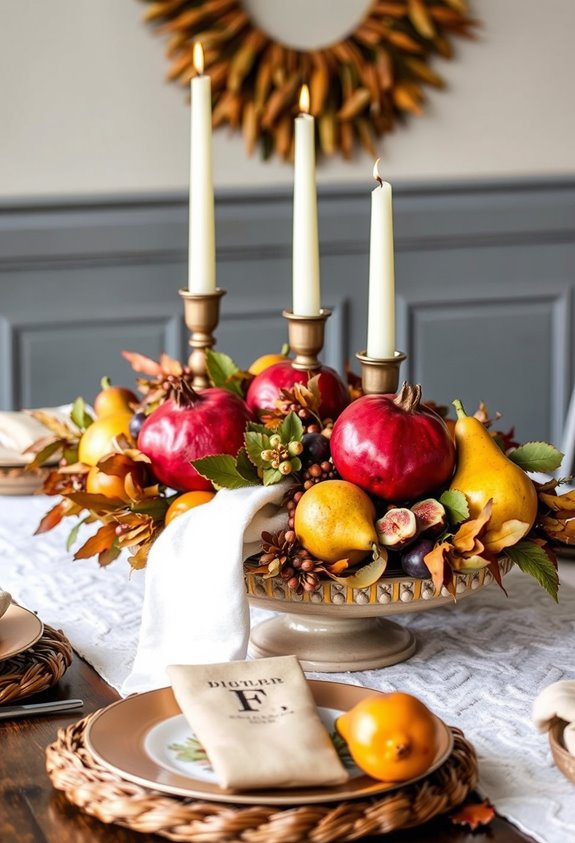
Most of the fruit sitting in your kitchen right now can pull double duty on your Thanksgiving table. Apples, pears, pomegranates, grapes, citrus, figs, persimmons — these aren’t just snacks. They’re decor. Warm reds, deep purples, bright oranges. That’s the whole fall color palette, already sitting in a bowl.
Grapes are especially versatile. Scatter them, tuck them, layer them. Done. Pomegranates add that deep, dramatic red that no plastic decoration can fake. Citrus brings brightness when everything else goes dark and moody.
You can also build a full fruit centerpiece using skewers, floral foam, and a little patience. Arrange rows bottom to top. Add greenery last to cover the foam. Suddenly, your fruit bowl became a centerpiece. No one needs to know how easy it was. For a festive twist, arrange your fruits into a turkey-shaped tray that doubles as both a conversation piece and a healthy alternative to heavier holiday dishes.
How Orange Anchors a Thanksgiving Table Without Overpowering It
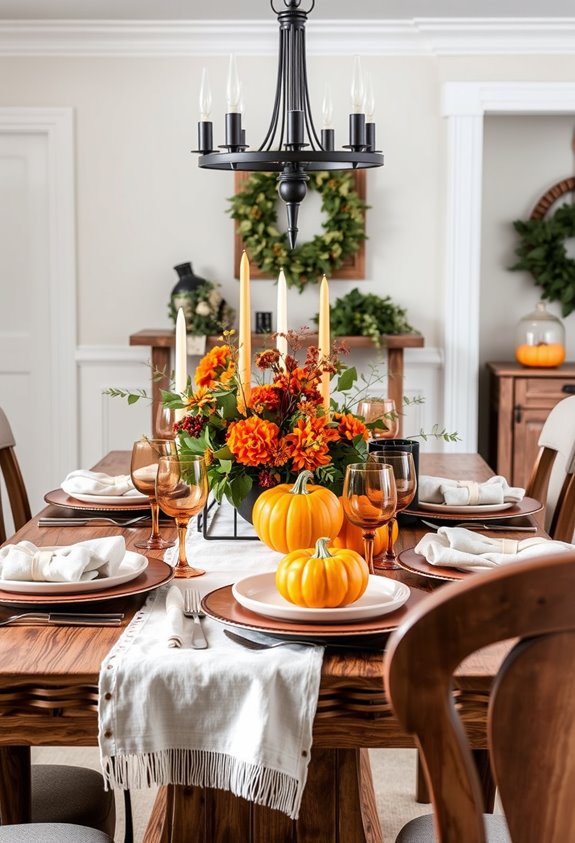
Orange is one of those colors that can go either way fast. Too much, and your table looks like a Halloween leftover. Too little, and you’ve missed the whole point of fall. The trick is using orange as an anchor, not a statement piece.
Start with a neutral backdrop. White plates, simple flatware, clean glassware. These give orange room to breathe without competing. Then repeat orange in small doses — napkins, votives, clementines, mini pumpkins. Repetition creates rhythm. It makes the table feel intentional, not accidental.
Contrast matters, too. Dark green foliage, gold accents, even a surprising touch of blue — these make orange pop instead of overwhelm. Candles add warmth without bulk. Done right, orange doesn’t take over. It just holds everything together. Pairing orange napkins with eucalyptus leaf runners keeps the seasonal color grounded in something natural and textured.
Branches and Natural Stems That Replace Thanksgiving Bouquets
Once you’ve nailed the orange, it’s worth thinking beyond flowers entirely.
Branches and natural stems can replace a traditional bouquet completely. No apologies needed.
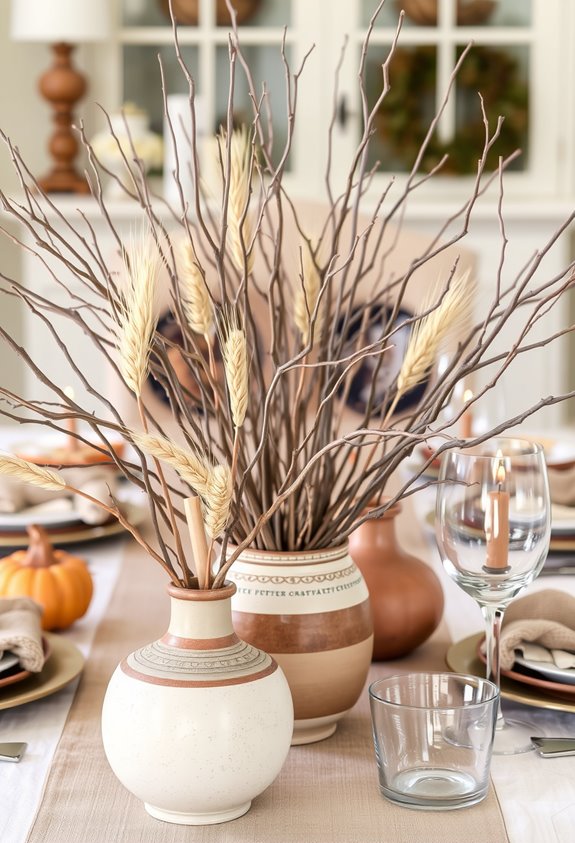
Materials like smoke bush, olive branches, eucalyptus, bittersweet, and dried hydrangea create a foraged look that feels gathered rather than purchased. That matters. It connects your table to the season without screaming “centerpiece kit from a big-box store.”
Texture does the heavy lifting here.
Mix rough bark, smooth stems, and leafy sprigs for contrast. Add berries, moss, or a small gourd. Done.
Place taller branches first so everything else finds its footing. Keep it asymmetrical. Let it breathe. A rustic basket or urn anchors the whole thing without looking forced.
Bittersweet branches are worth prioritizing since they dry well and retain berries for weeks with minimal handling.
Your table suddenly feels like it belongs somewhere real.
The Organic Accents That Make Thanksgiving Place Settings Feel Less Formal
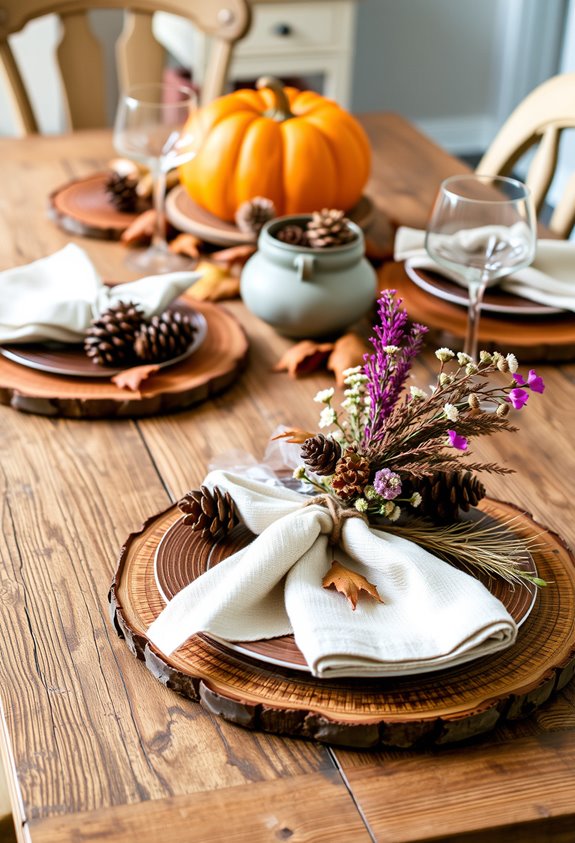
The tablecloth sets the tone before a single fork hits the table. Linen keeps things grounded. Soft, unfussy, and honest. Pair it with a burlap runner and suddenly the table feels like it belongs to real people. Good.
Now layer in the organic stuff. Woven placemats soften hard plate edges. Wooden chargers add warmth without trying too hard. Tuck a mini pumpkin near each plate and tie a handwritten place card to it. That’s it. That small detail tells your guests they matter.
Eucalyptus, sage leaves, a few acorns scattered around. Nothing precious. Nothing that screams centerpiece budget. Mix a few natural elements in modest amounts and the table feels collected, not curated. Relaxed, not accidental. There’s a real difference. A mustard-colored napkin tied with a velvet copper ribbon pulls the warmth together without adding clutter.
How Candles at Different Heights Change Your Thanksgiving Table?
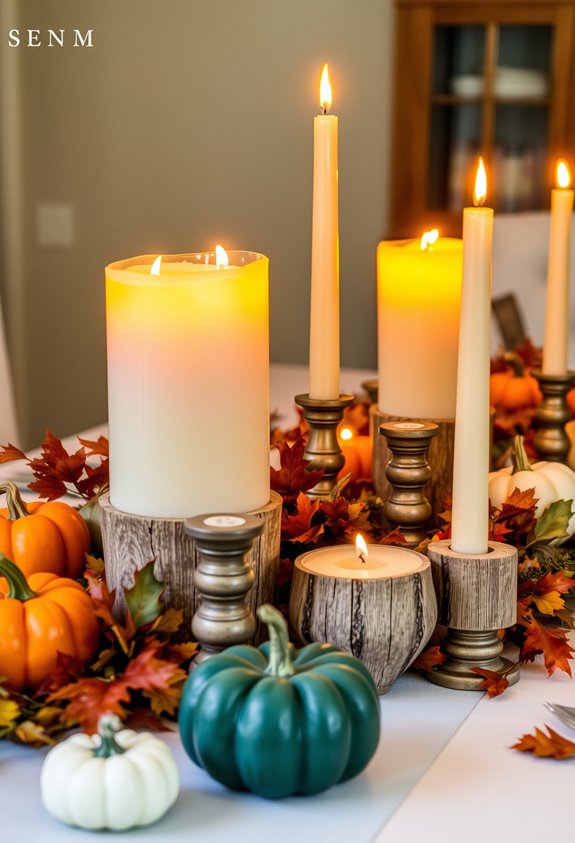
Candles do more than flicker prettily — they restructure the whole table. Mix taper candles, votives, and pillars at different heights, and suddenly you’ve got layers. Actual visual depth. Not just a flat row of flames that looks like a birthday cake gone wrong.
Tall candles anchor the arrangement. Shorter ones fill in the gaps. Together, they spread light more evenly and create that warm, cozy glow everyone’s chasing at a Thanksgiving dinner. It’s not complicated — it just works.
Here’s the practical part: height variety also protects conversation. Low candles near plates, taller ones spaced toward the center. Guests can actually see each other. Imagine that.
Pair the whole thing with greenery or pumpkins, and the table suddenly feels intentional. Finished. Like someone actually cared. For a safer and equally stunning effect, flameless LED candles offer realistic flickering that mimics traditional candles without any fire hazard.
Why Odd-Numbered Groupings Make Your Thanksgiving Centerpiece Look Intentional?
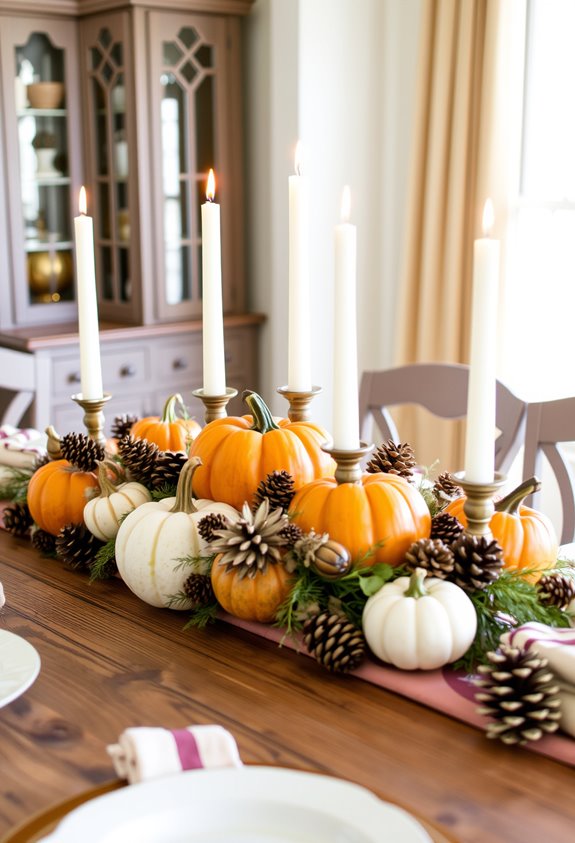
Three pumpkins beat four. Every time. It’s not magic — it’s just how your brain works. Odd-numbered groupings create asymmetry, and asymmetry creates movement. Your eye keeps scanning instead of stopping dead at a perfectly matched pair.
The 3-5-7 rule exists for a reason. Three items form the smallest recognizable pattern with a clear center. Five adds fullness. Seven handles a longer table without looking accidental. Each count gives the eye a landing point, which makes the whole arrangement feel curated — not like you just set stuff down and walked away.
The anchor piece matters most. Surround it with companions, vary the heights, and share a color or material across the group. That’s what separates “designed” from “random pile of gourds.” A stack of books with an object on top counts as one visual footprint, so you can layer elements without accidentally tipping your count into even territory.
How to Mix Thanksgiving Table Textures Without Overcrowding
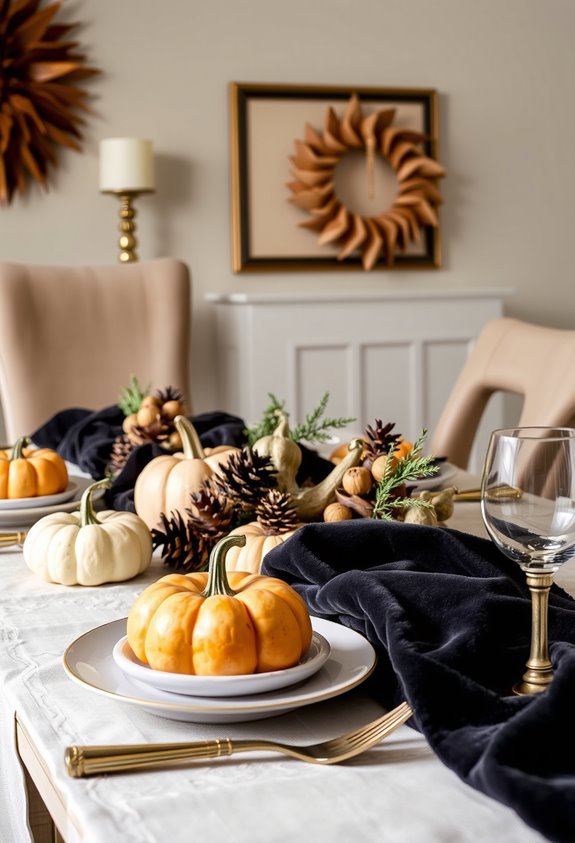
Once you’ve nailed the odd-numbered grouping, the next question is what those objects are actually made of — and how many different materials you can pile on before the whole thing starts looking like a craft store exploded. The answer? Less than you think.
Stick to a limited base color, one complementary color, and a single accent. That’s it. Within that restraint, you can mix smooth, woven, shiny, and rough surfaces freely. Think silver with copper. Crystal with greenery. Paper with rattan. These pairings add dimension without adding chaos.
Your place settings do the heavy lifting here. Layer a charger, a dinner plate, maybe one accent plate. Different textures, same structure at every seat. Repetition creates cohesion.
The centerpiece? Keep it simple. Your table’s already working hard enough. A natural washed linen tablecloth left unpressed creates an effortless juxtaposition against dressier, more polished place settings.
How to Style a Full Thanksgiving Table and Still Fit the Food
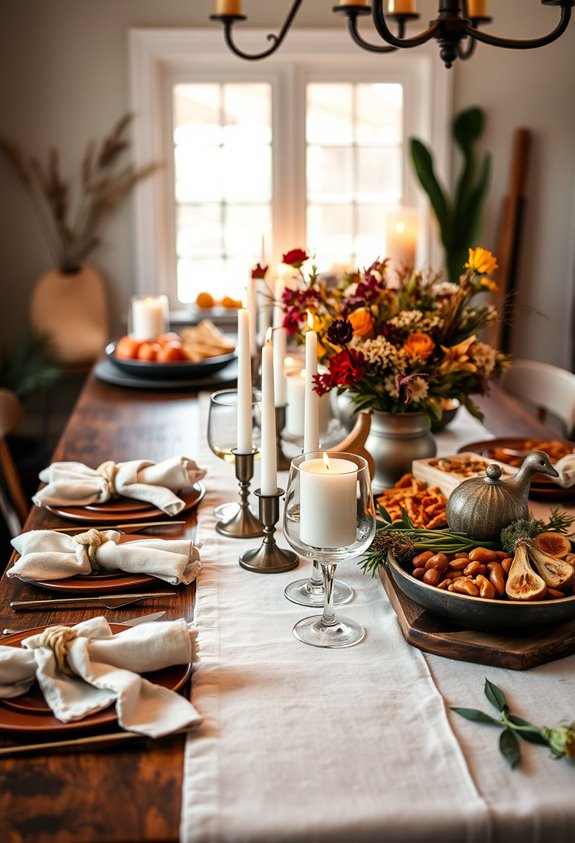
The real trick to a styled Thanksgiving table isn’t the decor — it’s making sure there’s still room for the actual food.
Keep your centerline low and narrow. A simple runner, some branches laid flat, clustered candles. That’s it. You don’t need a floral arrangement the size of a small child blocking the gravy boat.
Stack your place settings clean: dinner plate, folded napkin, flatware outside-in. Simple. White plates and clear glasses let the food do the talking.
And here’s the thing — the turkey *is* the centerpiece. Surround it with grapes, herbs, and citrus. Done. Move the overflow to a buffet. Seriously, not everything needs to live on the main table. Less crowding means more belonging around it.
Try placing large vases of florals at both ends of the table instead of the middle — it keeps the conversation line open and the center clear for serving dishes.
Frequently Asked Questions
Can Kids’ Tables Follow the Same Unexpected Element Mixing Rules?
Yes, they can — but safety changes everything.
Adult tables embrace tall candlesticks and fragile glassware. Kids’ tables? Hard pass on both.
You still mix textures, colors, and playful elements, but you swap open flames for battery-operated candles and keep centerpieces under 12 inches.
Mini pumpkins, mismatched dishes, DIY placemats — all fair game. Same mix-and-match energy, smarter execution. The unexpected still works. You just keep it unbreakable.
How Early Should Unexpected Natural Elements Be Purchased Before Thanksgiving?
Buy dried, foraged, and long-lasting natural elements two to four weeks out.
Fresh flowers and produce? Wait until two to five days before Thanksgiving. Seriously, don’t buy pumpkins three weeks early and expect them to look good on the table.
Foraged stuff like pinecones and acorns needs cleaning and possibly freezing to kill bugs, so early collection matters.
Stagger your purchases. It’s smarter, reduces waste, and your tablescape actually looks intentional.
Do Unexpected Table Elements Work for Outdoor Thanksgiving Dining Setups?
Yes, they absolutely do. Picture copper chargers catching the afternoon light while string lights flicker overhead — that’s your outdoor setup working *for* you. You’re not just decorating; you’re creating a space where people feel like they belong.
Burlap runners, brass candlesticks, ceramic pieces — these textures thrive outside. Blankets on chairs? Practical *and* intentional. Lanterns handle the evening beautifully. Outdoors doesn’t limit unexpected elements. It amplifies them.
Can Unexpected Thanksgiving Table Elements Be Reused for Christmas Decorating?
Yes, you can absolutely reuse them. Magnolia leaves, garlands, and candles? They’re built for both holidays. Swap orange and brown accents for red, green, and metallics. Done. Pinecones shift naturally into Christmas without you lifting a finger. Plaid ribbon stays, just adjust the accent color. Your place-card holders become Christmas sign holders. It’s not magic — it’s smart reuse.
You’re already halfway to a Christmas table before Thanksgiving dinner’s even digested.
How Do Unexpected Elements Hold up During a Long Thanksgiving Dinner?
Unexpected elements hold up well — if you’re smart about it. Treated nature decor won’t introduce critters. Low centerpieces won’t block conversation. Quirky plates actually pull double duty as dinnerware and talking points. Unscented candles keep food aromas intact. Vintage teacups and kraft paper place cards? Surprisingly durable.
The real risk isn’t the unusual stuff falling apart. It’s choosing too many competing accents and watching your whole vibe collapse by the second course.