
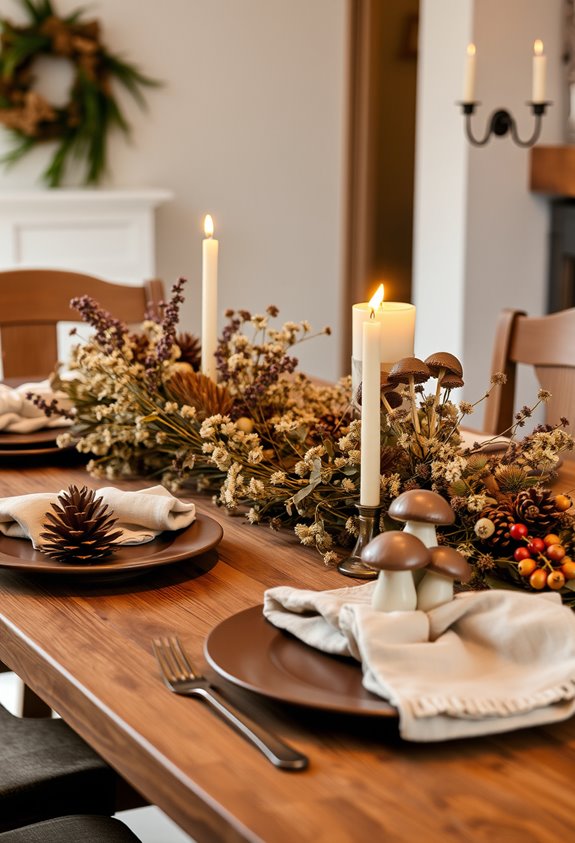
Cottagecore Thanksgiving swaps orange plastic pumpkins and matchy harvest sets for foraged botanicals, mismatched ceramics, and candlelit tables that look collected over decades — not assembled last Tuesday. It’s earthy, restrained, and built around linen, stoneware, and dried things. Warm creams, sage greens, and muted plums replace the usual rusty reds. It’s less seasonal performance, more lifestyle. Whether it works in your home depends entirely on what you’re already working with — and there’s a lot more to unpack here.
What Cottagecore Actually Looks Like for Thanksgiving 2026
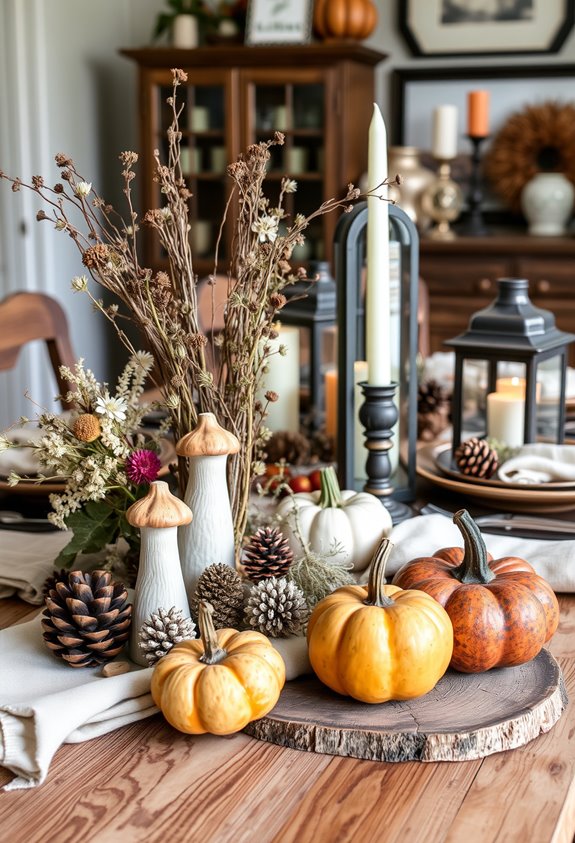
Forget the glossy orange centerpieces and matching everything — cottagecore Thanksgiving 2026 is built on soft, layered textiles, natural materials, and objects that look like they’ve been collected over decades. Linen, cotton, wicker, clay, and wood do the heavy lifting here. You’re looking at crinkled napkins in rust and moss, dried botanicals, handmade ceramics, and candlesticks that look inherited rather than purchased yesterday.
The palette ditches bright orange entirely. Think warm cream, sage green, mushroom taupe, dusty rose. Or go darker — forest green, burgundy, plum. Both directions work. The whole point is that nothing matches perfectly. Nothing looks staged. Frayed edges and timeworn finishes aren’t flaws in this aesthetic. They’re the aesthetic. It’s cozy, slightly romantic, and honestly? A little rebellious against traditional Thanksgiving décor. Design experts suggest that one truly old piece per room — or in this case, per table — instantly adds the kind of soul that no new purchase can replicate.
How Does It Stack Up Against Classic Harvest Décor?
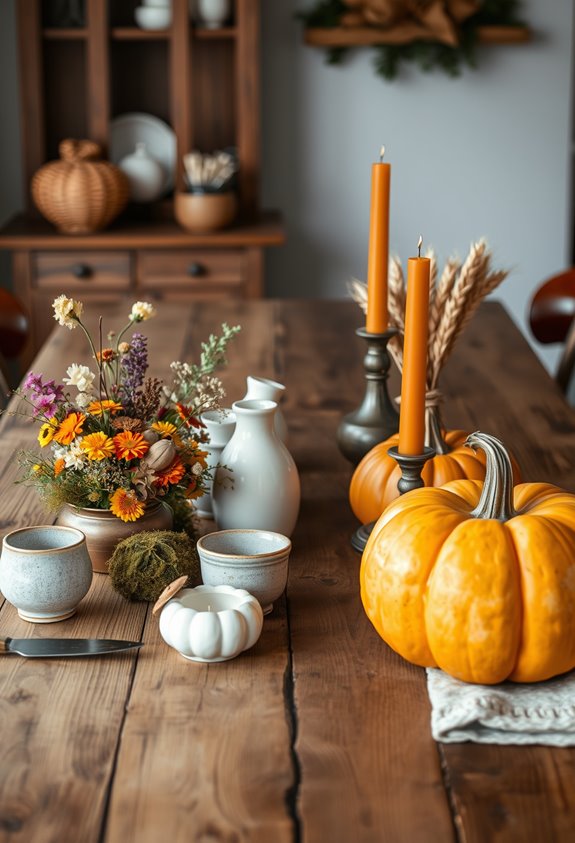
Classic harvest décor and cottagecore aren’t really competing for the same trophy. One’s a seasonal sprint. The other’s a whole lifestyle.
Classic harvest leans into autumn symbolism — your oranges, your rusty reds, your corn husks. Very festive. Very temporary.
Classic harvest décor is all autumn, all the time — oranges, corn husks, and rusty reds that disappear by December.
Cottagecore doesn’t care about the calendar. It’s built from layered textiles, ceramics, and botanicals that make a room feel collected over time, not assembled the night before Thanksgiving.
The palette in 2026 is shifting toward moss greens, muted plums, and aged-oak browns. Nothing loud. Nothing obvious. That’s the point.
Classic harvest décor is easy to recognize as holiday-specific. Cottagecore belongs to something bigger — a countryside identity that doesn’t pack itself away in November. You’re not decorating for a holiday. You’re decorating for a feeling.
Spaces rooted in cottagecore often anchor themselves with an antique coffee table that wears its scratches openly, letting the furniture tell a story rather than perform a season.
Set a Cottagecore Thanksgiving Table With Linen, Ceramics, and Candlelight
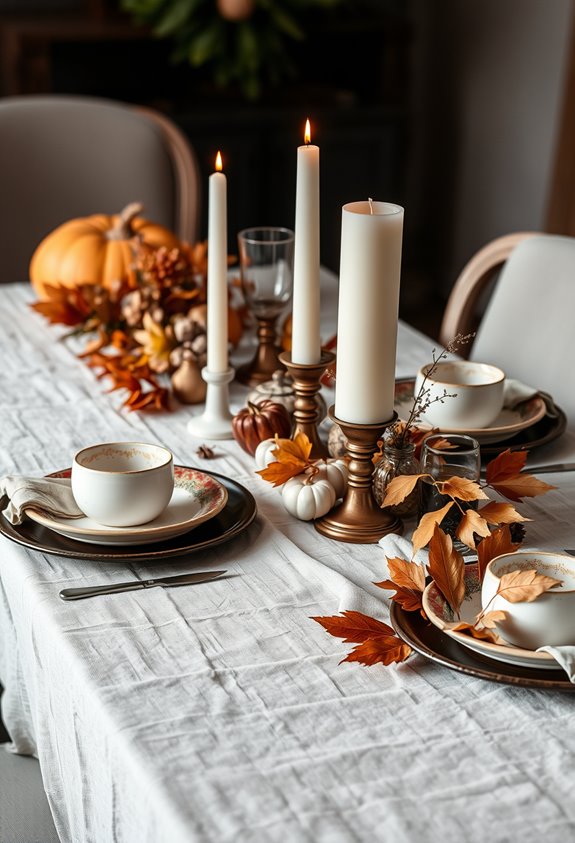
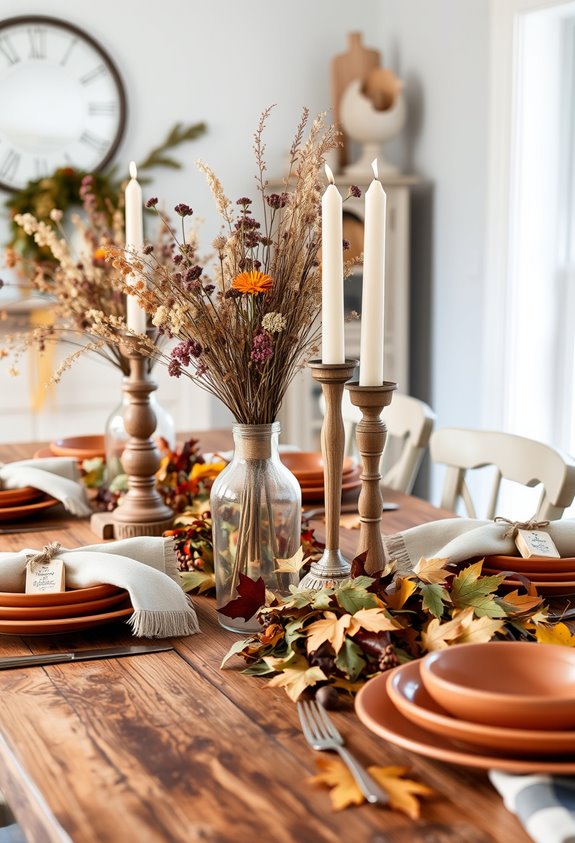
At a cottagecore Thanksgiving table, three things do the heavy lifting: linen, ceramics, and candlelight.
Start with a neutral linen runner. It’s timeless, not trendy, and you’ll actually use it again. Layer crinkled napkins in rust or moss green for texture.
Then bring in the ceramics. Vintage floral china, mixed salad plates, a butter dish, a cake stand. Layering plates creates visual richness without requiring anything tall or dramatic.
Now, the candles. Beeswax tapers in staggered heights keep things from looking flat. Add tea lights in amber glass to fill the gaps. Keep everything low so guests can actually see each other. That’s the whole point. You’re not decorating a display case. You’re building a table where people feel like they belong. A U-shaped stoneware holder like the Crate & Barrel Valla White Ceramic 2-Taper Candle Holder fits two tapers and keeps the arrangement grounded without overcomplicating it.
Swap Plastic Pumpkins for These Cottagecore Alternatives
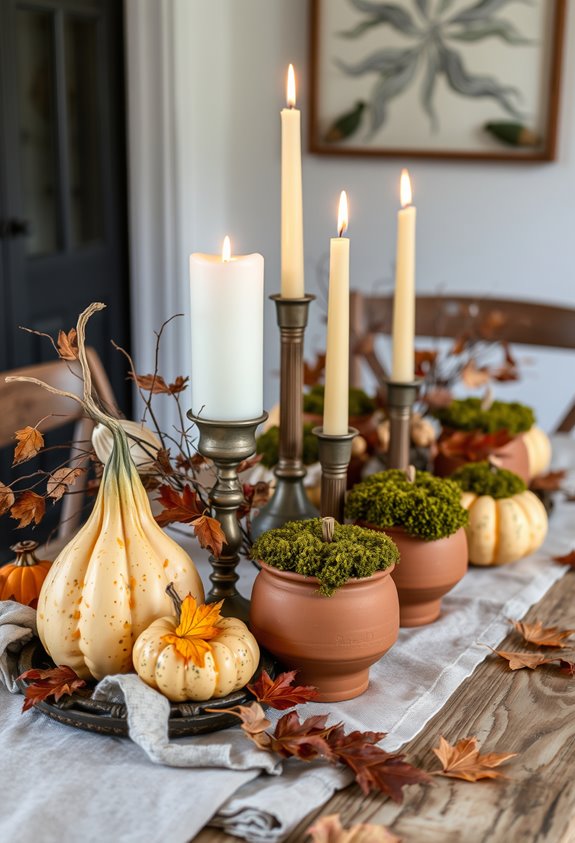
Plastic pumpkins are doing a lot of work for something that looks like it belongs in a party supply bin. You can do better. Velvet pumpkins in deep plum or forest green feel tactile and intentional. Yarn pumpkins last for years. Gourd candleholders actually do something. These aren’t complicated swaps — they’re just smarter ones.
Go outside. Pressed leaves, pine cone garlands, and wrapped wheat stalks replace synthetic décor without making your home look empty. Dried orange slices add warm color. Foraged dried florals in distressed ceramic vessels create centerpieces that feel genuinely collected, not assembled.
Thrift stores carry vintage brass candlesticks and tarnished silver goblets that shift everything. One good find replaces a bin full of orange plastic. Decoupaged baskets using paper napkins with cottage-y floral designs add texture and warmth to a Thanksgiving table without spending much at all. That’s the whole point.
Layer in Dried Botanicals and Foraged Finds the Cottagecore Way
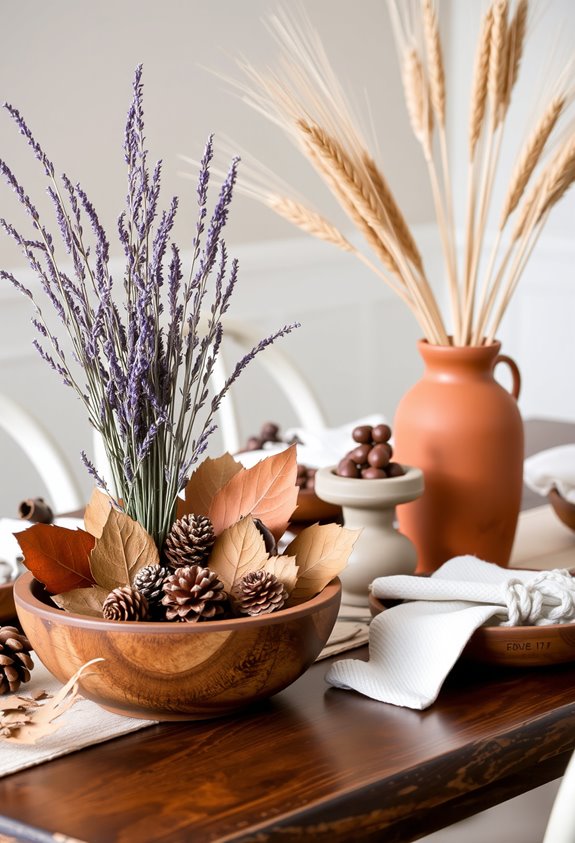
Once you’ve cleared out the plastic bin décor, the next move is layering in dried botanicals and foraged finds — and this is where cottagecore actually earns its reputation. Lavender, pampas grass, wheat stalks, baby’s breath. These aren’t complicated. They’re just real, textured, and quietly beautiful in a way polyester never manages.
Skip the symmetry. Odd-number groupings and mixed stem heights create movement that feels natural, not staged. Foraged branches and seed pods add structure without costing you anything. Literally.
Drop everything into ceramic bud vases, wooden trays, or vintage jars. The container matters. Stoneware and terracotta make the whole arrangement feel intentional. Mismatched is fine — preferred, actually. That collected, timeworn look is exactly the point. You’re building something that feels lived-in and genuinely yours. Artists like Izabella of Izabella Resin Art forage botanicals during forest walks, pressing and drying them to preserve their natural shape and detail.
Add a Playful Accent Without Killing the Cozy Vibe
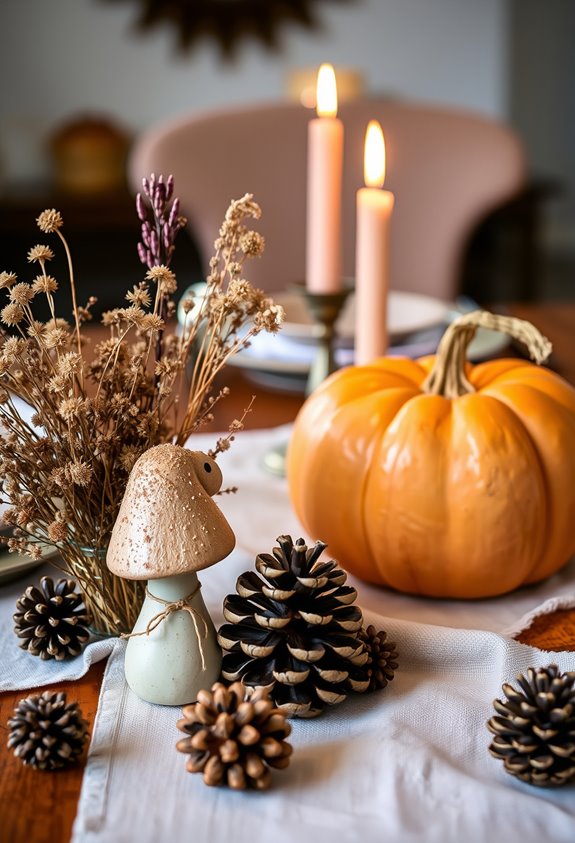
Here’s where people tend to overthink it. One playful detail is enough. You don’t need five.
A torn-edge watercolor place card with a pheasant feather tucked into the napkin? That’s it. That’s the whimsy. Dark brown or gold ink keeps it legible without screaming for attention. Twine or velvet ribbon ties the napkin loosely, no formal ring required. A small dried thistle or blackberry cluster near the plate adds surprise without chaos.
The trick is restraint. Playful wording on the cards works because the physical styling stays soft. A matte ribbon in rust or moss green adds personality without competing with anything larger. Texture over shine, always.
You’re building something that feels lived-in and intentional, not decorated by a committee. Keep it quiet. Let it breathe. A dark wax seal pressed onto the place card is one small detail that quietly reinforces the whole mood without asking for anything back.
Build a Cottagecore Mantel That Anchors Your Thanksgiving Space
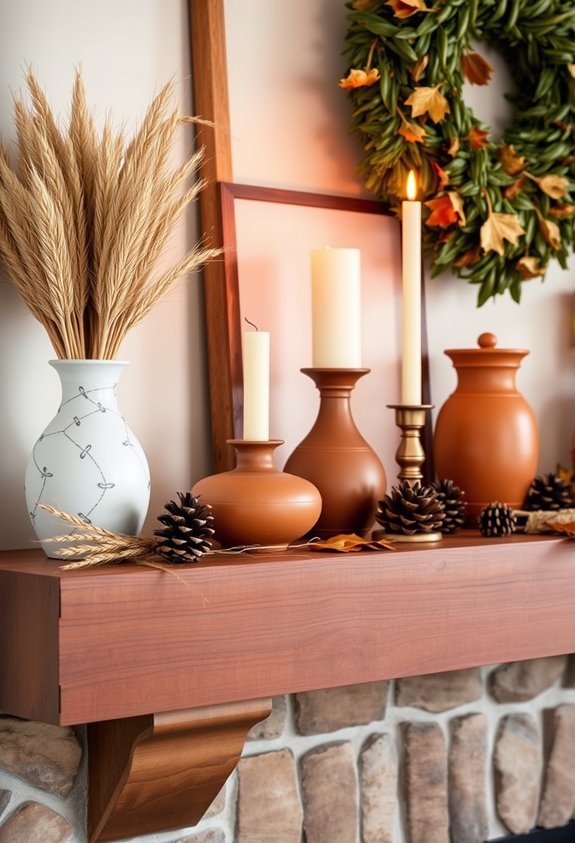
The mantel is the room’s anchor, and if you get it wrong, no amount of charming table settings will save you.
Start with a garland. Mixed eucalyptus and dried wheat hit that soft, organic note Cottagecore lives for. Match your garland width to your mantel depth — a shallow mantel needs a narrower garland. Simple math.
Layer in dried hydrangea, strawflowers, or yarrow bundles. Faded, uneven, slightly imperfect. That’s the whole point. Add a focal wreath, a few candles, and maybe a worn ceramic bowl of mini pumpkins. Asymmetrical beats symmetrical every time here.
Stick to creams, sage green, and warm wood tones. Keep it to three to five objects total. Restraint isn’t boring — clutter is. For books on the mantel, strip the dust jackets and display favorite hardcovers horizontally — they add height and layering without fighting the rest of the composition.
Is This Look Right for Your Home?
Before you start hunting for dried hydrangea bundles and thrifted candlesticks, it’s worth asking whether your home can actually pull this off. Not every space can. Homes with visible wood, plaster, or older trim have a natural head start. The bones already do half the work.
Newer homes aren’t disqualified, but you’ll rely more heavily on textiles, ceramics, and plants to get there. That’s fine. Linen throws and woven textures carry serious weight in this style.
Your color situation matters too. Cream, sage, mushroom, and warm earthy tones fit naturally. Stark white walls? Harder. Not impossible, just harder.
The honest truth: if your home currently runs on chrome, gloss, and clean lines, cottagecore will feel like a costume. You’ll know it. Guests will too. Olive green and mustard yellow are two colors that show up repeatedly in cottagecore spaces and tend to land well regardless of the existing palette. Olive green paired with mustard yellow creates that warm, grounded feeling the style depends on.
Frequently Asked Questions
When Should I Start Shopping for Cottagecore Thanksgiving Décor?
Imagine golden light, dried wheat bundles, and linen napkins that smell like autumn.
Start shopping in late summer or early fall. September’s your sweet spot.
Buy textiles first—runners, throws, napkins. Then ceramics. Then botanicals.
Don’t wait until mid-November if you want the moody, heirloom-style pieces. They’re gone. Fast.
Cottagecore favors collected, curated finds over mass-produced stuff, so early shoppers win. Simple as that.
Can Cottagecore Thanksgiving Décor Work in a Small Apartment?
Yes, cottagecore Thanksgiving décor absolutely works in a small apartment. You don’t need a farmhouse to pull it off.
Focus on one surface — your dining table or a console. Stack dishes, cluster ceramic vessels, and add varied-height tapers for visual fullness without eating up floor space.
Swap bulky garlands for dried branches or a few gourds. Linen, wicker, and brass do the heavy lifting. Small space, big cozy impact.
How Much Does a Cottagecore Thanksgiving Setup Typically Cost?
Don’t break the bank — cottagecore Thanksgiving decor fits almost any budget. Under $100 gets you a solid seasonal vibe with textiles and dried botanicals.
Spend $100–$250 and you’ve got a noticeably styled room. Want full-on transformation? Budget $250–$500.
Textiles deliver the biggest visual punch per dollar. Wallpaper and genuine vintage pieces? Those cost more fast.
Bottom line: you don’t need a fortune to feel like you belong in this aesthetic.
Where Can I Find Affordable Cottagecore Thanksgiving Pieces Online?
Etsy and Amazon are your two go-to spots. Etsy‘s better for statement pieces that actually *look* handmade — think pressed botanical prints ($15–35) or dried wildflower wreaths ($28–45).
Amazon handles the supporting cast: linen cushion covers, pampas grass bunches, wicker baskets — all under $16. Search terms like “speckled ceramic bud vase set 3” or “linen table runner natural undyed” cut through the noise fast. Skip listings that say polyresin. Just skip them.
Can Cottagecore Thanksgiving Décor Transition Into Christmas Decorating Easily?
Yes, it shifts easily. That’s honestly one of its best features. Your neutral beiges, natural wood, and linen stay put. You just swap mini pumpkins for pine boughs, ditch the fall leaves, and add evergreen sprigs. Scent swap your candles too. Done.
The garland base stays; you just strip the autumn stuff. Cottagecore’s whole identity is seasonal and natural, so Christmas fits without a total overhaul. It’s practically built for this.