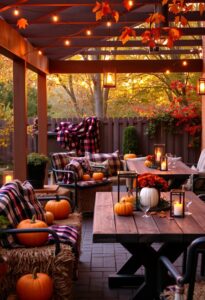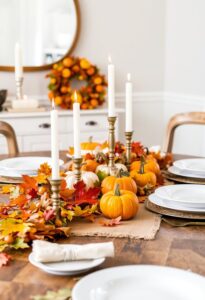
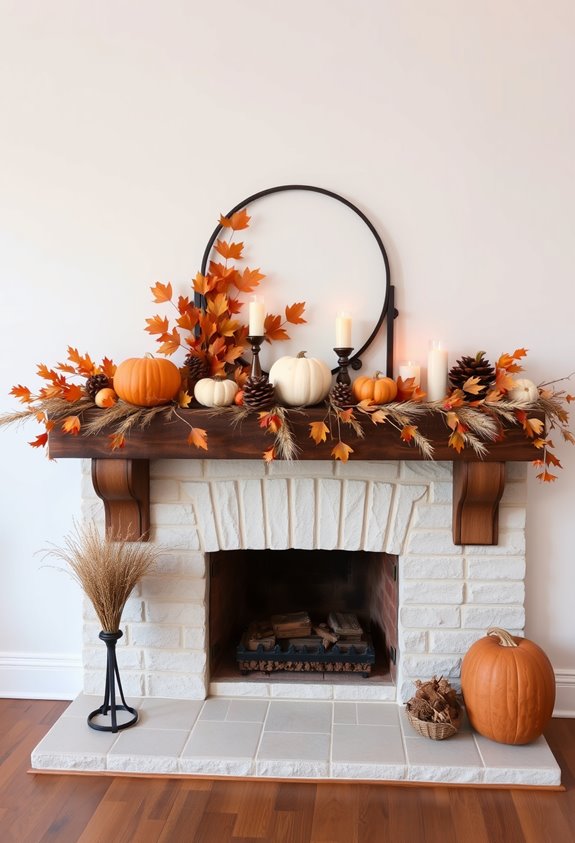
The most beautiful Thanksgiving mantels share one thing: intention. You’ll find a strong focal point like a wreath or framed art anchoring everything, a foliage garland running horizontally across the shelf, and three to five supporting pieces with varied heights. Pumpkins, candles, and natural textures do the heavy lifting. Warm tones—orange, gold, cream—show up everywhere. Keep it between three and five objects or it becomes a craft-store explosion. The details ahead make all the difference.
Foliage Garlands That Anchor a Thanksgiving Mantel
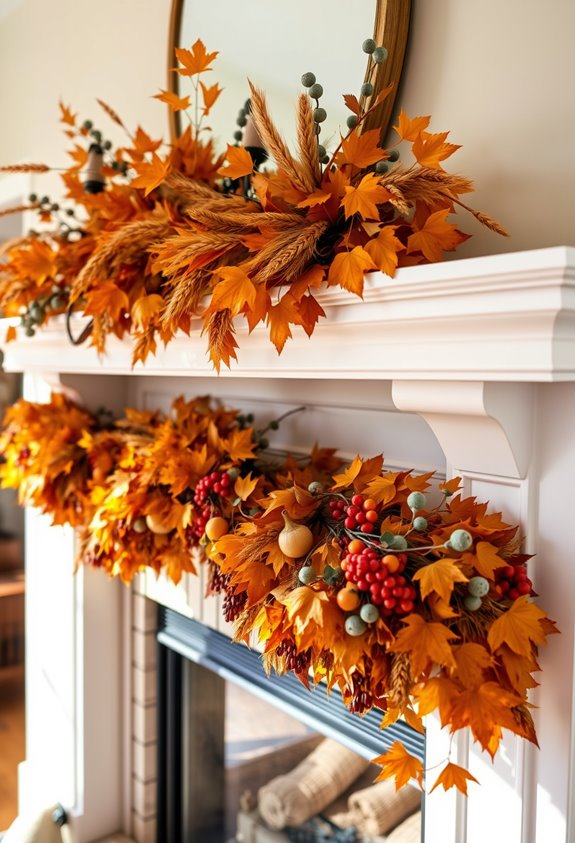
Greenery does the heavy lifting on a Thanksgiving mantel. It’s not decoration — it’s structure. A foliage garland creates the horizontal line your eye follows across the whole display. Without it, everything else just sits there looking lost.
Evergreen foliage holds its shape longer than fresh flowers, which means it actually survives the holiday. Smart choice. Mixed greenery adds depth because different leaf sizes and textures prevent that flat, fake look nobody wants.
Layered foliage reads as styled, not just placed. That’s a real distinction. Mantel styling sources consistently treat garlands as foundational — not optional. If you want your mantel to feel warm and intentional rather than thrown together, foliage is where you start. Full stop. The same principle applies to holiday tablescapes, where tartan and classic motifs like trees and stars are treated as structural anchors rather than afterthoughts.
Pumpkins and Gourds for Every Thanksgiving Mantel Style
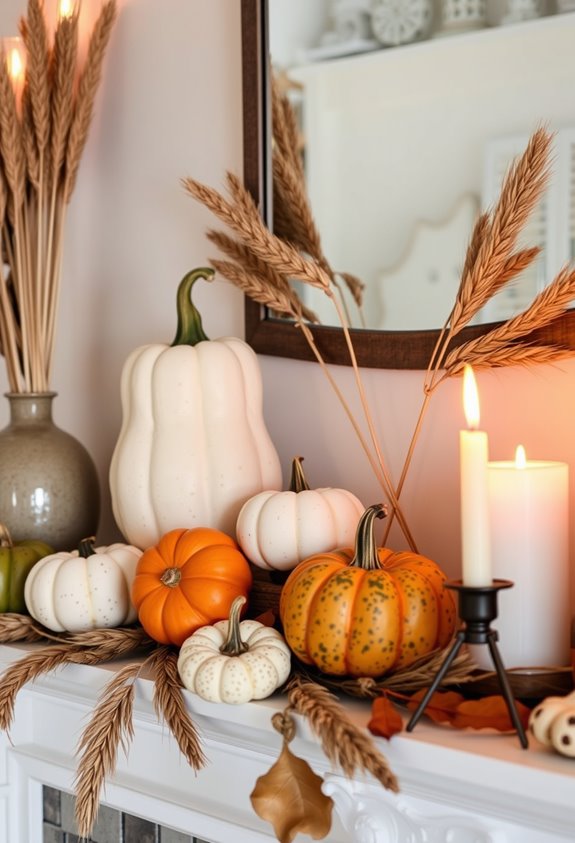
Once your foliage garland is locked in, pumpkins and gourds are what give a Thanksgiving mantel its personality. And yes, the choices actually matter.
Go classic with mini pumpkins grouped in threes — it’s a styling rule for a reason. Want something more polished? Neutral white or creamy pumpkins with dried wheat bundles nail that modern farmhouse look effortlessly.
Rustic crowd? Layer mini pumpkins with pinecones, acorns, and wooden trays. Add burlap or plaid flannel and you’re done.
For balance, place larger pumpkins at the ends, smaller gourds in the center. Stack flat pumpkins largest-to-smallest. Easy.
Artificial pumpkins work just as well as fresh ones — and they come back next year. Smart, not lazy. There’s a difference.
You can find everything you need in one place by browsing the Thanksgiving Shop and Pumpkin Décor collections curated specifically for the season.
How Candles Transform Your Thanksgiving Mantel Display
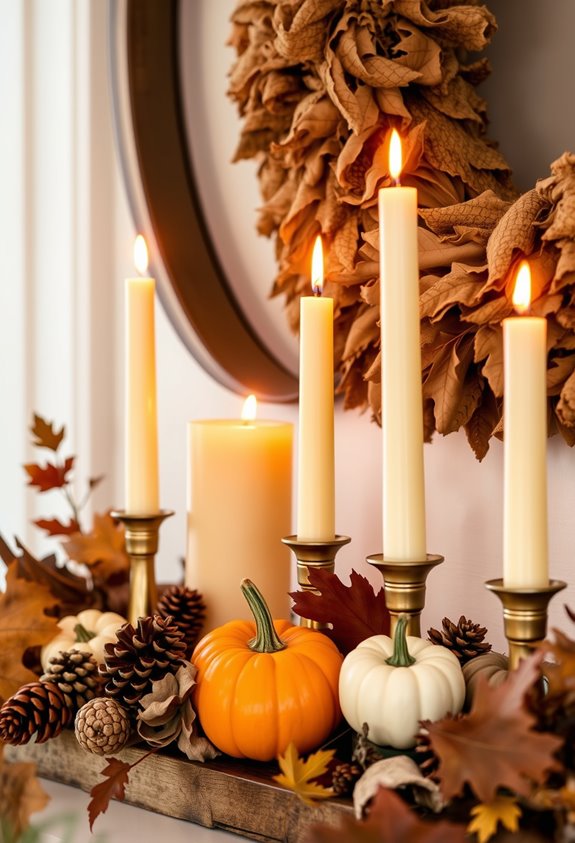
Candles are debatably the easiest way to completely change how a Thanksgiving mantel feels. Seriously. One cluster of pillar candles and suddenly your fireplace looks intentional. Taper candles, votives, jar candles — they all work. Orange, white, and beige are your strongest color plays for the season.
Grouping matters more than most people realize. Small clusters beat random scattering every time. Vary the heights. Add a mirror behind them and watch the light bounce. That’s not magic — that’s just reflection doing its job.
Safety isn’t optional. Keep real flames away from leaves, fabric, and anything flammable. Flameless LED candles exist for exactly this reason, and they look surprisingly good. Battery-operated versions handle tall mantels without drama. Warmth without the hazard. That’s the whole point. Displaying candles on a silver plate charger underneath them adds both reflectance and texture to the overall arrangement.
The Best Natural Textures for a Harvest Mantel
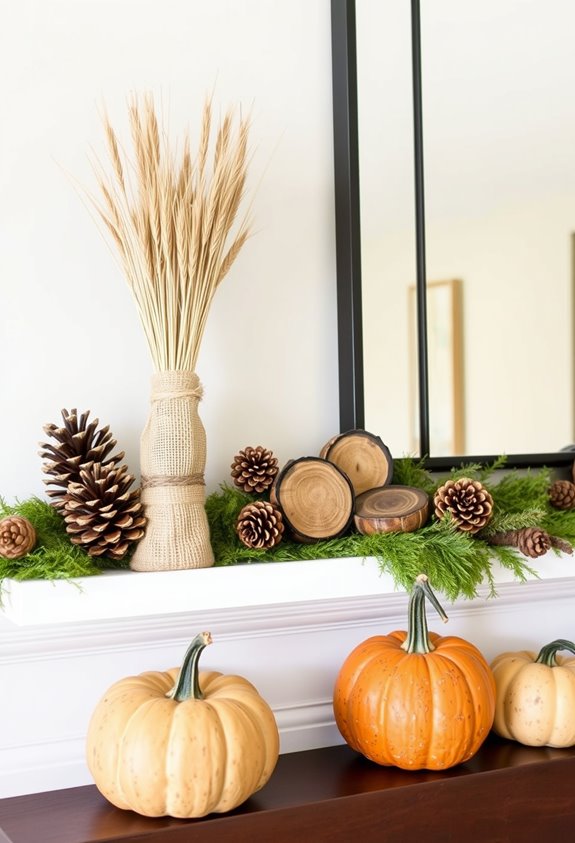
Texture is what separates a Thanksgiving mantel that looks intentional from one that looks like a shelf with stuff on it.
Linen brings that crisp, organic finish that makes everything around it look considered. Cotton softens the mood. Put them together in a blend, and you’ve got something that feels classic without trying too hard.
Then layer in the real stuff. Pine bark. Oak shavings. Dried leaves. Coconut fiber. These aren’t fancy — they’re just honest materials that signal autumn without screaming it.
That’s the goal.
Polyester-cotton works if upkeep matters more than feel. No judgment. But if you want your mantel to actually *look* like something, lean natural. Earthy, layered, matte. That combination doesn’t just photograph well — it feels like somewhere people want to gather. Materials like coconut fiber do more than look the part — they’re fully natural ingredients that actively improve soil quality when repurposed back into the garden after the season ends.
Signs, Photos, and Accents Worth Placing on Your Mantel
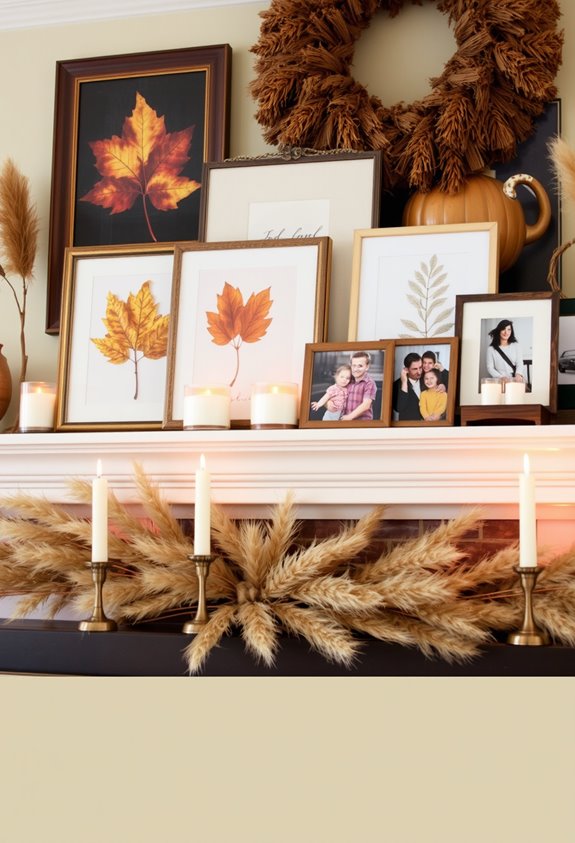
The stuff you put on your mantel beyond greenery and gourds — that’s where personality enters. A wooden sign that says “Thankful” or “Gather” isn’t revolutionary, but it works. It keeps the theme clear without cluttering the space. Simple wording reads well from across the room, especially when candles and garlands are already doing the heavy lifting.
Photos matter more than people realize. Small groupings of framed family shots — wood frames, gold finishes, muted tones — add something no store-bought accent can: actual meaning. That’s the whole point of Thanksgiving, right?
Then there are the harvest accents. Pumpkins, cornucopias, turkey motifs. Used sparingly, they make your mantel feel distinctly Thanksgiving rather than vaguely autumnal. Scale consistency matters. One arrangement, not five competing ones. Extending your pumpkins and gourds down to the fireplace hearth creates a cohesive focal point that ties the whole display together.
Choosing the Right Focal Piece for Your Mantel
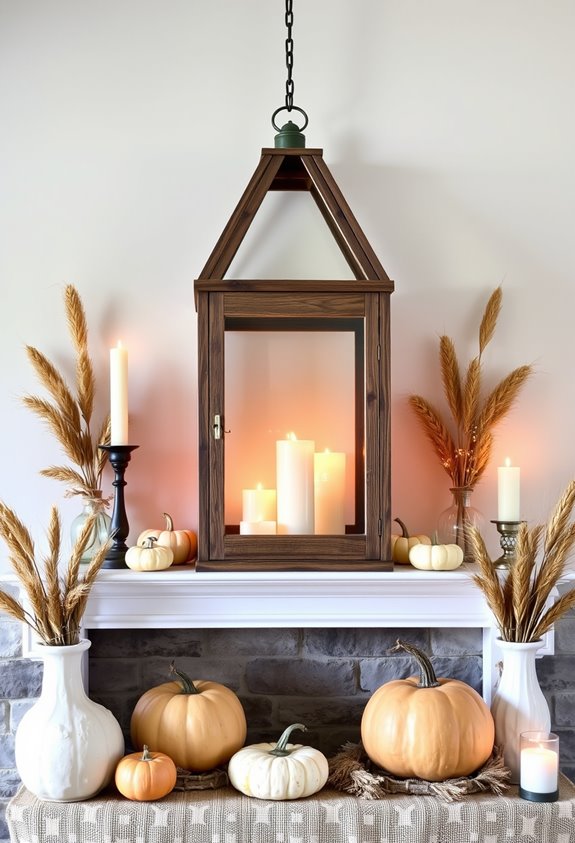
Every mantel needs one thing that runs the show. One anchor. One piece that tells everything else where to stand. Without it, you’ve got a collection of stuff, not a styled mantel.
Every mantel needs one anchor. Without it, you don’t have a styled space — you have a pile of stuff.
For Thanksgiving, that focal piece should go tall. A dried wreath, a large vase with organic branches, or substantial framed art — all solid choices. Height matters because it pulls the eye upward and gives the fireplace the authority it deserves.
Seasonal fit isn’t optional. Warm tones, natural textures, earthy materials — these are what make a mantel feel like Thanksgiving instead of just “fall-ish.” Muted and organic almost always beats bright and plastic.
Center it. Leave breathing room on both sides. Proportion is everything. Too small and it disappears. Too large and it’s overwhelming. Copper accessories like a polished poker or decorative screen can be placed nearby to add warmth and elegance that ties the whole display together, since copper finishes suit a wide range of décor styles without clashing.
How to Layer a Thanksgiving Mantel Without Overcrowding It
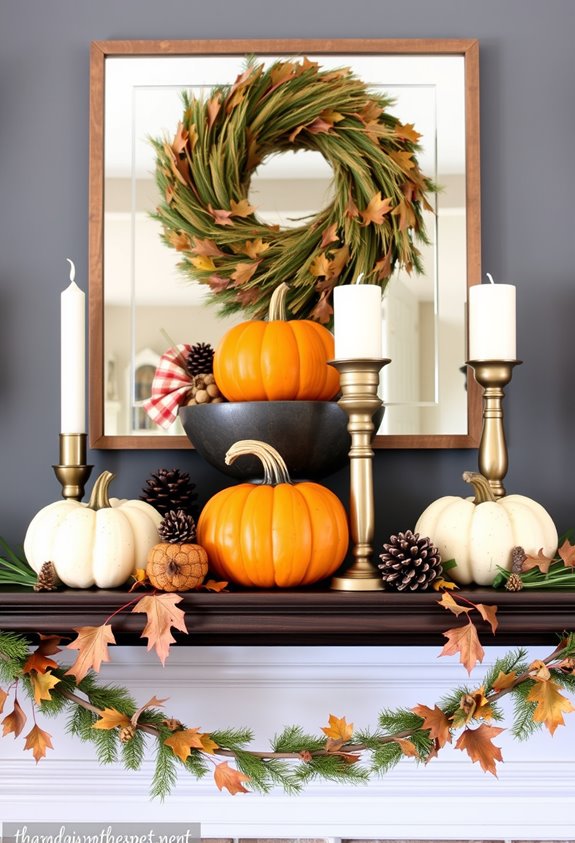
Once you’ve got your focal piece locked in, the real work starts — and this is where most mantels fall apart. Layering isn’t complicated, but people still manage to wreck it.
Start at the back with taller pieces, then step down in height as you move forward. That’s it. Depth over flat rows, always. Keep your total piece count between three and five — yes, really that few.
Bigger objects do more work, so you need less of everything else. Leave gaps between groupings on purpose.
Negative space isn’t empty; it’s breathing room that makes everything else pop. Mix textures — wood, ceramic, greenery — without adding more stuff. And when it starts feeling crowded? Remove something. That discomfort you’re ignoring is usually right.
Books or boxes work well as height anchors to support taller vases or candlesticks without adding visual noise.
Farmhouse, Modern, and Traditional Mantel Color Palettes
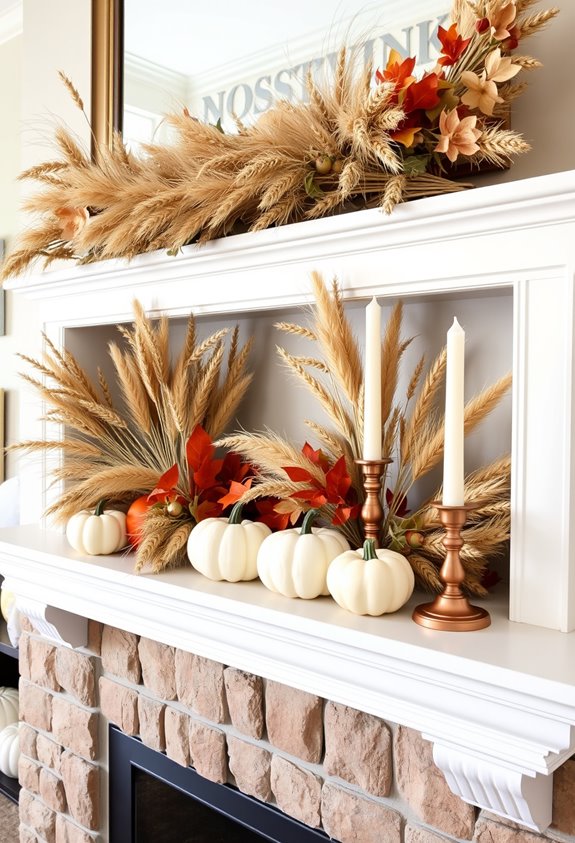
Now that your layers are sorted, color is where your style actually shows up. And yes, it matters more than you think.
Farmhouse mantels stay neutral. White, cream, tan, warm browns. Rustic textures do the heavy lifting when color won’t. It’s a quiet look, but it works.
Farmhouse mantels keep it simple. Neutral tones, natural textures, and nothing extra. Quiet works.
Modern goes cleaner. Think white or soft gray as your base, then one accent color — muted red, vintage blue — and you’re done. Restraint is the whole point.
Traditional? That’s where fall actually shows up. Orange, gold, burgundy, burnt orange, olive green. Multiple warm colors, all at once. It’s maximalist by comparison, and honestly, it earns it.
Here’s what all three share: warm undertones. Always. Even your “neutral” mantel has warmth buried in it somewhere. Subtle warm metallic accents like gold, copper, and bronze can bridge all three styles while keeping that seasonal essence intact.
The Core Formula Every Thanksgiving Mantel Relies On
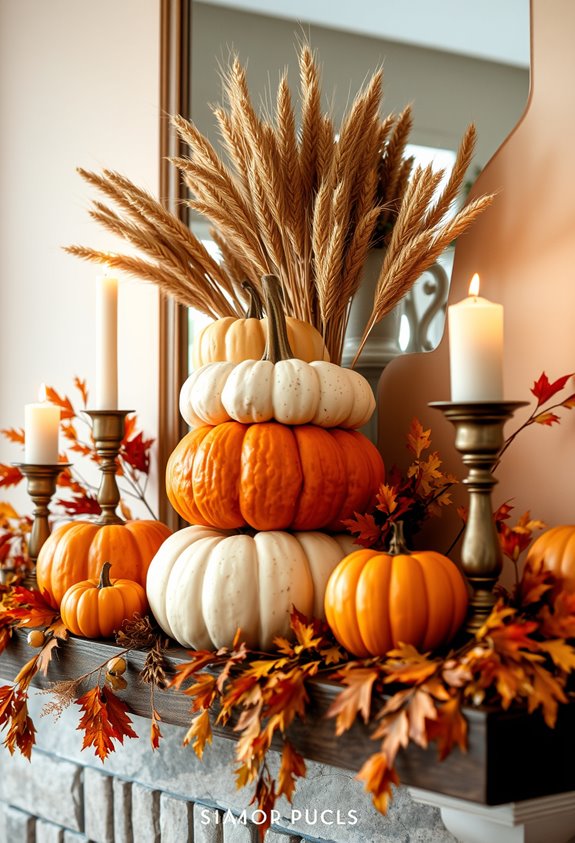
Most people overthink the mantel and end up with a cluttered shelf that looks like a craft store exploded. Don’t be that person. The formula is simple: one focal point, one horizontal layer, and three to five supporting objects. That’s it.
Your focal point goes first. A mirror, wreath, or painting — something large enough to anchor the whole arrangement. Then you add your horizontal element, usually a garland or branch, running across the surface. It ties everything together.
Height variation matters. You need tall, medium, and short pieces working together. Candleholders, stacked books, small pumpkins — they each play a role.
Odd-number groupings feel more natural. Three pumpkins beats two. Always. The mantels that look effortlessly styled aren’t accidental. They followed the formula. Asymmetry is part of that formula too — clustering pumpkins on one side only and balancing them with candleholders on the opposite end creates a composed look rather than a matched, rigid arrangement.
Frequently Asked Questions
How Do I Keep Real Foliage Fresh on My Mantel All Season?
Keep it away from heat. Seriously, your fireplace, vents, and candles are foliage’s worst enemies.
Mist your greenery regularly and soak cut ends in water before you install it.
Stick with fir, cedar, pine, or magnolia — they’re naturally tougher and last longer.
Match your garland width to your mantel depth so it sits secure.
Start early November with dried elements like wheat to supplement anything that’s fading fast.
Are There Child-Safe or Pet-Safe Options for Thanksgiving Mantel Décor?
Yes, absolutely. Swap real candles for battery-operated ones — open flames near curious kids or pets aren’t worth it. Skip small figurines and mini pumpkins; they’re choking hazards waiting to happen.
Instead, anchor a faux garland across your mantel and cluster a few large, unbreakable pumpkins together. Secure everything firmly. One solid focal piece beats a cluttered spread of small objects every time. Simple, stable, and intentional — that’s your safest move.
What Should I Do With My Mantel Décor After Thanksgiving Ends?
Like a medieval town crier announcing the season’s end — Thanksgiving’s over, so update your mantel fast. Pack away turkey figurines, cornucopias, and “Give Thanks” signs immediately. Keep pumpkins, gourds, and fall foliage; they’re still relevant. Swap warm tones for creams, whites, and gold. Add candles, lanterns, and simple greenery. Store themed pieces separately for next year. Clean the mantel first. Simple wins here.
How Much Should I Budget for a Fully Decorated Thanksgiving Mantel?
Your budget depends on how layered you want to go.
A simple setup runs $25–$75. A fuller, more styled look lands around $75–$200. Want premium faux foliage, lanterns, and coordinated pieces? You’re looking at $200–$500+. Magazine-worthy? Budget $500 and up.
The biggest cost drivers are garlands, pumpkins, and candles. More layers, more symmetry, more money. Simple math, really.
Can a Thanksgiving Mantel Work on a Wall Without an Actual Fireplace?
Yes, it works. You don’t need a fireplace to pull this off. Mount a mantel shelf on any wall, drape a garland across it, layer in pumpkins and candles, and you’ve got a focal point.
Add a mirror, prop up a “Gather” sign, and suddenly your blank wall feels intentional. It’s about composition, not combustion. The mantel’s just a stage. You’re setting the scene.