Traditional Thanksgiving tables — starched linens, towering florals, fine china nobody’s allowed to touch — are getting replaced because they don’t work anymore. They block conversation, they’re expensive to update, and they photograph terribly. Modern hosts are choosing handmade ceramics, foraged naturals, and low centerpieces that actually fit the table. The results look intentional without looking uptight. Nine specific looks are driving this shift, and each one solves a problem the traditional setup never could.
The Earthy Thanksgiving Table That Feels Like Fall
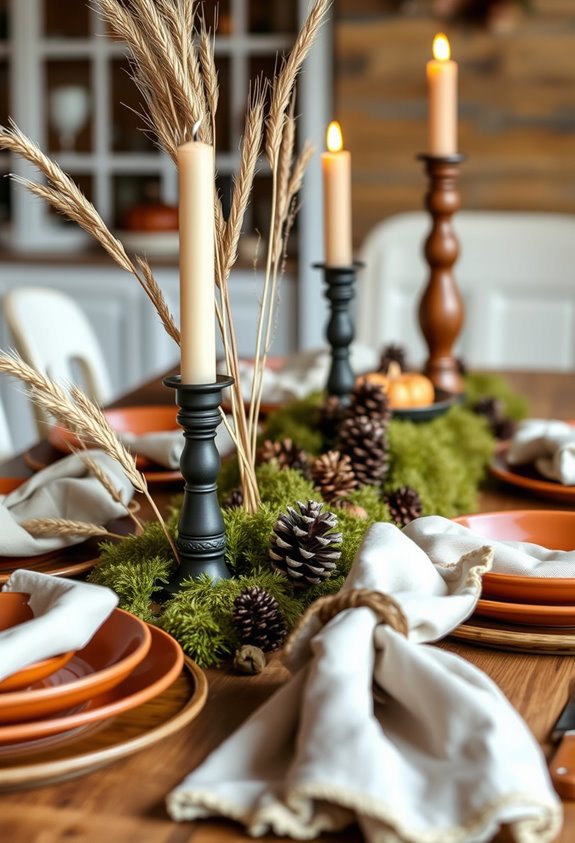
You’re building on browns, beiges, terracottas, burgundies, and warm golds. These tones don’t compete. They settle. Natural-colored linens create a quiet foundation so your foraged branches, dried florals, and clustered gourds actually pop.
Browns, beiges, terracottas. These tones don’t compete — they settle, so everything else can speak.
And yes, foraged. Pinecones, acorns, leaves, mini pumpkins — stuff you can literally pick up outside. Budget-friendly isn’t a compromise here. It’s the whole point.
Layer your textures. Burlap runner, wooden charger, woven placemat. Varied materials make the table feel collected, not curated within an inch of its life. Folding your burlap runner lengthwise and letting it rumple and gather naturally creates little crannies perfect for nestling acorns, twigs, and other small found objects.
This look belongs to everyone at that table. That matters.
The Crisp White Table That Never Goes Out of Style
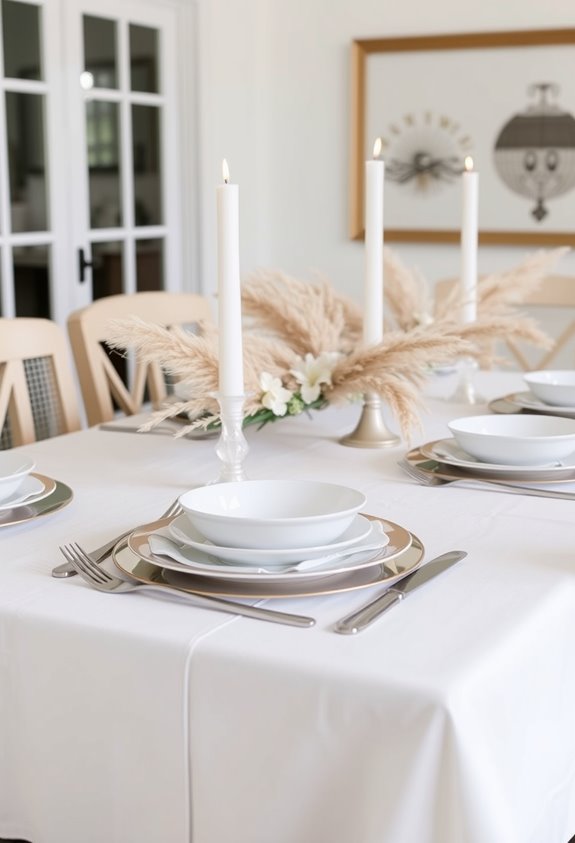
There’s a reason the crisp white Thanksgiving table keeps showing up year after year — it works. It’s clean, flexible, and honestly a little foolproof. White goes with everything. Full stop.
You’re not reinventing anything here. You’re building on something that already belongs.
Here’s what makes this table feel complete:
- A white tablecloth anchors everything without competing
- White dinnerware keeps the palette tight and intentional
- Linen napkins and embroidered runners add texture, not chaos
- Clear glassware and metallic flatware bring quiet contrast
- White pumpkins or dried florals finish the centerpiece without overwhelming it
The beauty? You can update small details yearly and the foundation still holds. It photographs beautifully, adapts to any hosting style, and never feels dated. Keeping the centerpiece low with stacked white pumpkins and small rounds ensures clear sightlines across the table so conversation flows naturally. That’s not luck. That’s a smart table.
How to Build a Tonal Green Table From Scratch
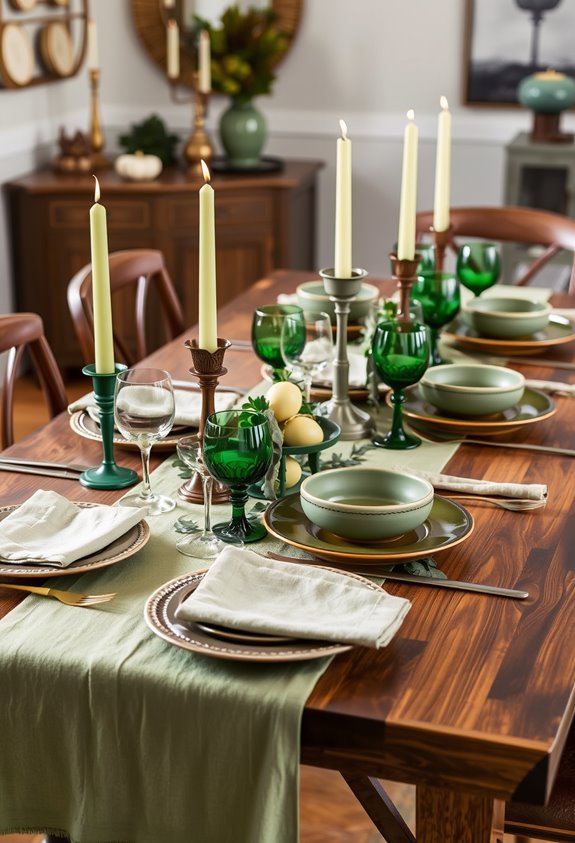
Tonal green isn’t just a color choice — it’s a commitment. You’re building something intentional here, not throwing a centerpiece on a tablecloth and calling it a day. Start with a neutral wood surface — green layers read cleaner against natural material. From there, everything works within one color family: sage, olive, moss, forest. Different values, different undertones. Same world.
Finish matters. Matte feels quieter. Satin amplifies light. Pick one that fits your space.
Then layer. Tablecloths, runners, napkins, chargers — all green, all slightly different. Texture does the heavy lifting when color contrast isn’t the point. Stoneware, linen, tinted glassware. Each surface pulls its weight.
It sounds simple. It isn’t. But when it works, everyone at the table knows it. If you’re building the table itself, the base length should be calculated as tabletop length minus 8 to ensure proper apron rail fit and visual proportion.
The Luxe Modern Table With Brass and Bold Accents
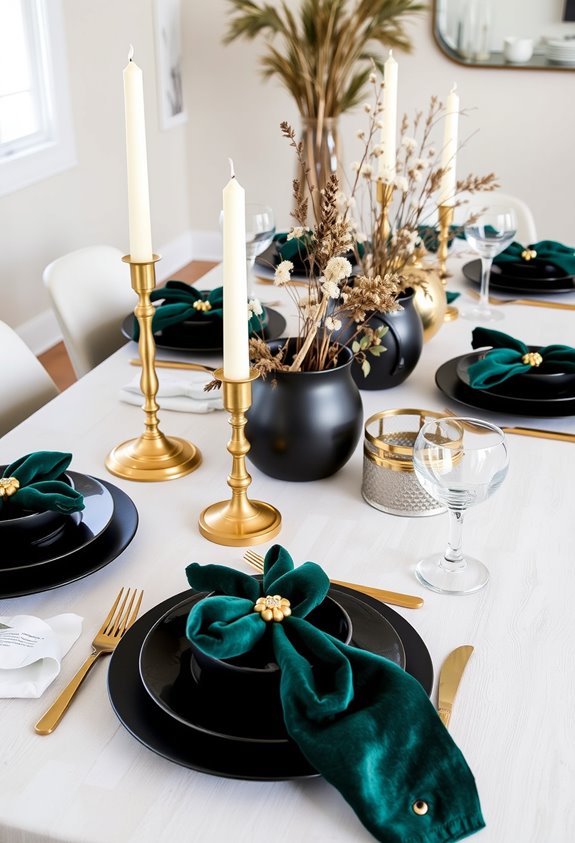
Restraint is overrated — until it isn’t. Brass changes everything. Swap tired orange-and-brown for polished brass chargers, bold jewel tones, and clean lines, and suddenly your table looks like it belongs somewhere important.
Here’s what makes it work:
- Brass chargers and candlesticks anchor the whole look
- Jewel tones like bordeaux, indigo, or aubergine replace predictable harvest colors
- Mixed metallics — brass, pewter, black flatware — add real dimension
- A metallic runner delivers sheen without overwhelming the setting
- Matte or natural materials balance the shine so nothing fights for attention
Berry-red with olive green and polished brass? That’s a combination with actual contrast and depth. Pick one unexpected accent color. Just one. More than that and you’ve lost the plot entirely. Gold tablecloths paired with metallic plates can serve as a base layer that makes a fall floral centerpiece genuinely pop.
Casual, Textured, and Built to Reuse Every Year
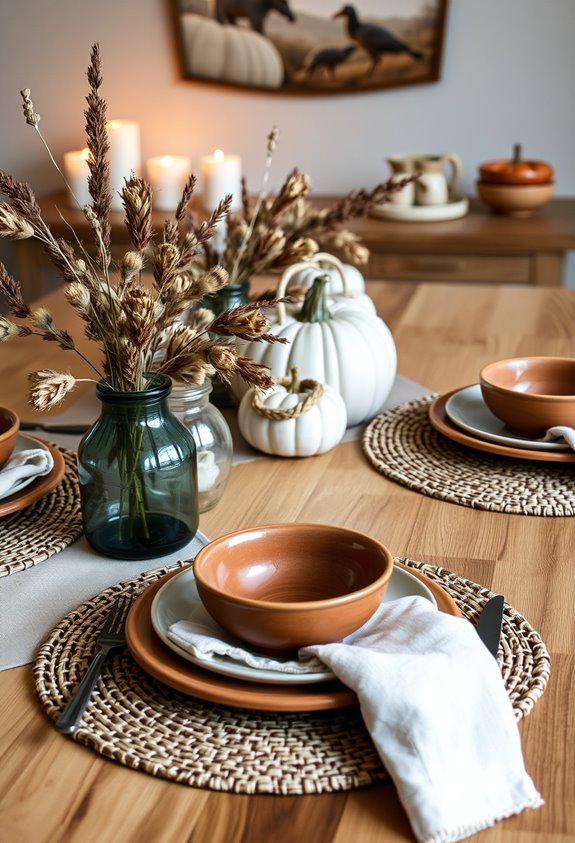
Formal tablescapes are fading out. Nobody’s ironing a starched tablecloth anymore — and honestly, good riddance. The shift is toward casual, textured layering: rattan placemats, flax linen, jute runners, handmade ceramics. Things that feel lived-in and warm instead of stiff and untouchable.
Here’s the smarter play, though. These pieces aren’t one-season throwaways. Dried branches, recycled glassware, organic stoneware — you buy them once and restyle them every year. That’s the whole point. Build a flexible base, swap in seasonal accents, done.
Crate & Barrel, Camille Styles, and Homes & Gardens are all pointing the same direction: neutral, reusable, texture-forward. Not because it’s cheaper (though it is). Because it actually feels more inviting than a perfectly coordinated table that nobody wants to touch. For those leaning into a single mood, anchoring the whole table around one focal color — layered through dinnerware, linens, and earthenware — creates a cohesive look that’s just as effortless to pull off.
Which Thanksgiving Tablescape Style Fits Your Space?
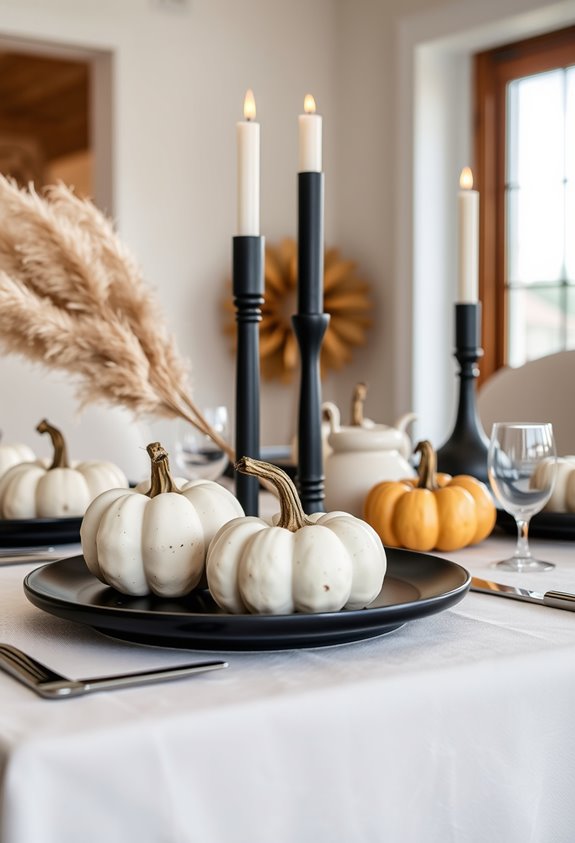
Not every tablescape style works in every space — and pretending otherwise is how you end up with a full harvest layering situation crammed onto a two-person apartment table. Match the style to your actual room.
- Modern minimalist fits small tables and open-plan spaces where visual calm matters
- Traditional harvest belongs on larger rectangular tables that can handle serious layering
- Organic modern adapts well to wood tables and neutral, contemporary interiors
- Rustic farmhouse suits casual kitchens and spaces already featuring vintage or natural details
- Outdoor casual works for patios and mild-climate backyard gatherings with larger groups
Your space tells you what it needs. Listen to it. Forcing the wrong style doesn’t make the table look fuller — it just makes it look wrong. For outdoor gatherings, mix indoor and outdoor furniture with warm blankets and pillows to make the space feel intentional rather than improvised.
Mix-and-Match Place Settings That Pull It All Together
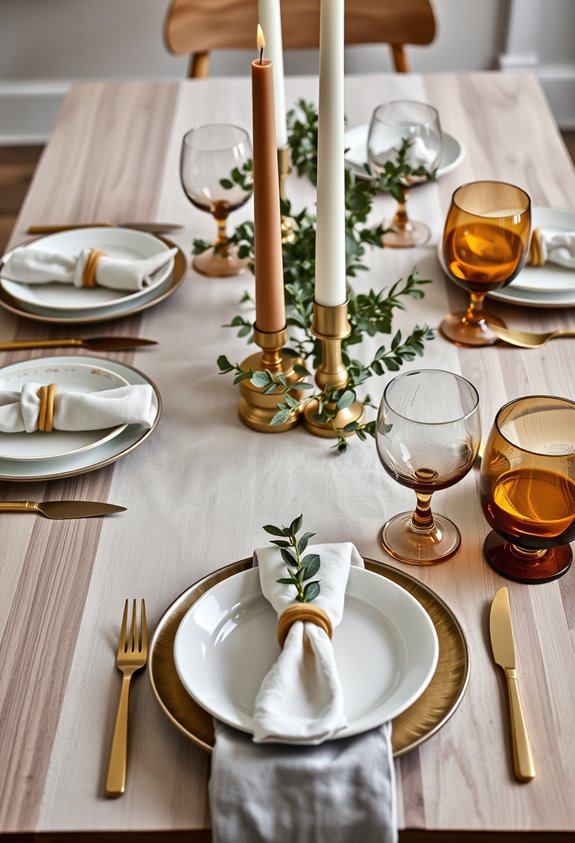
Pick one unifying element — a color, a metal finish, a pattern family — and let everything else vary around it. Stripes next to florals? Totally fine, as long as the colors speak the same language. Ceramic next to wood next to woven linen? That’s depth, not disorder.
Layer your plates. Repeat your accent color across napkins, glassware, even a small vase. Those repetitions are what make a mixed table feel curated instead of chaotic.
You don’t need a matching set to belong at the table. You just need intention. Start with neutral dinnerware and flatware as your foundation, and build every layer of personality on top of that steady base.
Why Handmade Ceramics Outperform Fine China on a Modern Table
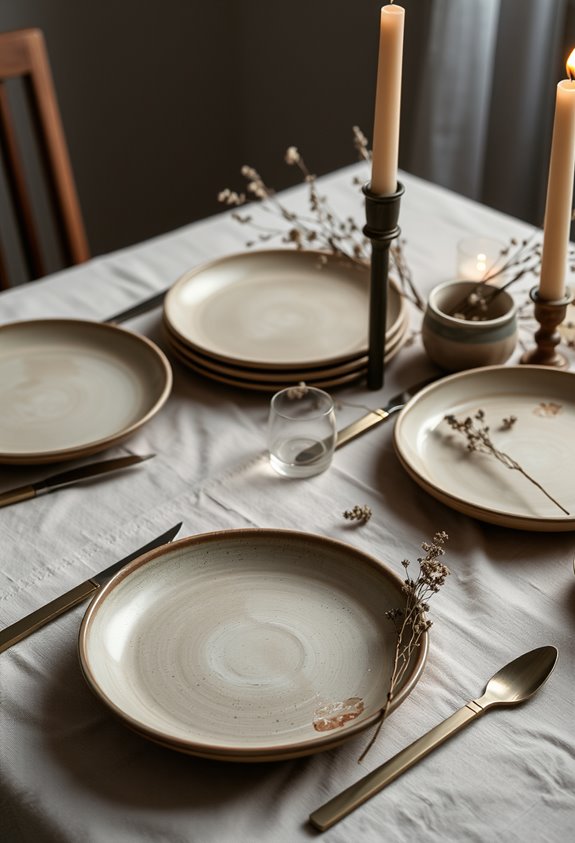
Once you’ve committed to mixing pieces on purpose, the next question writes itself: what kind of pieces? Handmade ceramics. Full stop. Fine china looks great in a cabinet. A modern table isn’t a cabinet.
Fine china belongs in a cabinet. A modern table demands something alive — handmade, imperfect, and entirely intentional.
Here’s why ceramics win:
- Texture reads better — light catches irregular surfaces dramatically, especially in photos
- Wabi-sabi is real — asymmetry and visible handwork signal sophistication now, not sloppiness
- Maker provenance matters — supporting independent craftspeople carries genuine cultural status
- Durability holds up — stoneware handles daily use without the “don’t touch” energy of china
- Earthy palettes fit — matte glazes and organic shapes belong on modern tables
Fine china signals heritage. Handmade ceramics signal individuality. Your guests will feel the difference immediately.
Centerpieces That Stay Proportional to Your Table
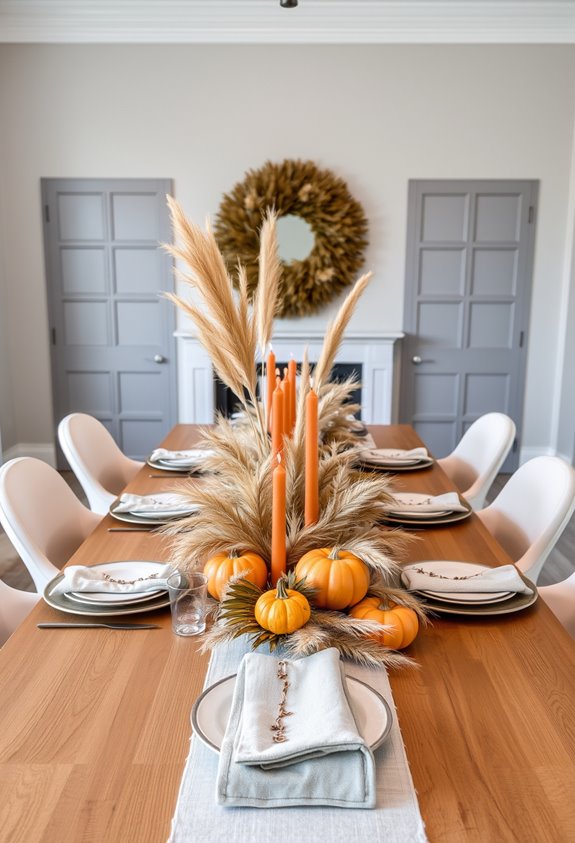
The centerpiece you’re picturing right now is probably too tall. Classic Thanksgiving florals tower over the table and quietly kill the conversation. Nobody wants to crane around a vase to talk to their cousin. Keep height under 12 to 14 inches max. That’s it.
On a 6-foot table, a centerpiece spanning 48 to 60 inches feels intentional without eating the whole surface. Three low clusters spaced 20 to 24 inches apart create rhythm. Odd numbers work better visually. That’s just how it reads.
Leave 18 to 24 inches of open space at each place setting. People need room for plates, elbows, and actual food. Natural textures like gourds, greenery, and small pumpkins keep things seasonal without the bulk. Proportional and grounded beats dramatic every time. For budget-conscious hosts, pinecones, fallen leaves and mums are affordable go-to materials that still look intentional and grounded.
Frequently Asked Questions
How Early Should Hosts Start Planning Their Thanksgiving Tablescape Each Year?
Start mid-October — that’s roughly five weeks out. Sounds extreme, but it works.
You’ll want two to three weeks for menu planning and nailing your tablescape concept. Then one to two weeks out, you’re buying décor and reviewing your serving pieces.
One week before? Wash linens, clean glassware.
Finally, set the actual table one day before Thanksgiving. Waiting until Thanksgiving morning is a rookie mistake. Get ahead of it.
Can Modern Thanksgiving Table Trends Work for Outdoor or Patio Dining?
Yes, modern Thanksgiving table trends absolutely work outdoors. Earth-tone linens, wooden accents, and seasonal greenery look even better against a natural backdrop.
Add string lights for early sunsets, throw blankets for the chill, and a heater if needed. Minimal decor suits open spaces perfectly.
You don’t need a formal dining room to pull this off. A patio, deck, or pergola works just fine. Nature’s already doing half the decorating for you.
What Is the Average Budget for Assembling a Modern Thanksgiving Table?
you don’t need to spend a fortune. A modern Thanksgiving table typically runs $20–$40 for decor alone. Add table settings, a tablecloth, place cards, and a centerpiece, and you’re looking at roughly $70–$130 total.
That’s it. Natural elements, candles, and thrifted finds keep costs low without sacrificing style. Meanwhile, your full hosting bill? That’s a completely different, much scarier number.
Are Modern Thanksgiving Table Trends Suitable for Very Small Dining Spaces?
Yes, modern Thanksgiving trends absolutely work in small dining spaces. Scale matters more than style. Keep centerpieces under 12 inches, use smaller decor items, and stick to simple place settings.
Earthy branches, petite pumpkins, low candles — they create seasonal impact without eating up precious table space. Crisp white or layered tonal palettes make tight rooms feel less cramped.
Big, busy centerpieces? Hard pass. Minimal, clean, and intentional is your small-space superpower here.
How Do Modern Thanksgiving Tablescapes Photograph Compared to Traditional Settings?
Traditional tables are basically a visual explosion of rust, gold, and copper — chaotic, busy, and honestly kind of exhausting to look at in photos.
Modern tablescapes? They photograph cleaner, sharper, and more editorial. You get stronger contrast with colors like indigo and emerald. Negative space lets food and details actually breathe. Matte finishes reduce glare. Low centerpieces keep everything visible. It’s intentional.
Traditional feels nostalgic and abundant. Modern feels like you actually planned it.