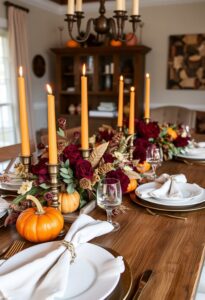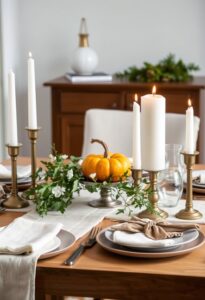
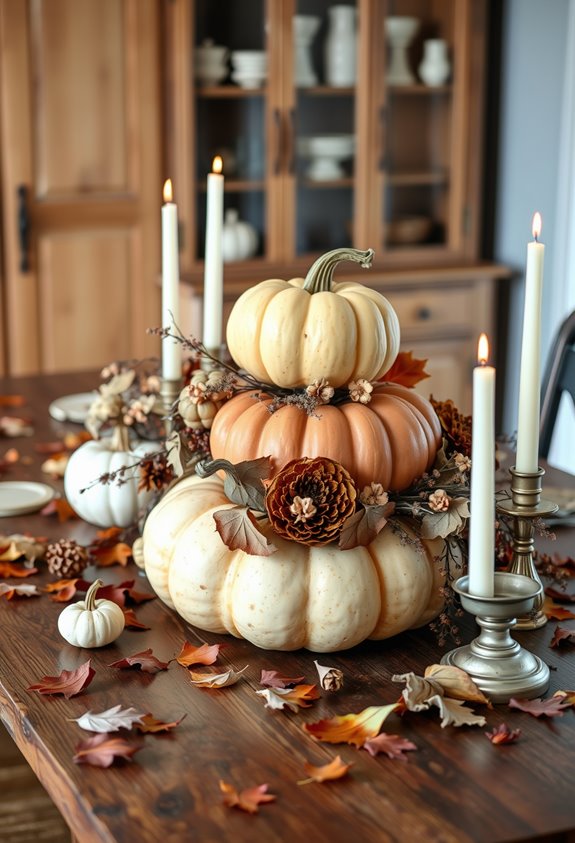
If your Thanksgiving centerpiece is just sitting there looking pretty, it’s not pulling its weight. The best alternatives actually do something — they smell like cinnamon or cedarwood, feed your guests, or double as a conversation piece made from foraged pinecones and acorns. Produce bowls, garland runners, succulent clusters, edible displays — all of them work harder than a dusty gourd arrangement. Stick around and you’ll see exactly which option fits your table.
Candles and Votives That Set the Thanksgiving Mood
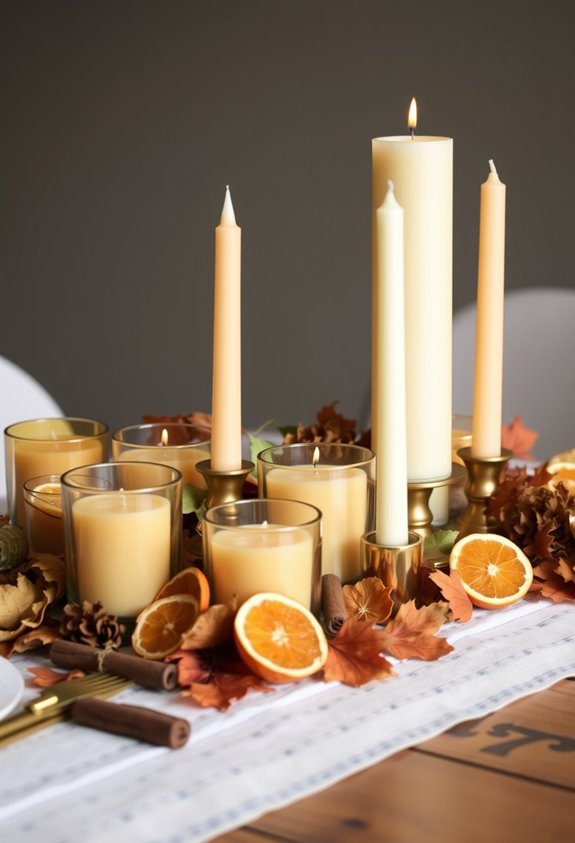
Candles almost always earn their spot at the Thanksgiving table. They’re warm, fragrant, and instantly make your home feel festive and welcoming. That’s not nothing. Scents like cinnamon, pumpkin, cedarwood, and apple pie literally set the mood before guests even sit down.
Votives are your secret weapon here. Small, affordable, endlessly flexible. Scatter them across the table, cluster them on the mantel, or line them along a shelf. Group them with pinecones, autumn leaves, or berries and suddenly you’ve got something that looks intentional. Deep oranges, golden yellows, rich reds — lean into that fall palette hard.
Worried about open flames? Flameless LED candles deliver the same warm glow. Zero drama. Your tablecloth stays intact. Everyone wins. For an elevated touch, look for candles made with pure essential oils and free from synthetic ingredients, so the fragrance you’re welcoming guests with is as clean as it is inviting.
Produce Bowls Packed With Thanksgiving Table Color
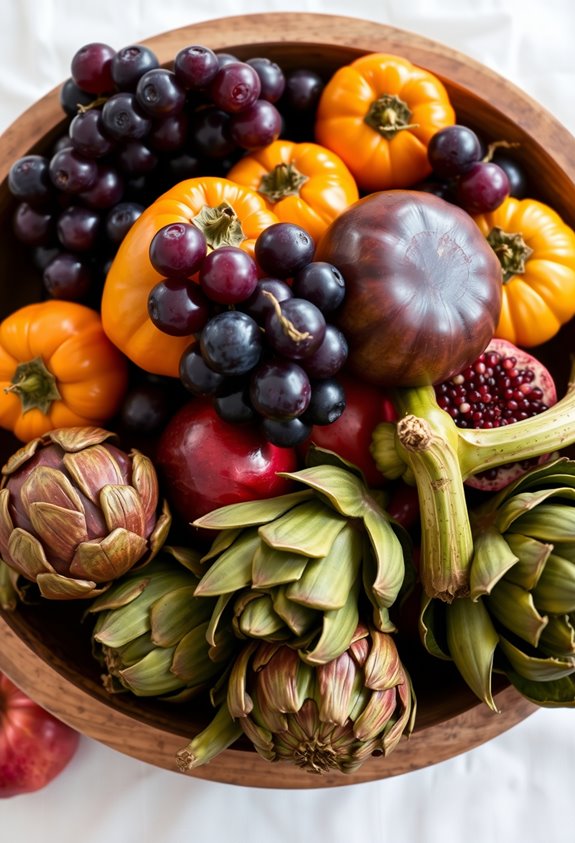
Sometimes the best centerpiece is just a bowl of food. Seriously.
A large wooden or woven bowl filled with mini pumpkins, gourds, pears, and artichokes does more visual work than most elaborate arrangements. It’s grounded, seasonal, and genuinely beautiful.
A bowl of seasonal produce. Mini pumpkins, gourds, pears, artichokes. More beautiful than anything overly arranged.
Neutral vessels make the produce colors pop harder. Think rustic wood, woven textures, or clear glass. Keep it under 12 inches tall so guests can actually see each other across the table. Revolutionary concept, as everyone realizes.
Layer your ingredients tightly. Dense placement reads as abundant, not thrown together. Add kale, eucalyptus, or leafy greens for depth. Pomegranates bring a deep red punch against neutral tablescapes. You can run smaller groupings down the table too. One bowl or five — it works either way. Use wooden picks to anchor heavier produce items like artichokes and gourds so they stay exactly where you place them.
Pinecones, Moss, and Acorns for a Rustic Table Base
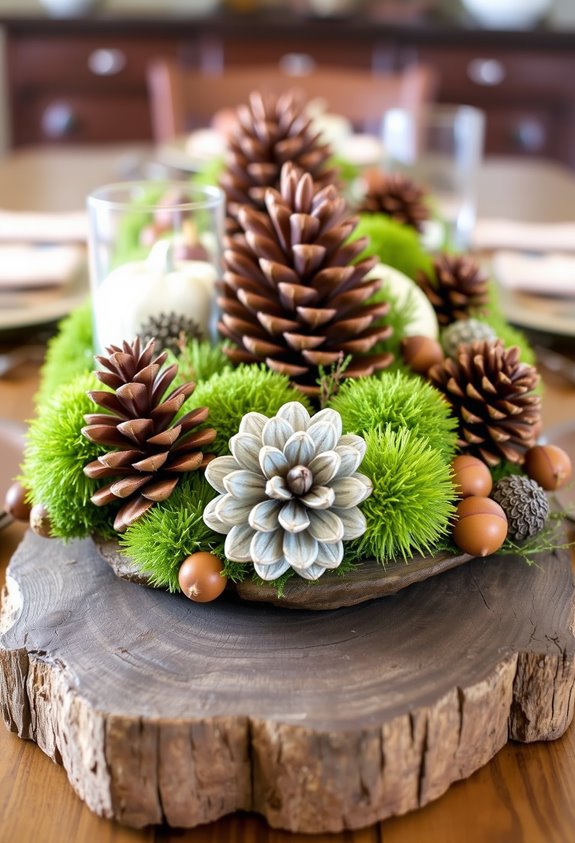
If produce bowls are the easygoing option, a rustic base built from pinecones, moss, and acorns is where things get genuinely tactile. This approach creates something that actually feels foraged—not assembled from a big-box seasonal display.
Here’s how the layering works:
- Moss first — it covers the base, hides rough edges, and sets a forest-floor foundation
- Pinecones next — clustered, not evenly spaced, for volume without looking staged
- Acorns last — small fillers that add fine texture and contrast against bigger pieces
- Candles in the middle — height and warmth without blocking anyone’s view
It’s low-profile. It’s conversational. And dried pinecones last season after season. You’re not just decorating a table—you’re building something people actually want to gather around. In fact, acorns and chestnuts collected from travel destinations like Paris or Florence can make the arrangement feel even more personal and storied.
Greenery Garlands That Run the Whole Table
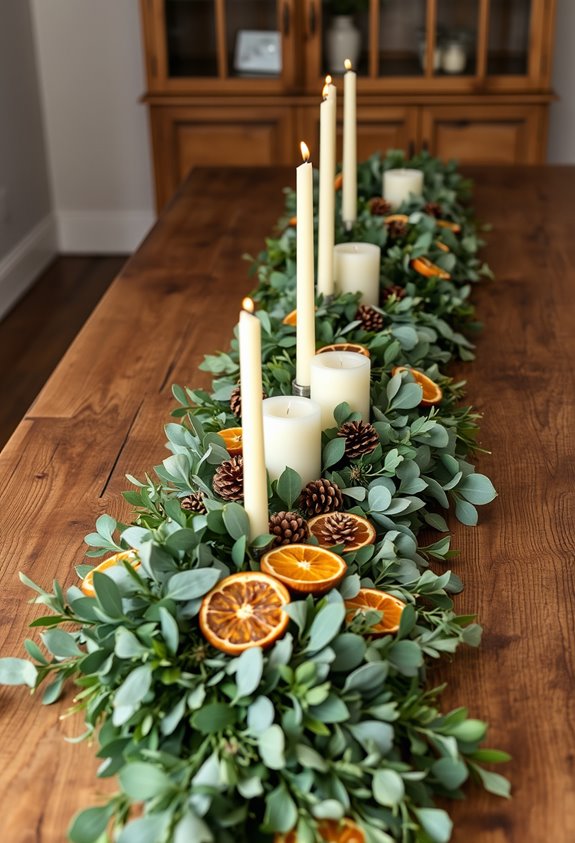
Most centerpieces stake out a single spot on the table and call it a day. Boring.
A greenery garland runs the full length, turning your entire table into the centerpiece. No single footprint. Just continuous, lush coverage everyone can enjoy together.
You build it in sections — small bundles wired or taped together, layered so each one hides the last. More stems per bundle means a fuller look. Mix in eucalyptus, magnolia leaves, or textured greens for sophistication. Then tuck in mini pumpkins, clementines, or flowers. Add candles. Done.
It’s also practical. The garland stays flat and open, so guests aren’t craning around a massive vase. Make it the day of, and fresh flowers hold just fine without water tubes. For a polished finish, create two garlands that meet in the middle around a central arrangement like a floral pumpkin centerpiece.
Branch Arrangements That Give Your Thanksgiving Table Height
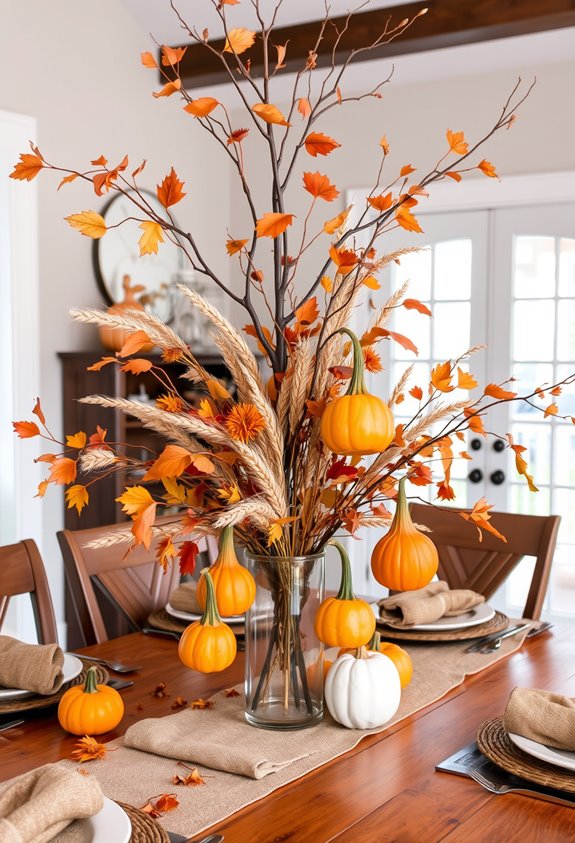
Height changes everything. A single sculptural branch in a narrow vase doesn’t block anyone’s view — it rises above it. That’s the whole trick. Stay under 12–14 inches for low arrangements, or go dramatically tall as a vertical line. No in-between.
Great branch options that actually work:
- Smoke bush for loose, architectural structure
- Olive branches or magnolia leaves for seasonal texture
- Privet tucked in for berry detail
- Eucalyptus for depth and layering
Keep the rest of your table grounded. Stack your plates. Add candles or small pumpkins nearby. Textural contrast matters more than you’d think. And before you finalize anything, sit down in a dining chair and look across the table. Conversation shouldn’t require ducking. An intentional, uncluttered layout ensures no single item dominates sightlines, which is exactly what a well-placed branch arrangement achieves.
Succulents That Last Past the Holiday
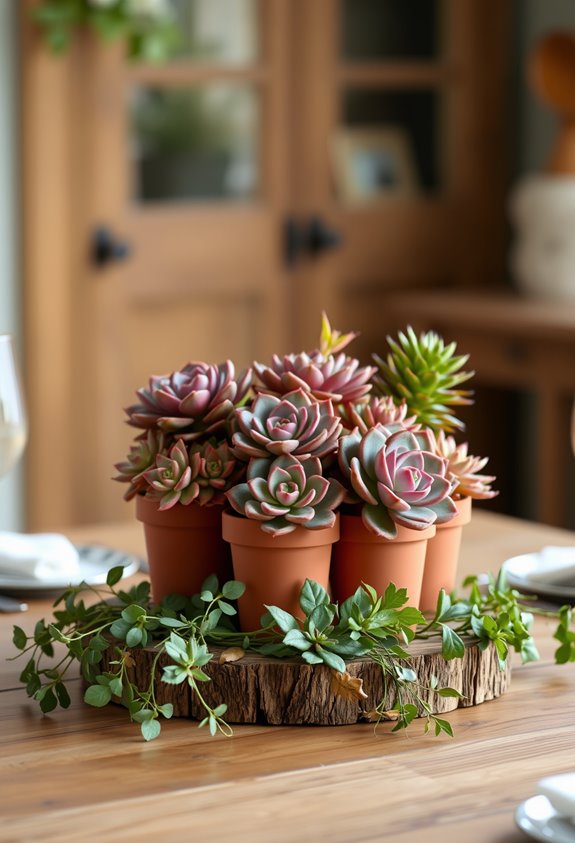
The flat, segmented stems with pointed, claw-like edges make it visually distinctive in mixed arrangements. Kalanchoe works too — flowers lasting weeks and weeks. Both beat cut flowers. Easily.
Keep them in bright, indirect light, ideally near an east-facing window. Water only when the top inch of soil is dry. Good drainage is non-negotiable.
Some holiday cacti live for decades. Your centerpiece could outlast your mortgage. No pressure. Native to the coastal mountains of Brazil, it thrives as an epiphyte on trees and rocks in its natural habitat.
Edible Centerpieces That Pull Double Duty
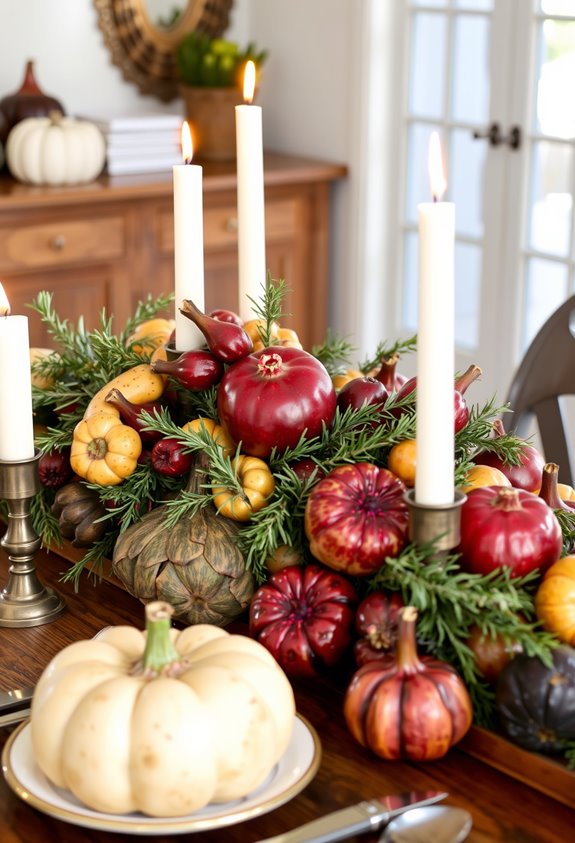
Edible centerpieces pull double duty — looking great on the table and disappearing into hungry hands before cleanup. No leftover décor guilt. Everyone wins.
Here’s what actually works:
- Stacked citrus towers — oranges and grapefruits at the base, kumquats and limes up top, secured with toothpicks for height
- Hollowed watermelon serving vessels that hold fruit salad inside while looking intentional outside
- Pull-apart star bread that shifts straight from centerpiece to appetizer without explanation
- Pickle towers skewered onto a cone structure — weird, but people absolutely lose their minds over them
Your table becomes a conversation starter *and* the first course. That’s efficiency. A cake stand or lipped tray keeps everything contained and prevents the whole situation from sliding into chaos mid-dinner. Fresh herbs like sage, thyme, and rosemary make especially smart additions because herbs used later in soups, cocktails, and dinners means zero waste from your centerpiece.
Everyday Containers That Make Surprising Centerpieces
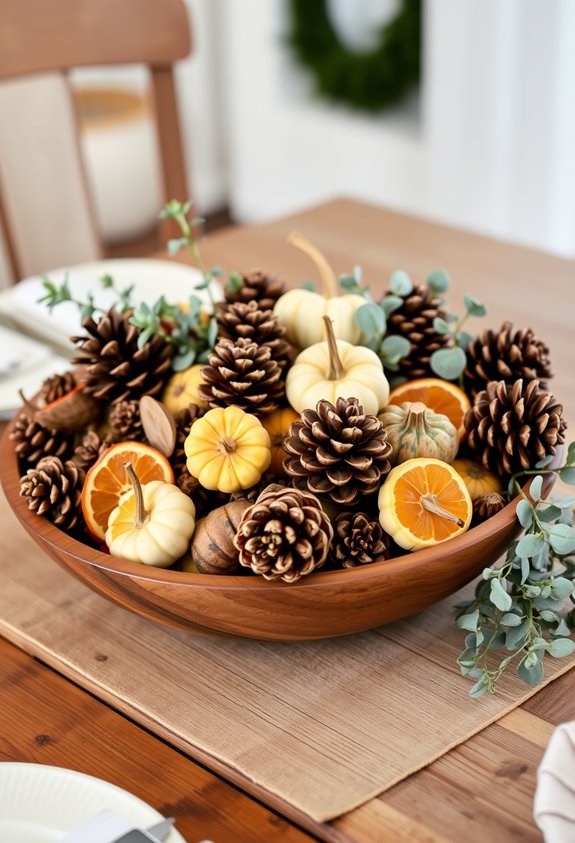
You don’t need to spend money on a vase. Seriously. That pickle jar in your recycling bin? Perfect centerpiece vessel.
That pickle jar you almost recycled? It’s already a vase. Stop spending money on something you have.
Mason jars group beautifully on a table because their straight sides and stable bases make clustering effortless. Tin cans bring a surprisingly charming rustic contrast between delicate flowers and industrial ridges.
Coffee tins, soup cans, vintage biscuit tins — all fair game.
Got a teapot collecting dust? Fill it with wildflowers or peonies. Done.
Milk pitchers handle fuller bouquets easily. Even takeout containers work with a liner and some water.
The point is simple: your kitchen already has everything you need. Wine bottles become narrow-neck vases. Teacups hold a few bold blooms. You’re not behind on this. You’re actually ahead. Plain jars can also be wrapped with unfinished birch bark for an instant natural texture that highlights whatever blooms you place inside.
Frequently Asked Questions
How Far in Advance Can I Build a Thanksgiving Centerpiece?
You can build it 1 to 2 days ahead. Fresh flowers? Don’t push it earlier. Dried goods, gourds, and sturdy accents? Those can go up way sooner.
Here’s the real breakdown: nonperishables can be prepped weeks out, foraged materials a week ahead, and fresh blooms the day before. Save candles and delicate finishing touches for last. Less holiday-day chaos. More time for what actually matters.
How Do I Keep My Centerpiece From Blocking Guest Sightlines?
Keep it grounded — height is the real conversation killer here. Stay under 12 inches tall. Simple rule.
If your guest across the table disappears behind your centerpiece, it’s too tall. Use taper candles, scattered votives, or small pumpkins to add visual interest without building a wall. Try low, layered arrangements instead. They add texture without blocking anyone. Do a quick seated test before guests arrive. You’ll know immediately.
What Is a Reasonable Budget for a Nonfloral Thanksgiving Centerpiece?
You don’t need to spend a fortune. Seriously. Target $10–$15 for a centerpiece that looks intentional and pulled-together.
Got stuff at home already? You’re looking at $0–$10. Foraged greenery, candles you already own, a tray from your cabinet — basically free.
Only push past $15 if you’re buying multiple new pieces. Focus your spending on one focal element, like candles or pumpkins, then fill everything else in with natural materials.
Can One Centerpiece Style Work Across Different Table Sizes and Shapes?
Yes, one style can pull it off. A low, scaled-down arrangement is your most flexible option — it works across round, rectangular, and square tables without blocking anyone’s view.
Collection-style centerpieces adapt easily too; just add or remove pieces to fit the space. The real secret? Match the shape. Round tables love circular arrangements. Rectangular tables need something linear. It’s not complicated. Stop overthinking it.
How Do I Store Leftover Centerpiece Materials After Thanksgiving Is Over?
Sort everything first. Pull out wilted, broken, or moldy pieces — they’ll ruin your good stuff if you pack them together.
Group similar items like greenery, ribbons, candles, and containers separately.
Clean and fully dry everything before it goes into storage. Use labeled plastic bins by category.
Store them somewhere dry — skip the damp basement. You’ll thank yourself next November when you’re not digging through a mystery box of mystery garbage.