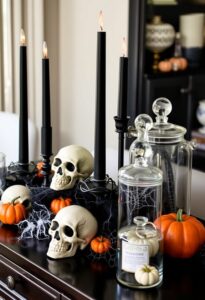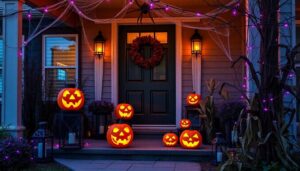
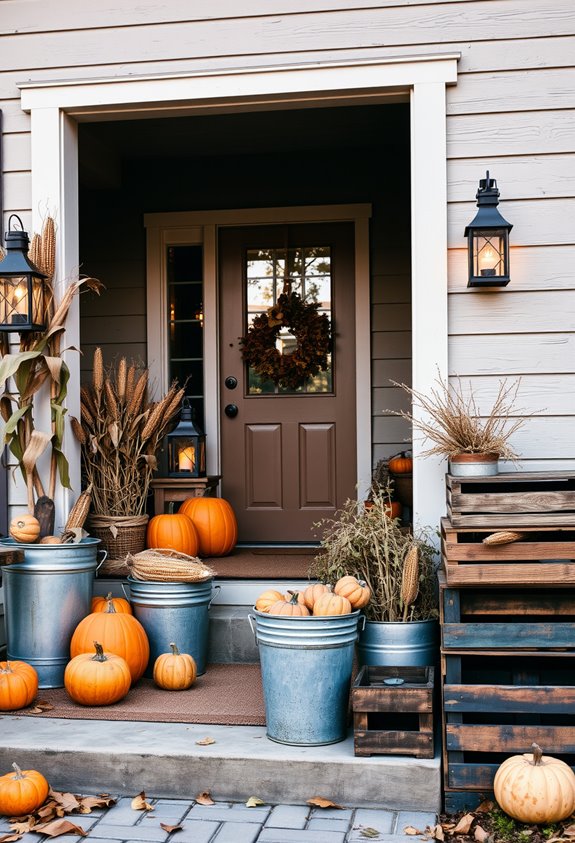
Farmhouse Halloween doesn’t need gimmicks — it needs the right bones. Start with a neutral foundation of cream, taupe, or black, then layer in muted pumpkin, deep sage, or moody navy as accents. Weathered wood, burlap, and galvanized metal do the heavy lifting. Odd-numbered pumpkin groupings, warm amber lighting, and lightly draped cobwebs add just enough eerie without going full haunted house. Stick around — there’s a lot more where that came from.
Design Highlights
- Weathered wood crates, hay bales, and burlap layers create rustic structure while softening darker Halloween elements for a warm farmhouse feel.
- Group pumpkins in odd numbers and vary heights using candles and bottles to build natural, visually interesting farmhouse compositions.
- Neutral cream, taupe, and beige foundations balanced with muted pumpkin or deep sage accents keep displays cozy rather than garish.
- Warm amber string lights, mason jar lanterns, and flameless candles layered together deliver spooky ambiance without harsh or unsafe lighting.
- Subtle spook accents like staged skulls, draped cobwebs, and perched crows add eerie charm without overwhelming the rustic warmth.
The Farmhouse Halloween Color Palette Worth Building Around
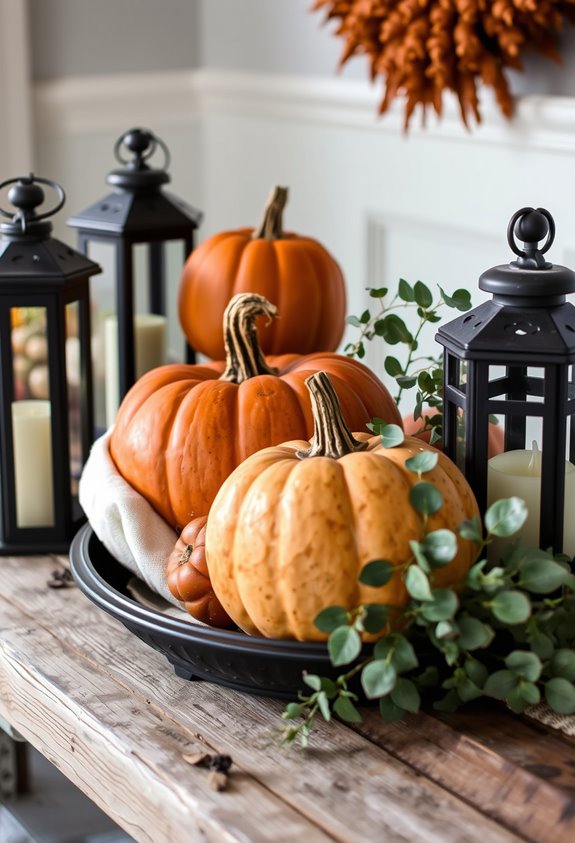
Most farmhouse Halloween palettes start with the same foundation: cream, ivory, taupe, beige, gray, and black. These aren’t boring choices. They’re intentional ones.
Neutrals aren’t the safe choice. They’re the smart one.
That neutral base keeps everything looking rustic and cozy instead of like a Spirit Halloween exploded in your living room.
From there, you layer in the classics: orange, black, purple, and green. Simple. Balanced. Instantly festive. Orange brings the harvest warmth. Black adds mystery. Purple and green give it just enough edge.
Want something softer? Soft clay, deep sage, muted pumpkin, and moody navy are trending for 2025. Blush, lavender, and inky indigo work too.
The real trick is the 60-30-10 rule. Sixty percent dominant color. Thirty percent secondary. Ten percent accent. That structure keeps your palette cohesive and your space feeling like it belongs together. If you want to nail your exact shades before committing, test colors on scrap paper first to make sure they work together the way you expect.
Porch Displays That Set the Farmhouse Halloween Mood
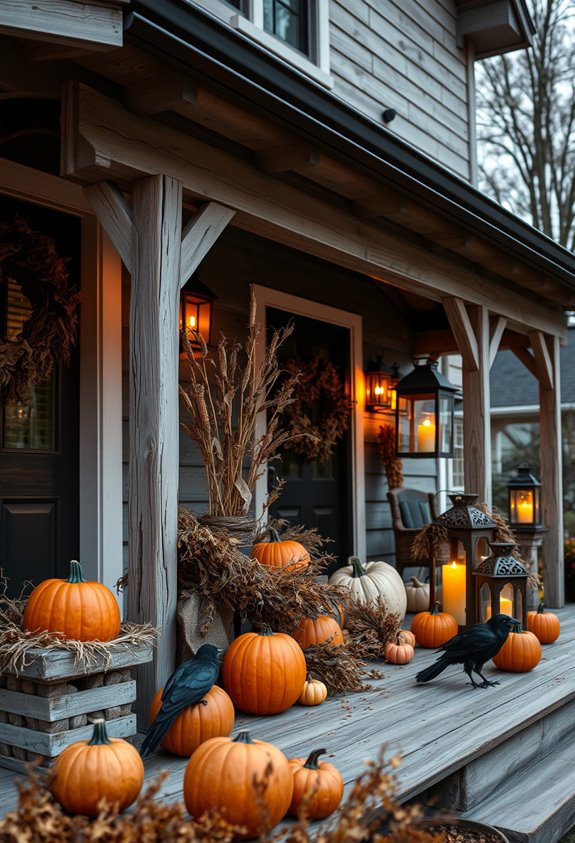
Once your color palette is locked in, the porch is where it actually proves itself. Start with structure. Hay bales, vintage benches, and reclaimed wood crates give you instant height and layering without spending a fortune. Stack pumpkins on them. Done.
Corn stalks frame your doorway with real harvest texture. Lanterns lined along the steps create that warm, welcoming glow that makes your porch feel intentional — not like a Halloween store exploded on it.
White gourds and natural-toned pumpkins keep everything calm and collected. Pair them with black stools or wooden trays. Cheesecloth draped over the doorway adds a ghostly touch that still reads handmade. Plastic spiders tucked into the weave? Surprisingly effective.
Try wrapping soft-sided pumpkins in buffalo check fabric and gathering them in a galvanized bucket for an instantly cohesive farmhouse moment.
Your porch should feel like it belongs to someone with taste. Make it that porch.
White and Painted Pumpkins Over Plastic Orange
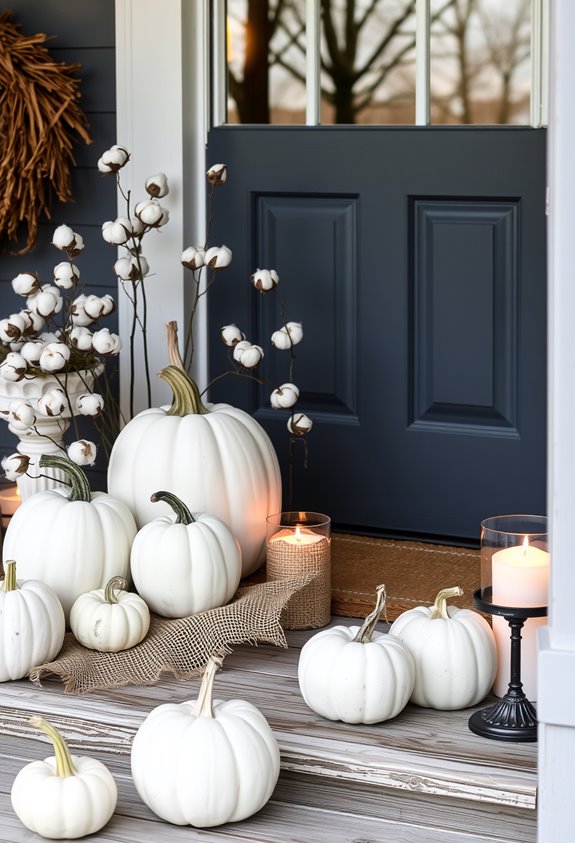
Plastic orange pumpkins are fine — if you enjoy looking like your porch was styled by a gas station.
The good news: white paint fixes everything. Start with a spray primer made for plastic, then layer on white chalk or spray paint. Expect three to four coats. Orange is stubborn.
Once you’ve got a clean white base, the real fun starts. Mix white with orange for a softer, more natural tone. Dry-brush highlights onto the raised ridges. Push darker shades into the grooves. Paint the stem brown or green. Add twine. Done. The result doesn’t scream “clearance bin.” It whispers “intentional.”
Neutral pumpkins also coordinate effortlessly with cream, tan, and muted green — basically the entire farmhouse color family. Reusable, too. Smart investment. Chalk paint is especially worth keeping on hand since it adheres to shiny plastic without needing a primer step at all.
How to Arrange Pumpkins in Crates, Urns, and Baskets
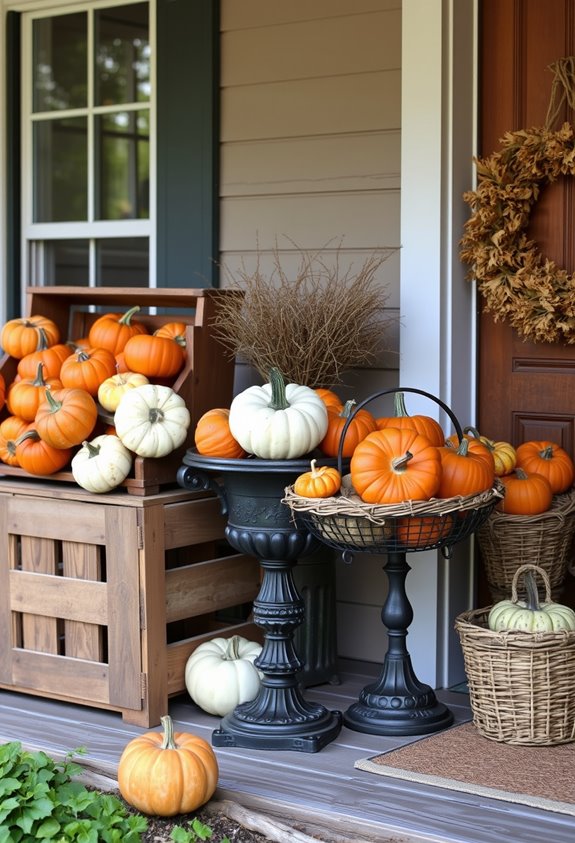
Grab three pumpkins — not two, not four — and you’re already ahead of most people. Odd numbers just work. Five works. Seven works.
Odd numbers are your secret weapon. Three pumpkins. Five pumpkins. Seven. Never four. Never two.
Two pumpkins side by side? That’s a sad little pair, not a display.
For crates, go vertical. Stack heights. Big pumpkins go back, small ones come forward.
Tuck in some foliage or dried stems to soften the wood edges. It matters more than you’d think.
Urns want drama. One oversized pumpkin, some dried hydrangeas or bittersweet around the base, and suddenly your entryway looks intentional.
Use broken paving stones inside for stability — nobody wants a toppled arrangement.
Baskets keep things compact and textured. Perfect for shelves or consoles.
Fill gaps with straw or berries. Tight groupings always look more curated. Always. Stuff a little tissue paper into the bottom of your basket to lift pumpkins higher and give the whole arrangement better presence.
Wood, Burlap, and Galvanized Metal as Farmhouse Halloween Anchors
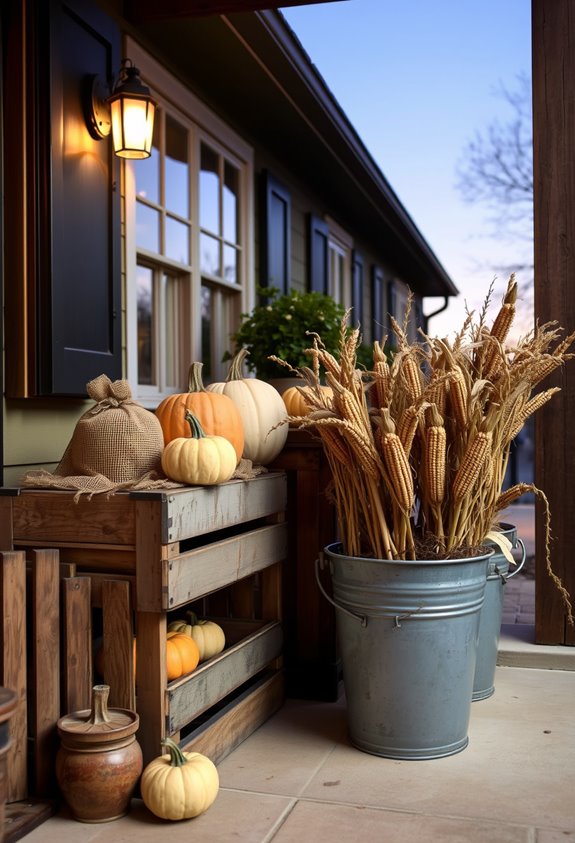
Three materials. That’s all it takes. Wood, burlap, and galvanized metal form the backbone of farmhouse Halloween styling, and honestly, they’ve earned that status.
Weathered wood sets the base — think barn boards, reclaimed crates, and fence slats that make everything feel collected, not purchased.
Burlap layers in softness. Its coarse texture warms up darker Halloween elements without turning your display into something you’d find at a discount party store.
Then metal steps in. Galvanized tubs, buckets, and lanterns add cool contrast against all that warmth.
Together, these three create something balanced — hard and soft, warm and cool. Imperfect finishes are the point. Distressed, frayed, weathered. That’s the look. Polished surfaces don’t belong here, and you already knew that. Simple materials like burlap, metal containers, and seasonal gourds can even transform front decks into genuine statements without overcomplicating the setup.
Crows, Skulls, and Cobwebs That Don’t Break the Farmhouse Feel
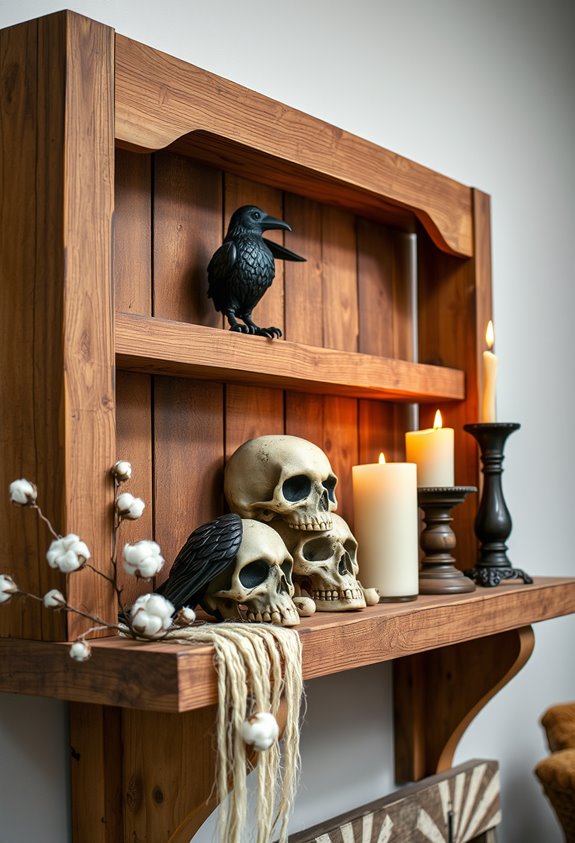
Once you’ve locked in your wood, burlap, and metal foundation, the next question is how to make things actually feel like Halloween without blowing up the whole aesthetic. Three words: crows, skulls, cobwebs.
Crows are a farmhouse Halloween staple. Perch a few on your mantel alongside white and light orange pumpkins. Done. They read spooky without screaming haunted house.
Skulls work the same way. Stage them on cutting boards, inside bell jars, or grouped with dried foliage. Paired with aged finishes and natural textures, they look refined. Not gory. There’s a difference.
Cobwebs are your secret weapon. Drape them lightly across mantels and door frames for subtle depth. Go dense, and things get properly eerie. Either way, the farmhouse palette stays intact. Spiders and rats pair naturally with cobwebs to round out the look without requiring much effort or expense. Think of them as the go-to investment items that show up year after year without losing their effect.
Lighting That Balances Cozy and Creepy in Farmhouse Halloween Spaces
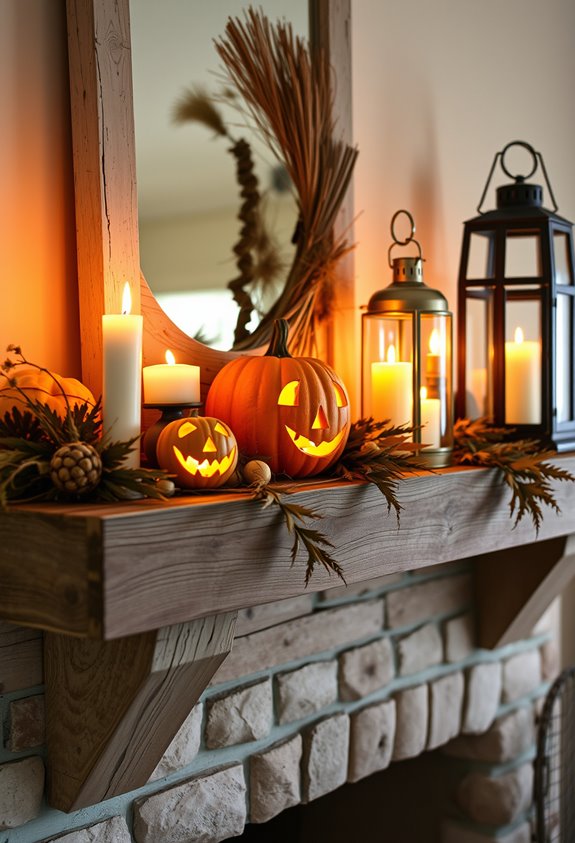
Getting the lighting right might be the most underrated part of farmhouse Halloween decorating. Stark white bulbs? Wrong move. You want warm amber, flame-effect, or warm white sources that keep things cozy without killing the spooky.
Lanterns are your anchor—black or weathered brass finishes, placed along steps or railings, doing exactly what they’re supposed to do. String lights belong draped through displays, not starring in them. Tuck fairy lights into mason jars. Wrap amber strands around wooden beams. Let candlelight hit the branches and pumpkins so shadows do the heavy lifting. Battery-operated candles earn their place anywhere open flames don’t belong.
Layer it all—overheads, lanterns, candles, strings—and you’ll get that balance everyone’s chasing. Cozy and creepy aren’t opposites here. They’re the whole point. For an extra sensory layer, try simmering apple cider with cinnamon sticks on the stove—it ties the whole atmosphere together in a way no bulb ever could.
Mantel, Shelf, and Small-Space Vignettes for Indoor Halloween Style
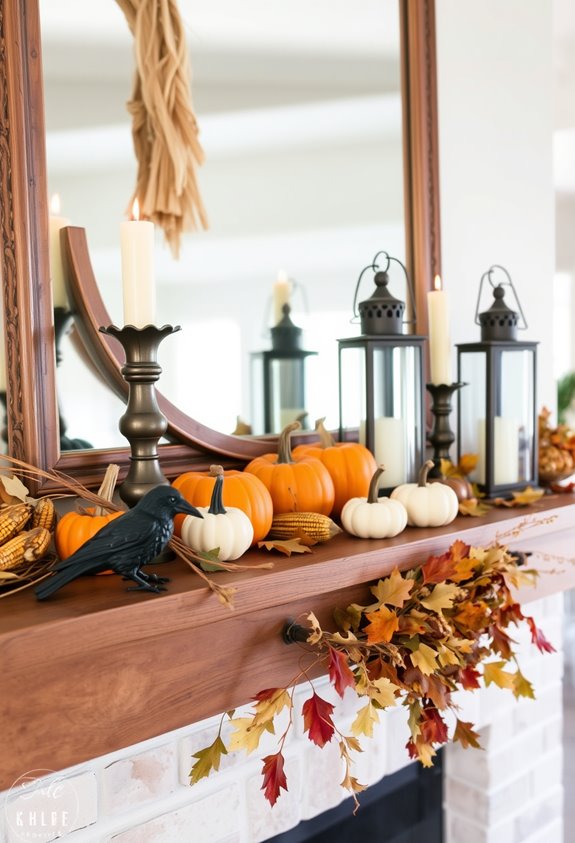
Mantels and shelves are where farmhouse Halloween either pulls together or falls completely flat. No pressure. Start with pumpkins as your base — stacked, clustered, or lined along the edge. Then layer in garlands, candles, and a focal point like a framed silhouette or farmhouse sign. Height variation matters more than most people realize. Mix candles, bottles, and pumpkins at different levels and watch the whole thing click.
Small shelves? Keep it tight. Mini pumpkins, apothecary jars, and black-and-white accents do the heavy lifting without crowding. Mason jars become lanterns. Old frames become spooky art. Repurpose what you have.
Loose garland draping reads farmhouse-casual. Uneven placement of witch hats or hanging bats adds movement. Balance heavier pieces with dried foliage or faux cobwebs. For a safer and equally atmospheric alternative, fill your unused fireplace with flameless candles of varying heights to create dimension without open flames. Simple, intentional, done.
Frequently Asked Questions
Can Farmhouse Halloween Decor Work Well for Apartment or Condo Living?
Yes, farmhouse Halloween decor works beautifully in your apartment or condo! You’ll love how white pumpkins, lanterns, and cozy textures create a warm, spooky vibe without overwhelming your space or clashing with your neighbors’ shared areas.
How Do You Store Rustic Halloween Decor Without Damaging Natural Materials?
Tuck your treasured pieces into breathable cotton bags and sturdy bins, keeping them off damp floors. You’ll wrap naturals in tissue paper, add silica packets, and label everything clearly so next season’s cozy setup feels effortless.
Are There Budget-Friendly Ways to Create Farmhouse Halloween Decor at Home?
You can absolutely create beautiful farmhouse Halloween decor on a budget! Raid thrift stores for vintage lanterns, repurpose wooden crates, and craft stick pumpkins with twine. Natural materials like gourds and burlap keep costs low while building that cozy, rustic charm everyone loves.
How Early in the Season Should Farmhouse Halloween Decorating Typically Begin?
You can start right after Labor Day with cozy fall basics like pumpkins and natural textiles, then layer in spooky farmhouse accents as October arrives—it’s a welcoming, relaxed approach that lets you enjoy every moment of the season.
Can Farmhouse Halloween Decor Transition Smoothly Into Thanksgiving Without Full Replacement?
Yes, it can! Imagine swapping your orange plates for white ones while keeping black chargers and pumpkins in place—you’ve instantly shifted to Thanksgiving. Your neutral farmhouse base makes both holidays feel effortlessly connected and warmly yours.
Conclusion
Farmhouse Halloween isn’t complicated. You’ve got your palette, your porch, your pumpkins — now pull it together. Like a good cast-iron skillet, this style works because it’s honest and unpretentious. Skip the cheap plastic stuff. Lean into wood, burlap, and candlelight. A few crows, a weathered crate, some white pumpkins — that’s genuinely it. You don’t need a lot. You just need the right things.