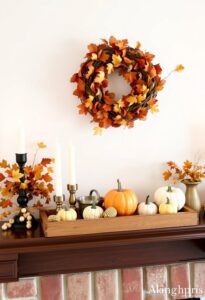
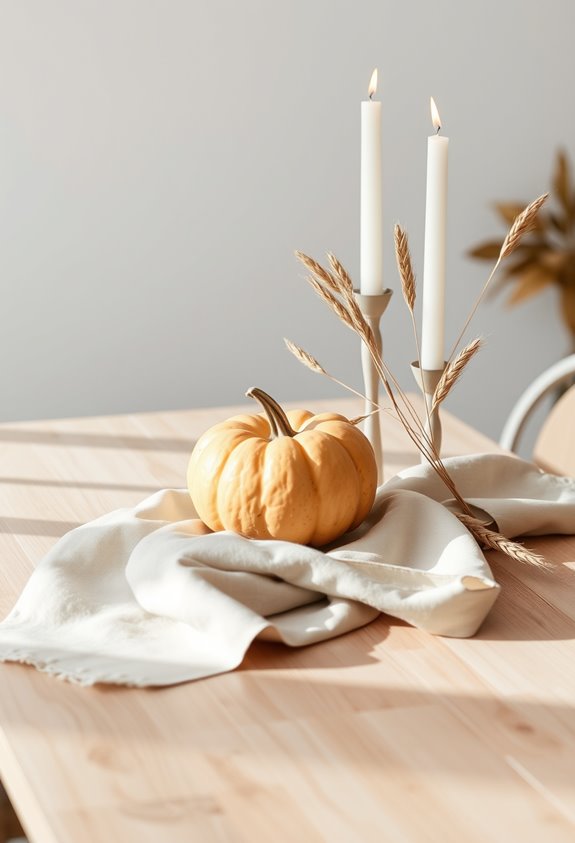
Minimalist hosts are winning Thanksgiving because they stopped buying stuff they don’t need. A neutral runner, a few candles, some greenery, and what’s already in your yard or kitchen—that’s genuinely all it takes. Fewer objects mean less visual chaos, better conversation, and more focus on the meal and the people around it. It sounds too simple to work. It isn’t. Keep going to see exactly how it all comes together.
Shop Your Home Before You Buy Anything New
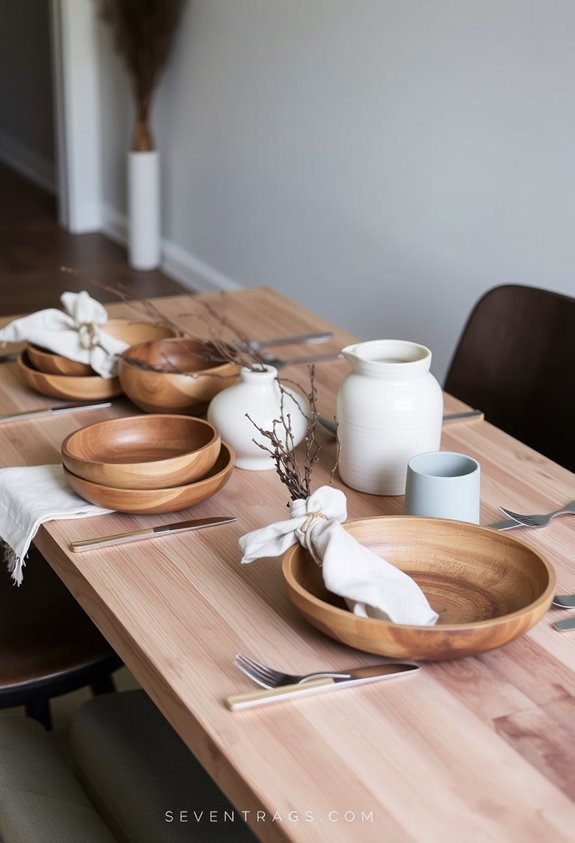
Before you drop a single dollar on new decor, walk outside. Seriously. Your yard is already holding materials most people would pay for. Cut a few leafy stems. Grab some dried flowers or interesting branches. Done. That’s your centerpiece.
Then raid your own house. That table runner you forgot about? Use it. Those mason jars collecting dust? They hold stems beautifully. Wooden bowls, linen napkins, candlesticks — you already own the good stuff. You just stopped seeing it.
Here’s the blunt truth: a cohesive Thanksgiving table doesn’t require a single new purchase. Your existing dishware, neutral serving pieces, and a few foraged branches will outperform most store-bought setups. The table you already have is enough. You just have to look. For place cards, grab a few large leaves, rinse them off, and write each guest’s name with a metallic permanent marker.
Use a Neutral Runner to Anchor Your Minimalist Thanksgiving Table
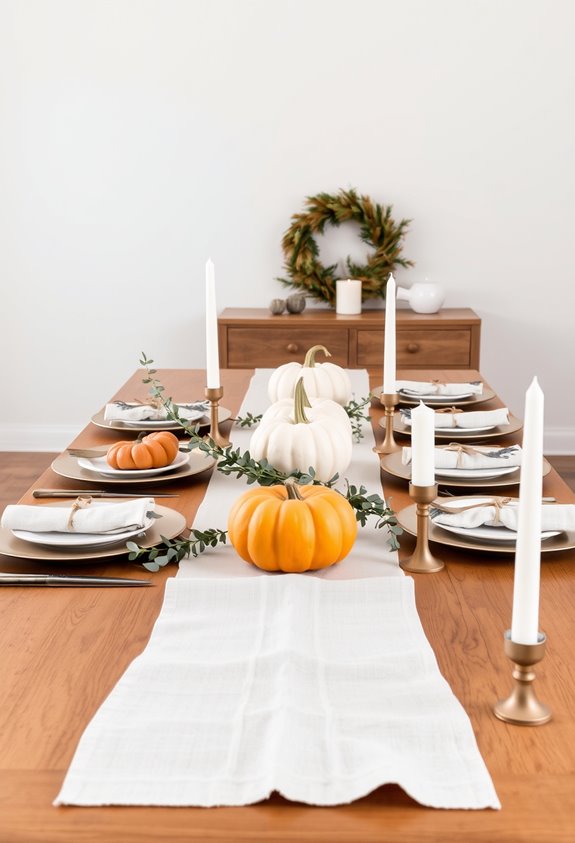
Once you’ve raided your home and gathered what you already own, you need something to pull it all together on the table. That’s where a neutral runner earns its place. Simple. Unfussy. Effective.
A linen or natural fiber runner adds texture without adding chaos. It anchors your centerpiece, frames the table, and lets the wood underneath breathe. That’s a design win, not a compromise.
Neutral tones — creamy whites, soft taupes, warm naturals — work with basically any table style. Modern, farmhouse, minimalist. All of them.
And here’s the thing: a neutral runner doesn’t compete with your food, your centerpiece, or your guests. It just holds everything together quietly. Which, honestly, is exactly what a good Thanksgiving table needs. Knotted napkins and imperfect plates can sit alongside it effortlessly, reinforcing that lived-in look without requiring any extra effort.
Let Candles Create Warmth With Staggered Heights
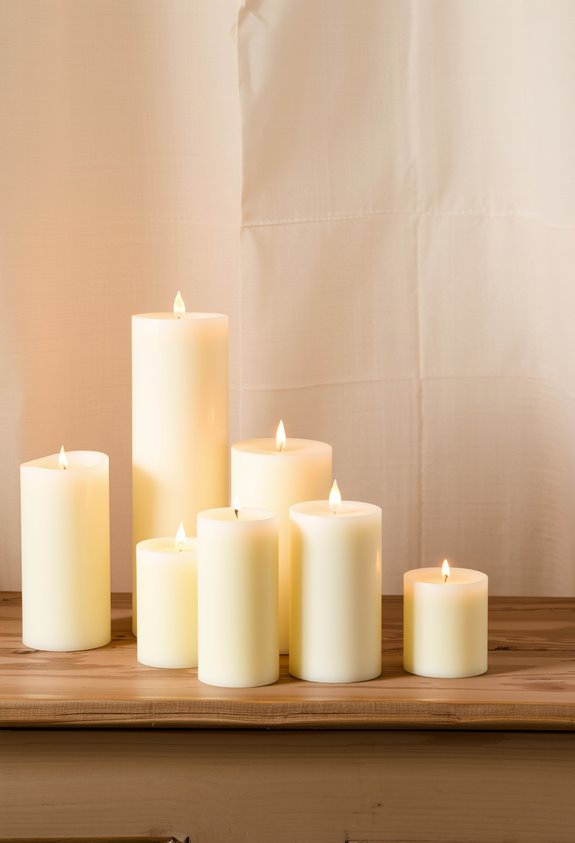
Candles do something no centerpiece arrangement can fake: they make a room feel alive. And you don’t need a lot of them. Just vary the heights. A short candle, a medium one, a taller one — suddenly your table has depth without trying too hard. Sets often come in coordinated height groups, like 2, 6, and 8 inches, so the guesswork is already done for you.
Keep everything low enough that guests can actually see each other. That’s non-negotiable at a shared meal. Stagger the arrangement so nothing blocks sightlines. Mix ivory, off-white, and white for a softer, cohesive look. Keep real flames away from greenery — or just use LED candles. Either way, the warmth is real. The glow does the work. Flameless candles are available in various sizes, shapes, and holders, making it easy to find options that suit any Thanksgiving theme without compromising your minimal aesthetic.
Skip the Flowers and Use Greenery Instead
That warm glow on your table is a great start — but it’s only half the picture.
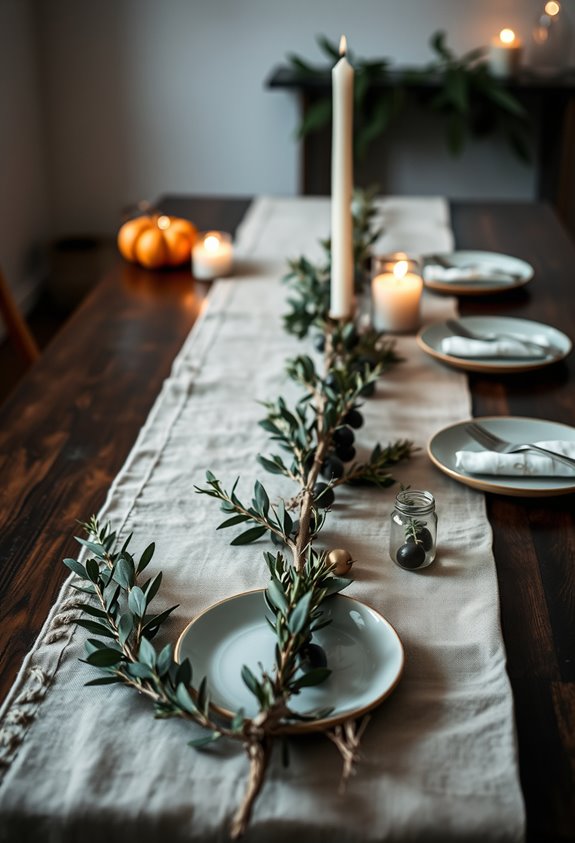
Flowers are overrated. There. Said it. A simple bundle of eucalyptus or a few olive branches does more for a minimalist table than a fussy floral arrangement ever could. Greens are quieter, cleaner, and they don’t compete with everything else you’ve set up.
Lay them loosely down the center as a runner. Tuck small sprigs into napkins. Use a shallow bowl with odd-numbered groupings for a low, easy centerpiece.
Foraged branches from your yard cost nothing. Cut greens from a grocery store cost very little. Either way, you’re getting a natural, sculptural look that pairs perfectly with linen, wood, and stoneware. Seeded eucalyptus works especially well as a primary greenery because it’s affordable, widely available, and adds subtle texture without overwhelming the table.
Simple works. Greenery proves it.
Scatter Pinecones, Gourds, and Seasonal Accents Low Across the Table
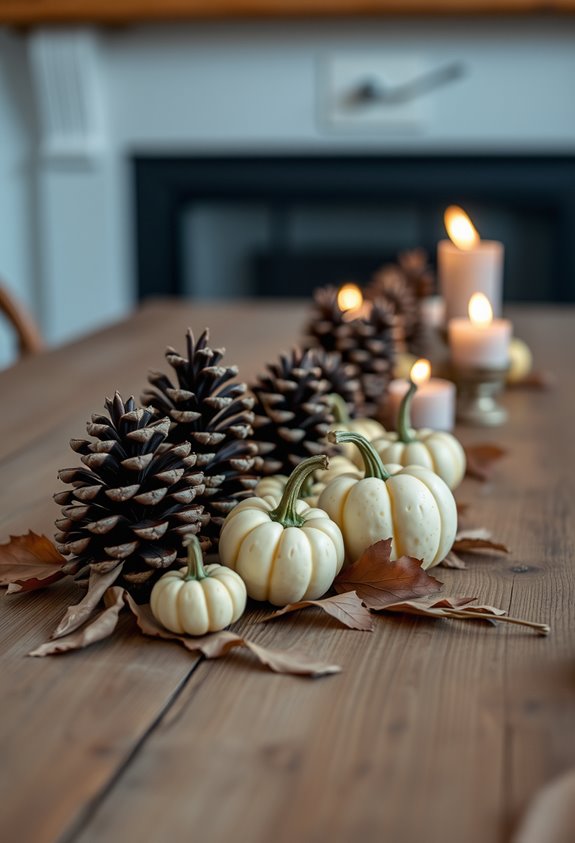
Greenery on the table is a solid foundation — now pile on. Grab some pinecones, small gourds, and mini pumpkins and scatter them low down the center of your table. That’s it. No towering floral arrangement blocking Aunt Carol’s face across the table. Just a loose, relaxed runner of textures that actually lets people see each other. Revolutionary, right?
Mix in dried wheat, cinnamon sticks, and a few fall leaves to fill gaps without adding height. Tuck in some tea lights or amber jars for warmth. Cluster the gourds first, then surround them with pinecones and smaller accents. Keep it full but not chaotic. The goal is a table that feels intentional and seasonal — without looking like you raided a craft store at midnight. For an extra layer of visual interest, try adding eucalyptus and whitewashed pumpkins alongside the dried gourds for a neutral, sophisticated finish.
Make Fruit and Vegetables the Centerpiece
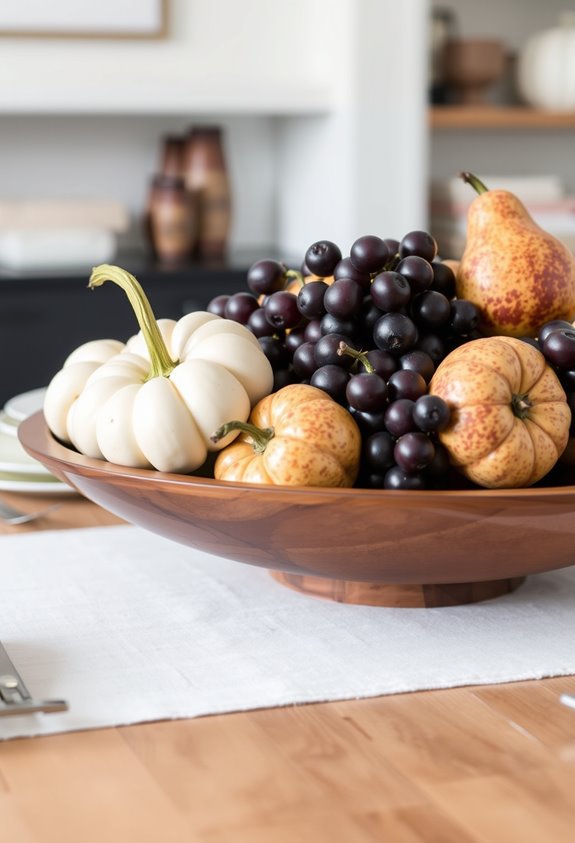
Once you’ve got the table scattered with gourds and pinecones, here’s a thought: skip the florist entirely. Fruits and vegetables do the heavy lifting here. Red pears, purple grapes, cranberries, artichokes, persimmons — they’re already bringing color, texture, and structure. No extra purchases necessary.
Skip the florist. Fruits and vegetables bring the color, texture, and structure — no extra purchases necessary.
The best part? You’re probably buying this stuff anyway. Use it twice. Display it, then cook it. That’s just smart.
Go monochromatic for a modern look. Mix burgundy, deep green, and purple for something moodier. Pair complementary colors intentionally — orange peppers with orange flowers, for example — and suddenly your centerpiece looks designed, not accidental.
Keep arrangements low. Sightlines matter. Nobody wants to make eye contact with a basket of kale at Thanksgiving. Well, mostly nobody. Use an oversized cutting board as your base, layering lettuce over crumpled newspaper in the center to build height before piling on your produce.
Tie One Small Detail Around Each Napkin
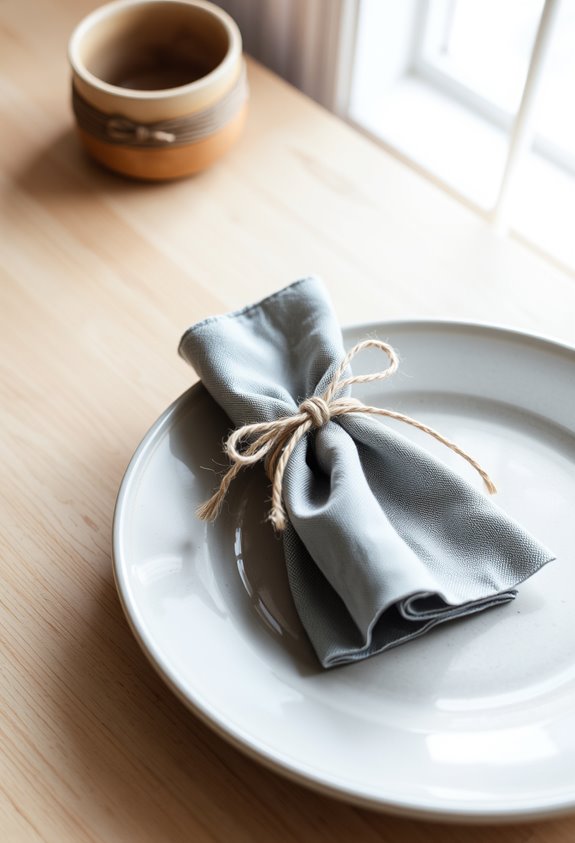
Forget elaborate folding. You don’t need origami skills to make your table feel intentional. Tie one small detail around each napkin — twine, ribbon, done. That’s it. Position the tie about two-thirds up a rolled napkin for a balanced silhouette that actually looks like you planned it. Because you did.
Now add something seasonal. A rosemary sprig. A cinnamon stick. A tiny pinecone. These small touches connect everyone at your table to the same moment, the same season. That sense of shared belonging? It’s powerful, and it costs almost nothing.
Keep every place setting consistent. Same tie, same detail, same vibe across the whole table. Cohesion is the goal. Natural materials like herbs and twine stay minimal without looking lazy. Fast to assemble, too. For the cleanest results, coordinate your napkins with your table runners and placemats to pull the whole look together.
Make It Meaningful With a Gratitude Jar or Leaf Display
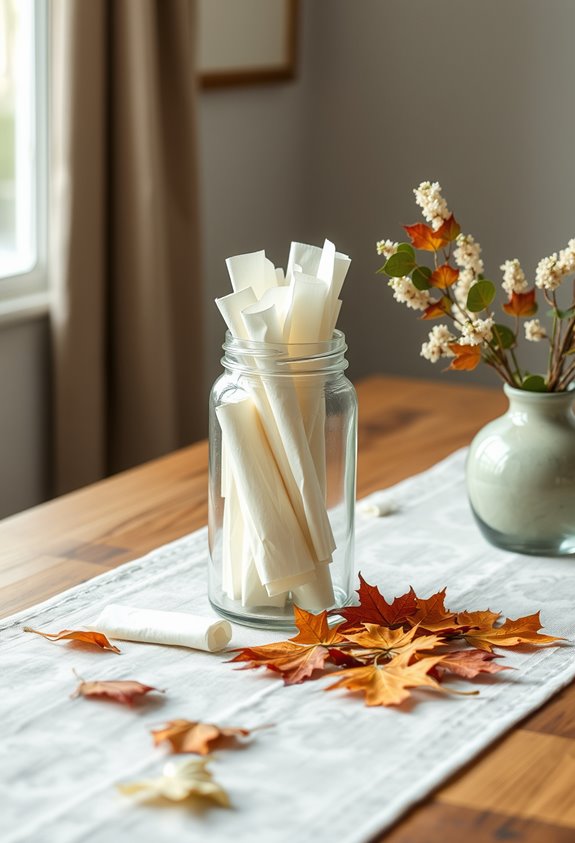
A gratitude jar is one of those ideas that sounds corny until you’re actually sitting there reading slips of paper out loud and someone tears up. Then it’s not corny anymore. It’s the whole point.
Some ideas sound corny until they make someone cry. That’s when you know they were never corny at all.
Here’s how it works: you set out a mason jar, some slips of paper or leaf-shaped cutouts, and a few pens. Guests write what they’re grateful for and drop it in. That’s it. No complicated setup, no expensive kit required.
Leaf-shaped notes add an autumn feel and double as table decor. Some families turn the reading into a guessing game, where guests try to guess who wrote each card and the correct guessers earn small prizes or bragging rights. Others save the jar as a keepsake.
It’s low-cost, low-clutter, and quietly powerful. One jar. One pen. Genuine connection. Minimalism doesn’t get more meaningful than that.
Why a Minimalist Thanksgiving Table Looks Better Than a Crowded One
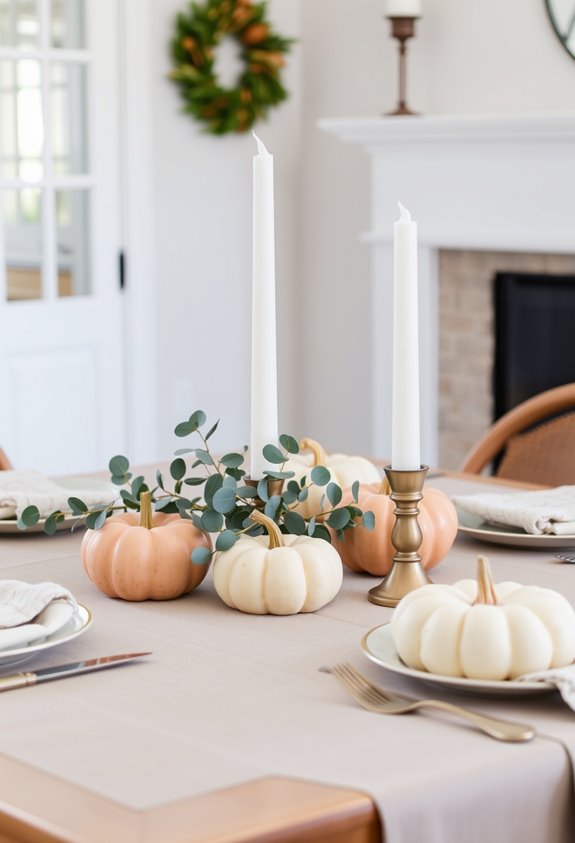
There’s a reason your eye goes straight to the food at a well-set minimalist table — and it’s not an accident. Fewer objects mean fewer distractions. Simple math, really.
When you strip away the excess, something interesting happens. The meal becomes the star. Your guests become the focus. Conversation flows because nobody’s craning around a towering centerpiece wondering what it’s supposed to mean.
Neutral palettes pull everything together without drama. White plates, clean silverware, clear glasses — they just *work*. Natural textures like linen and stoneware make sparse settings feel intentional, not lazy. Big difference.
Meanwhile, the overcrowded table? It’s visually exhausting. Candles, calm colors, and open space create warmth without chaos. Less clutter, clearer focal point. That’s not minimalism being boring — that’s minimalism winning.
Simple white dishes and a linen runner keep decor minimal and let the food remain the undisputed centerpiece of the entire meal.
Frequently Asked Questions
What Color Palette Works Best for a Minimalist Thanksgiving Table?
Ivory, taupe, and charcoal. That’s your sweet spot. You’re working with a light base, a mid-tone neutral, and one dark anchor — done.
Warm white plus greige plus deep green also works if you want subtle seasonal richness without going full Pinterest-nightmare.
Keep your accent to one color, max. Assign each color a role. Background, surface, text. That’s it. More than five colors and you’ve already lost the minimalist plot.
Which Materials and Textures Suit a Minimalist Thanksgiving Setup Most Effectively?
Linen, wood, and matte ceramics. That’s your trio. While everyone else drowns their tables in plastic gourds and glitter, you’re layering raw-edged linen with light wooden chargers and stone-finish bowls. It’s quiet, but it hits harder.
Rough textures beside smooth ones create contrast without chaos. Toss in frosted glass candle holders or a few branches. Simple. Refined. You’re not trying too hard — and that’s exactly the point.
Where Can You Find Affordable Minimalist Thanksgiving Decor on a Budget?
You don’t need to spend much. Seriously. Start with what you’ve already got — glassware, linens, serving boards.
Free stuff is everywhere: fallen leaves, pinecones, yard branches. Dollar stores carry candles, small pumpkins, and ribbon for next to nothing. Thrift stores? Gold mines for vases and trays. Craft stores round it out for DIY place cards.
Your backyard and your cabinets are basically a free decor aisle. Use them.
How Many Decorative Pieces Should a Minimalist Thanksgiving Table Actually Include?
Think of your table like a well-edited story — every character earns their place, or they’re cut. You’re aiming for 3 to 5 decorative pieces.
That’s it. One focal centerpiece, two to four small supporting accents. Done.
Odd numbers — three, five, seven — work best visually. Even numbers look staged.
More isn’t better here. Negative space *is* the design. A crowded table isn’t minimalist. It’s just a crowded table.
Can Minimalist Thanksgiving Decor Still Feel Warm and Seasonally Appropriate?
Yes, absolutely. Minimalist Thanksgiving decor can feel incredibly warm and totally seasonal. You don’t need a cluttered table to feel the fall vibes. Texture, soft lighting, and natural materials do the heavy lifting.
Think linen, wood, candles, and a few burnt orange or rust accents. Toss in some mini pumpkins or dried wheat stalks. Boom. It’s autumn. Simple doesn’t mean cold. It means intentional. You’ll actually *feel* the warmth more.