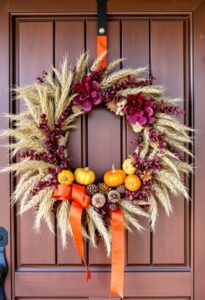
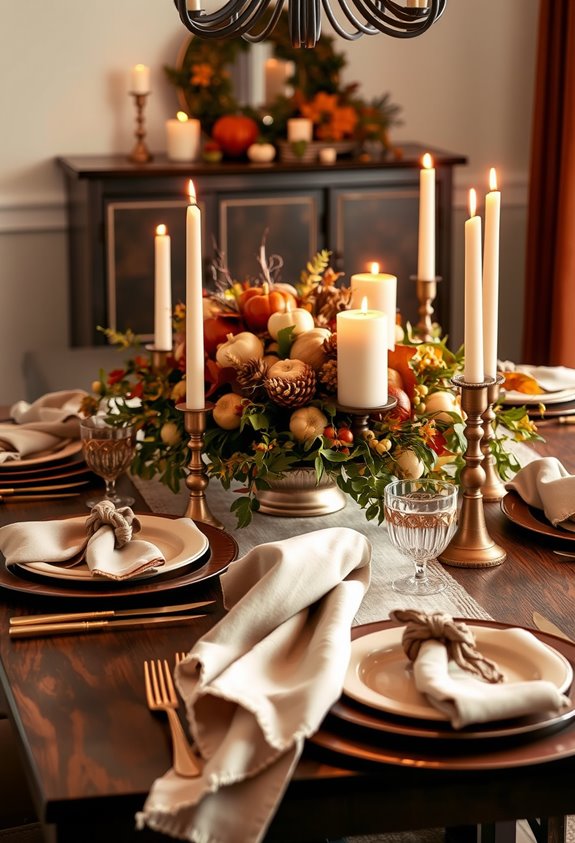
The best Thanksgiving tables share nine elements because each one solves a real problem — clutter, awkward sightlines, mismatched chaos. You’re not decorating randomly; you’re building a system. Strong linens anchor everything. A low centerpiece keeps conversation alive. Candles create warmth without killing your appetite. Natural textures signal the season without screaming it. Every element earns its spot or gets cut. Turns out, restraint is the whole secret — and there’s a lot more to unpack here.
Start With the Right Linens for Your Thanksgiving Table
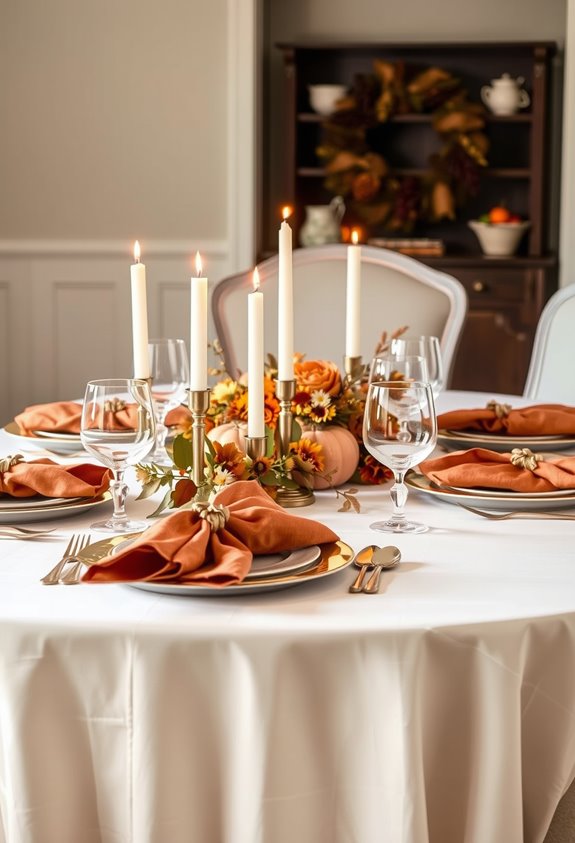
Before anything else hits the table — the centerpiece, the candles, the carefully arranged place settings — the linens go down first. That’s not an accident. It’s the foundation. Get it wrong, and everything stacked on top looks off.
Your tablecloth sets the visual frame. A runner anchors the center. Napkins complete each place setting. Together, they tell everyone at that table that you actually thought this through.
Cotton and linen fabrics are popular for good reason — they’re washable, durable, and they hold up through the chaos of a real Thanksgiving meal. Autumn motifs, warm tones, harvest prints. Classic or casual. Either works.
The point is coordination. Matching sets exist because cohesion matters. Your table should feel intentional. Like you belong there. Designers like Bruno Lamy have spent over 25 years perfecting the art of hand-block printed linens to bring that kind of intentionality to the table.
How to Choose a Fall Color Palette That Works
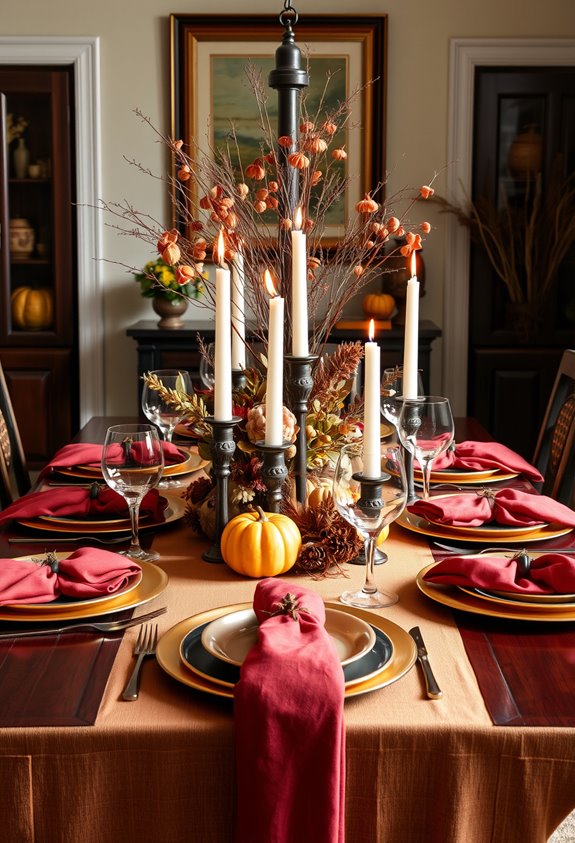
Once the linens are down, color becomes your next decision — and it’s not as simple as grabbing whatever looks “fall-ish” at the store. A cohesive palette needs structure.
Here’s what actually works:
- Start warm. Cream, taupe, or camel as your base keeps everything grounded and seasonal.
- Go muted. Sage, olive, and rust beat anything bright or saturated. Low saturation reads elegant, not chaotic.
- Pick your depth. Dramatic table? Lean into burgundy and dark olive. Softer vibe? Fig, taupe, and blush do the job.
- Limit the palette. Two neutrals plus one accent. That’s it. More than that and you’ve got a mess. For maximum harmony, try pairing complementary tones like aubergine with teal rather than forcing colors that fight each other.
Cohesion isn’t accidental. It’s intentional. Keep it tight and everything else falls into place.
Why Chargers and Placemats Belong in Every Thanksgiving Place Setting
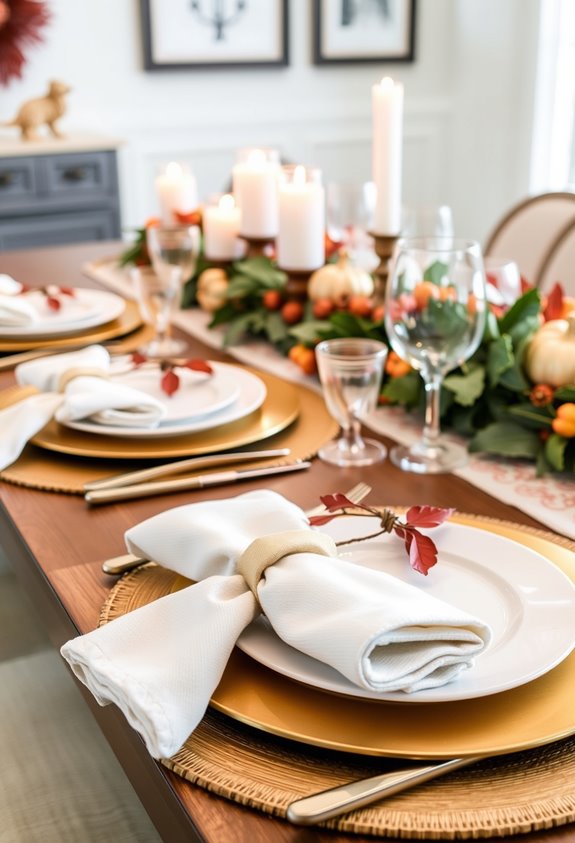
Chargers are large decorative plates—13 to 15 inches—that sit beneath your dinner plate. They add depth, color, and structure. They also protect your tablecloth from spills before the meal even starts.
Placemats do similar work: they define each guest’s space, protect surfaces, and add texture. Together, they create dimension that makes your table feel intentional and complete.
Here’s the blunt truth: skipping both makes your table look unfinished. Using one is fine. Using both? That’s how you signal to your guests that this meal actually matters. Chargers should be placed 1 inch from the table edge, centered in front of each seat.
What Makes a Thanksgiving Centerpiece Actually Work?
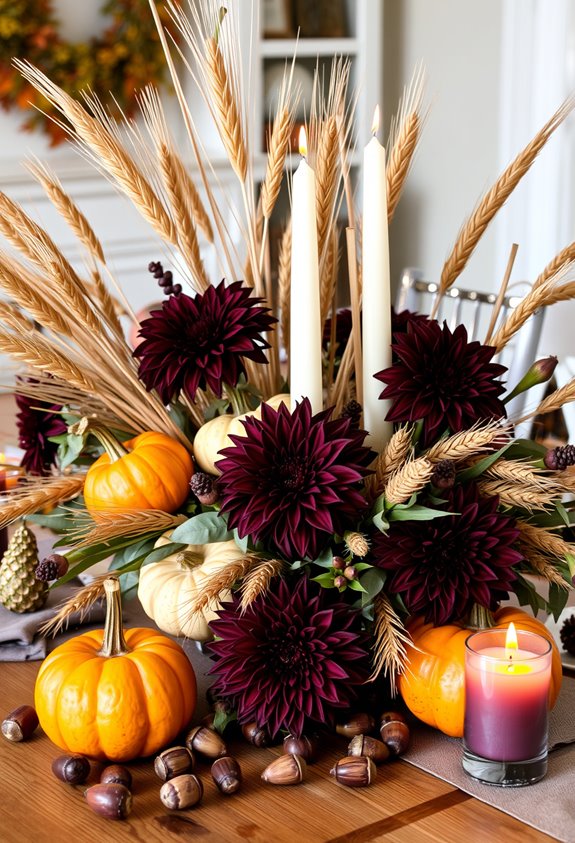
Now that your place settings have structure, let’s talk about what’s sitting in the middle of it all. Your centerpiece isn’t decoration. It’s a decision.
Here’s what actually makes it work:
- Stay low. Guests need to see each other. A towering arrangement kills conversation fast.
- Match your table shape. Round table? Round arrangement. Rectangular? Go long and narrow.
- Anchor it first. Start with one large focal element, then build around it.
- Layer your textures. Gourds, dried florals, pinecones, wood vessels — mix them deliberately.
Stick to one coordinated color story. Orange, amber, plum, dusty ochre — pick a direction and commit. Too many competing hues just create chaos nobody asked for.
Keep it seasonal. Keep it grounded. Keep it functional. If you’re using candles, always opt for unscented so they don’t compete with the aroma of the food.
Natural Elements That Make a Thanksgiving Table Feel Like Fall
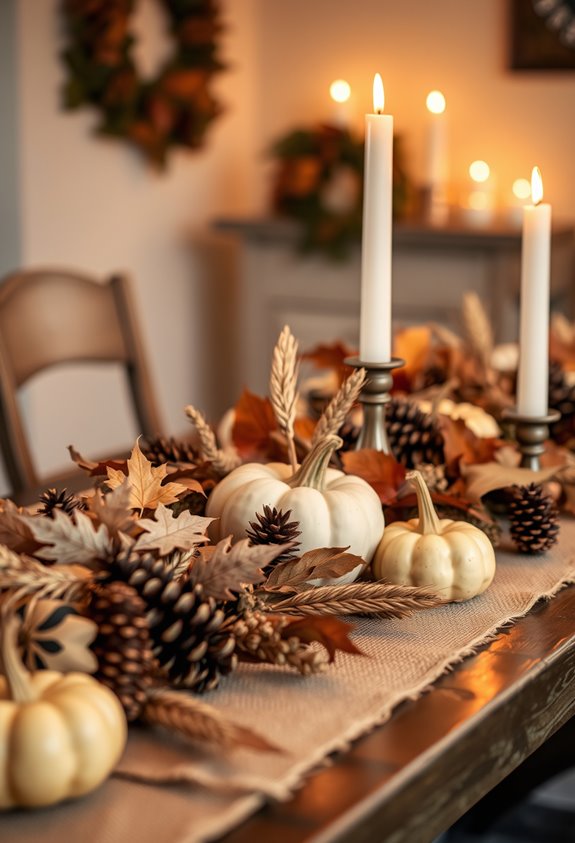
The best Thanksgiving tables don’t come from a big-box craft store — they come from outside. Literally. Mini pumpkins, gourds, heirloom pumpkins, apples, pears — these aren’t just decorations. They’re signals. They tell everyone at your table that the season actually means something.
Branches cut from the yard add height. Eucalyptus, magnolia leaves, and oak branches create that layered, organic look you can’t fake with plastic. Greenery runs the length of the table like a runner, tying everything together without trying too hard.
Then come the small things. Pinecones, acorns, unshelled nuts — scattered around centerpiece bases, tucked into bowls, filling gaps. They make the table feel abundant. Gathered. Real.
Dried hydrangeas and fall florals pull it all together. Texture does the work here. Always. Arrange everything on a large cutting board or rustic tray to ground the display and give the centerpiece a cohesive, intentional base.
How to Build a Place Setting That Looks Intentional
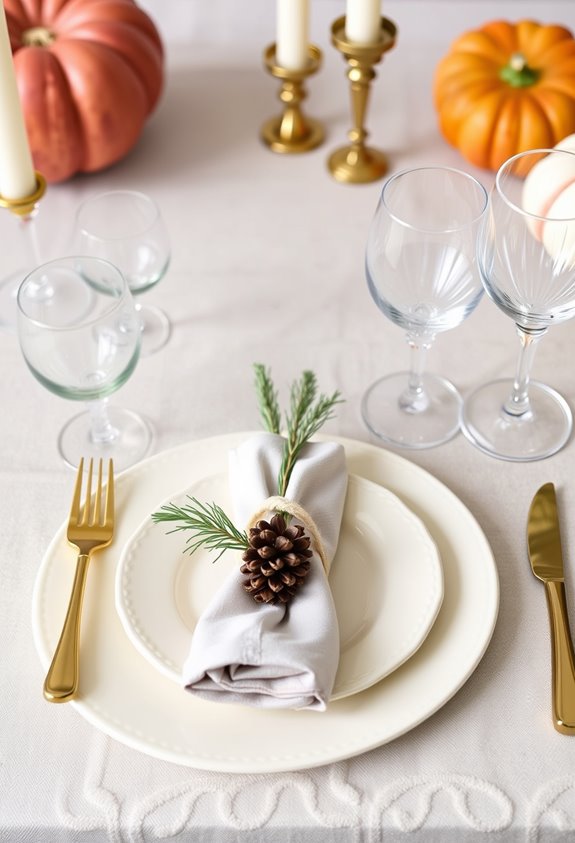
Once you’ve got the table looking like a forest floor in the best possible way, it’s time to think about what actually sits in front of each guest.
A place setting either looks intentional or it doesn’t. Here’s how to get it right:
- Center the dinner plate about 1 inch from the table edge.
- Place forks on the left, knives on the right with blades facing inward.
- Position glassware directly above the knife, upper right.
- Fold the napkin neatly on the plate or beside the forks.
Consistency across every seat matters. A lot.
Negative space isn’t wasted space — it’s design. Keep materials coordinated, surfaces polished, and decorative elements from crowding the setting.
Everyone deserves a seat that feels like it was set just for them. Balance, harmony, and intention are the foundation of every well-set table, and when those three things align, guests feel the care before the meal even begins.
Candles That Set the Right Mood Without Competing With Food
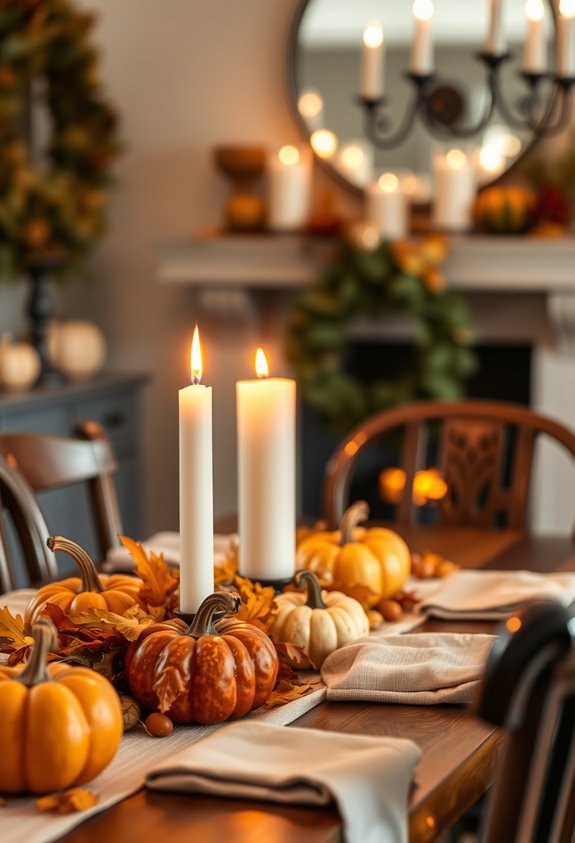
Candles can make or break a Thanksgiving table, and most people get them wrong. Strongly scented candles at the dinner table? That’s a hard no. Keep the table itself fragrance-free so your pumpkin pie can actually shine. Save the cinnamon-vanilla situation for the entryway or mantel.
Color matters too. Amber, burnt orange, deep red, ivory — these warm autumnal tones belong here. They blend naturally without screaming for attention.
Don’t go flat, either. Mix tapers, votives, and pillars. Vary the heights. Stagger the placement down the center so nobody’s staring at a wax wall during conversation.
The goal is simple: a soft, flickering glow that makes everyone feel like they belong at this table. That’s the whole point. Taper candle holders work especially well when staggered heights are used, keeping the centerpiece low enough that guests can actually see each other across the table.
Napkin Folds, Place Cards, and Details That Finish the Table
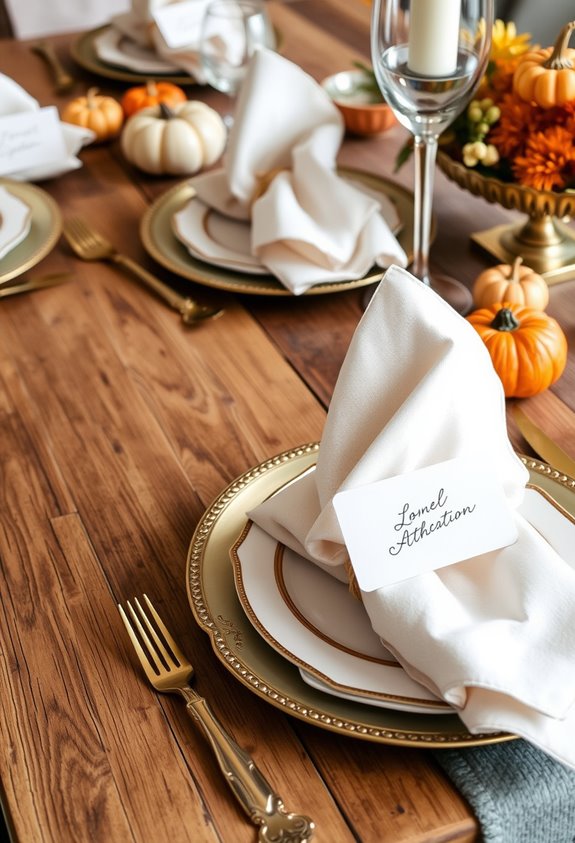
Start with napkins. A folded napkin isn’t just functional — it signals that someone actually cared. That matters more than you’d think.
A folded napkin says what a perfectly cooked dish sometimes can’t — that someone genuinely cared you were there.
Here’s what finishes a Thanksgiving table properly:
- Structured napkin folds that hold their shape through multiple courses
- Cloth napkins in warm, neutral tones that support the seasonal palette without fighting it
- Place cards with names or a single word like “Thankful” — minimal, personal, effective
- Small natural accents like pinecones, pears, or dried leaves tucked near each setting
These details don’t just look good. They create order.
Guests arrive, find their spot, feel welcomed. The table feels *complete*, not just set. Small things. Big difference. Don’t skip them. A fallen leaf at each plate, marked with a name in metallic marker, doubles as both décor and a place card in one effortless step.
How to Style a Thanksgiving Table Without Overdoing It
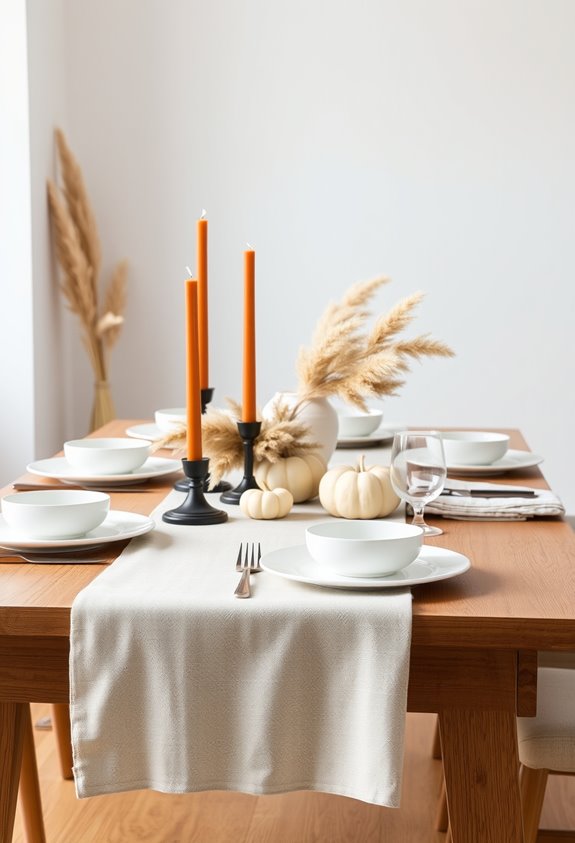
The easiest way to ruin a Thanksgiving table is to keep adding things. More isn’t more. It’s just more. Start with a strong foundation — a tablecloth, a runner, something that grounds the whole look. Then build up from there with purpose. Every item should earn its spot.
Keep your palette tight. Two or three colors plus one accent. That’s it. White dinnerware works with almost anything and keeps the table from feeling chaotic. Your centerpiece stays low — under 12 inches — so people can actually see each other.
Here’s the blunt part: leave space. Empty surface isn’t failure. It’s intention. Guests need room to serve themselves and breathe. Edit before everyone arrives. A table that looks designed feels like belonging. A table that looks stuffed feels like stress. Finish the look with taper candles at varied heights to add depth and a lived-in sense of warmth without crowding the surface.
Frequently Asked Questions
How Far in Advance Can I Set up My Thanksgiving Table?
You can set up most of your Thanksgiving table days ahead. Shocking, right? Plates, flatware, chargers, runners, and folded napkins? Done early. No stress.
But fresh flowers, fruit, and herbs? Those wait until closer to the meal — they’ll wilt, rot, or just look sad otherwise. Keep the table undisturbed, and you’re golden. A buffet setup elsewhere also helps protect your early work. Plan smart. Execute early.
What Are the Best Ways to Protect a Tablecloth From Spills?
Start with a waterproof runner under your tablecloth. That’s your first line of defense.
Layer placemats and chargers to create extra barriers where dishes sit.
Keep absorbent napkins nearby because spills happen fast. Real fast.
A table runner down the center protects the highest-traffic zone.
Position drinks away from centerpieces so one accidental knock doesn’t become a disaster.
Fast response matters more than you’d think — liquids spread quickly.
Can Outdoor Thanksgiving Tables Use the Same Styling Principles Indoors?
Yes, you absolutely can. The same principles apply: layered textures, natural materials, warm colors, and coordinated place settings. Outdoors just demands a few smart swaps.
Use durable textiles instead of delicate ones. Keep centerpieces low and anchored. Swap open flames for lanterns or flameless candles. Wind doesn’t care about your aesthetic. Neither does a rogue gust. But the core design logic? It travels outside without losing anything.
How Do I Style a Thanksgiving Table for a Very Small Space?
Small tables host big memories. Start with a neutral table runner — skip the full tablecloth. Keep place settings simple: basic plates, clear glasses, everyday silverware. Your centerpiece shouldn’t exceed 12 inches tall. Swap one large arrangement for small bud vases. Add candles in a tight, low cluster. Move serving dishes to a side table. Less really is more here. You don’t need more space — just smarter choices.
What Budget-Friendly Sources Carry Thanksgiving Table Decor and Linens?
You don’t need a big budget. Dollar stores, Target, Walmart, and Hobby Lobby carry affordable decor and linens.
Thrift stores and yard sales? Goldmines for candle holders, vases, and unique accents.
Grocery stores double as decor sources — grab pumpkins, apples, and squash.
Craft stores stock ribbon, burlap, and contact paper cheaply.
And honestly, your own home’s jars, bottles, and glassware work perfectly. Free stuff from your yard works too.