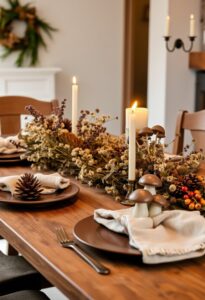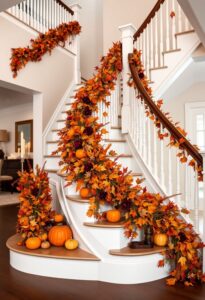
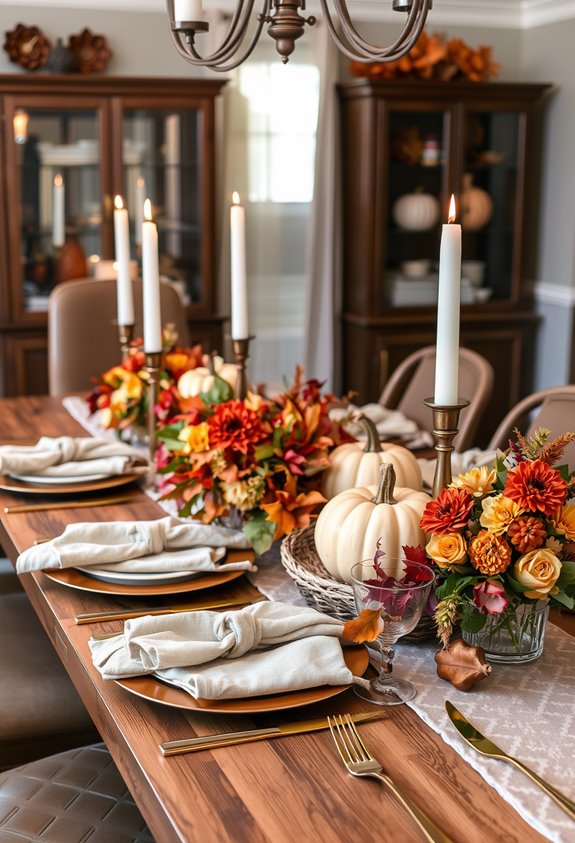
Your Thanksgiving table doesn’t set itself, and skipping the details shows. A tablecloth anchors the whole look before anyone sits down. Your color palette drives every other decision. Silverware placement, centerpiece height, candle groupings — none of it’s arbitrary. Place cards tell guests they were actually considered, not just crammed into a seat. Get these nine touches right, and the table does the work for you. There’s more to unpack on every one of them.
Start Your Thanksgiving Table With the Right Tablecloth
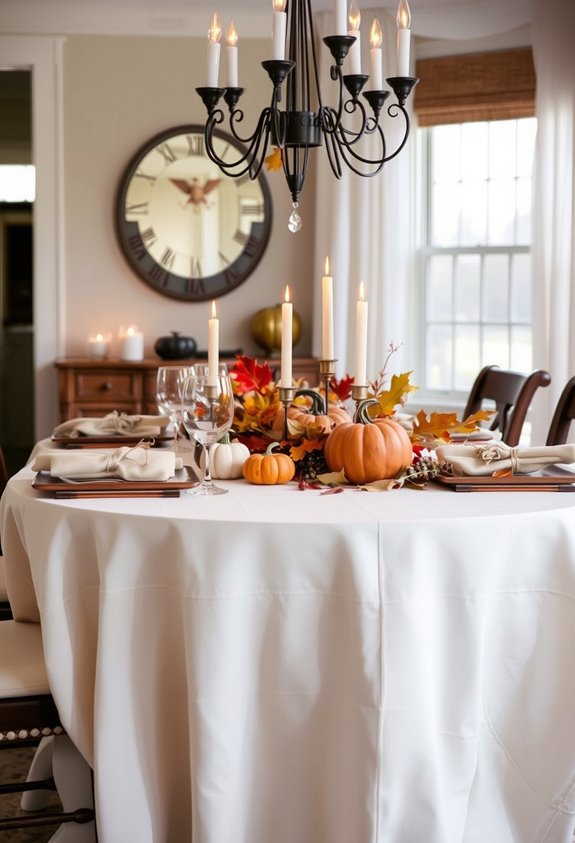
Everything starts with the tablecloth. Not the centerpiece. Not the fancy dishes your grandmother swears by. The cloth. It anchors everything else — dishes, glassware, centerpieces — into something that actually looks intentional. Without it, you’ve just got stuff sitting on a table.
The right tablecloth signals something. It tells your guests this meal matters. It sets the tone before anyone’s even pulled out a chair. Formal, festive, warm — the cloth does that work quietly.
And yes, practicality counts here. Thanksgiving is messy. Stain-resistant fabrics, washable textiles, darker patterns — these aren’t boring choices, they’re smart ones. A tablecloth also softens the table surface and muffles the clatter of plates. It’s doing more than you think. Choose wisely.
Pick a Thanksgiving Color Palette Before Anything Else
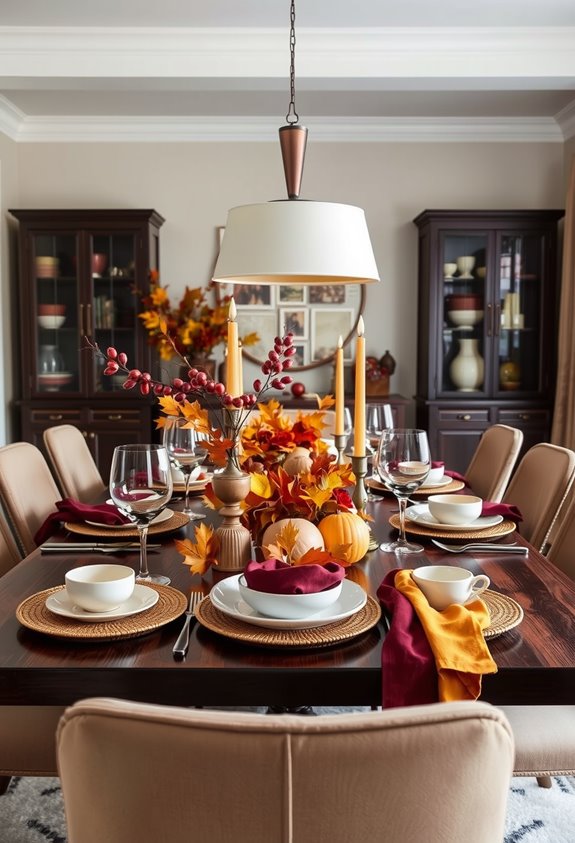
Once you’ve got your tablecloth sorted, the next call is color. Pick your palette before you buy a single candle. Seriously. Everything else follows from this decision.
Pick your palette before you buy a single thing. Everything else follows from that one decision.
Classic Thanksgiving leans into orange, red, yellow, and brown — harvest imagery that’s been working for generations. Don’t fix what isn’t broken. But if that feels tired, go moody. Navy, charcoal, and plum create something more intimate. Deep teal works too. No strict rules exist here.
Start with one hero color. Add two or three supporting tones. Keep your ratio tight — roughly 50% hero, 30–35% supporting, 15–20% accents. Gold metallics bridge traditional and modern effortlessly.
Here’s the part people skip: test your colors first. Linens, dishes, candles, florals — they all interact. Repeat your palette consistently, and the whole room clicks together. Bold jewel tones like emerald, fuchsia, and burgundy are worth considering if you want depth and drama without defaulting to traditional fall shades.
Layer in a Runner for Texture and Protection
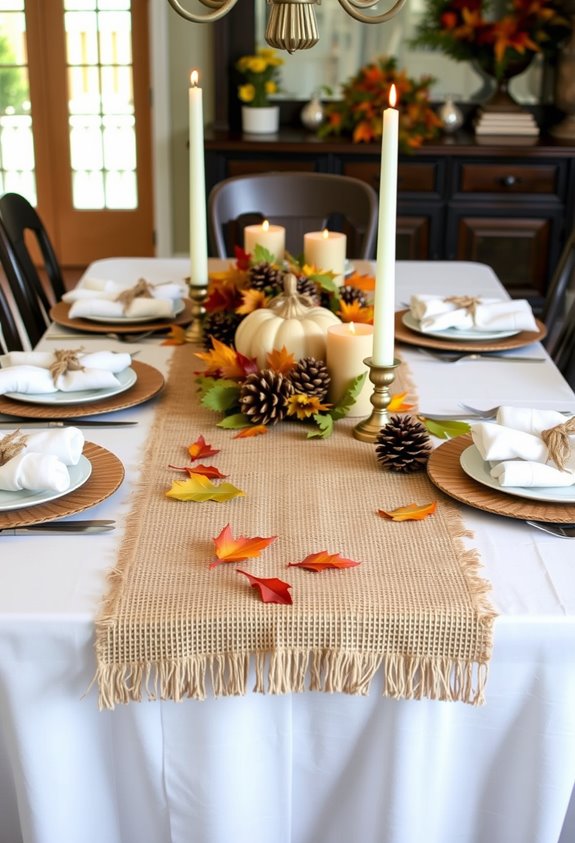
On top of your tablecloth, a runner does two things at once — it adds texture and protects your table.
Simple as that.
It guards against scratches, spills, and hot dishes while pulling your whole tablescape together.
You don’t need a complicated setup to make it work.
Pick the right material for your vibe:
- Burlap or jute for a rustic, harvest-style feel
- Velvet for something more formal and luxurious
- Polyester blends for stain resistance and easy cleanup
- Linen for a timeless, understated look
Layering a patterned runner over a neutral cloth instantly creates polish.
Reversible runners give you extra flexibility.
And if you’re using burlap? Layer it over cotton to cut down on shedding.
Natural fibers and handcrafted wood pieces work especially well together to bring in that rustic Thanksgiving feel.
Your guests will notice.
Your table will thank you.
Build Thanksgiving Place Settings Around White Plates
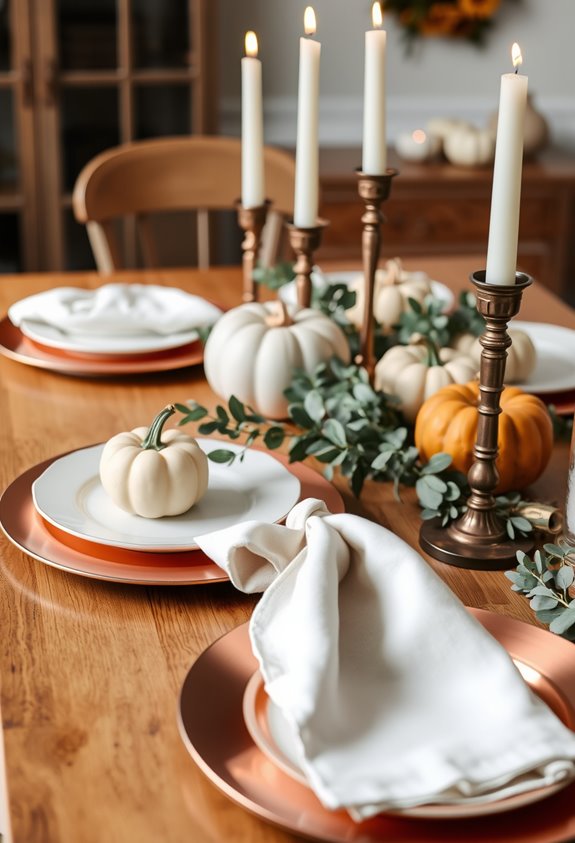
Now that your runner’s locked in, it’s time to think about what goes on top of it. Start with white plates. Seriously, just start there. White dinnerware works with every theme, every color, every table mood you’re going for. Formal dinner? Done. Casual Friendsgiving chaos? Also done.
Here’s what white plates actually do well: they make your food look incredible. Those deep, rich Thanksgiving colors — the roasted browns, the cranberry reds — hit differently against white. The contrast does the heavy lifting for you.
Layering is easy too. Drop a charger underneath, stack a salad plate on top, add a linen napkin with a metallic ring. Done. White dinnerware is the core. Everything else just builds around it. You can even layer a wood-look accent plate over your charger with the white dinner plate sitting in the middle for a rustic, collected feel.
Arrange Silverware the Right Way
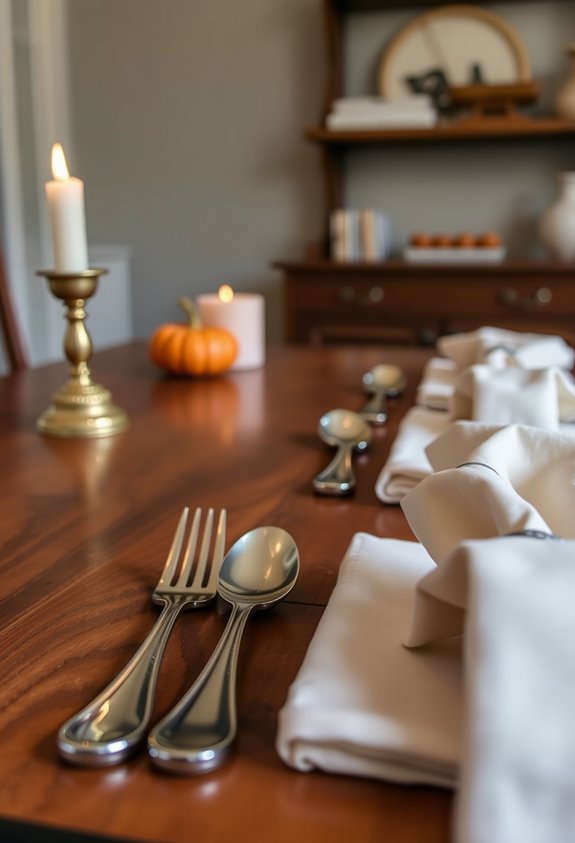
Silverware placement isn’t complicated, but people still get it wrong. Here’s the fix: forks left, knives and spoons right. That’s basically it. The knife blade faces inward, toward the plate. Tines point up. Bottom edges line up evenly, about an inch from the plate. Yes, it matters.
Follow these rules and you’ll look like you know what you’re doing:
- Forks go left, outermost first — salad fork, then dinner fork closest to the plate
- Knives and spoons go right, knife nearest the plate, soup spoon beside it
- Dessert utensils go above the plate, horizontally
- Only set what you need — cluttered settings signal amateur hour
Neat, intentional, done. For formal occasions, a charger plate serves as a decorative base beneath the napkin or first course before the dinner plate is ever brought to the table.
Create a Centerpiece Guests Can See Over
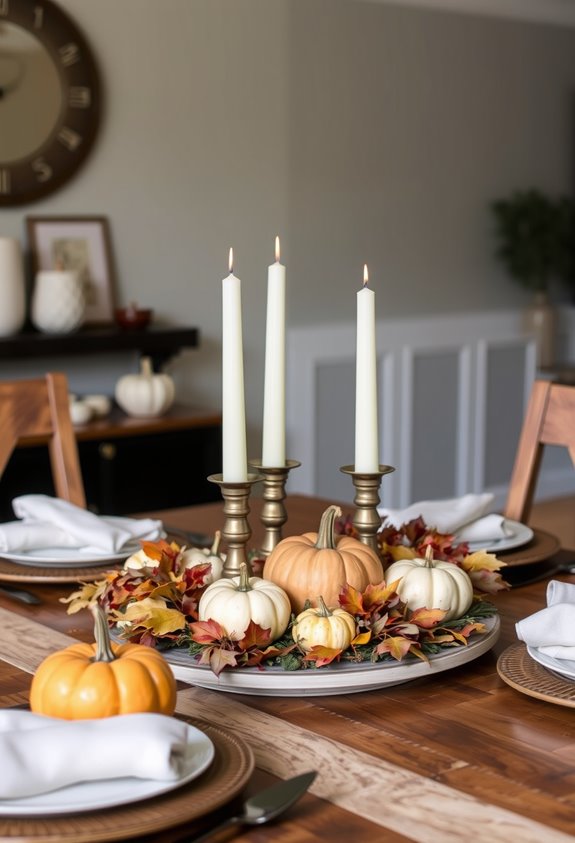
The centerpiece is where well-meaning hosts go wrong fast. You spend real money on something gorgeous, then watch your guests lean sideways all night just to make eye contact. Not the vibe.
Keep it under 12 inches tall. That’s it. That’s the rule. Seated dining works best when arrangements stay between 10 and 14 inches max, with shorter being safer for actual conversation.
Width matters too. Your centerpiece shouldn’t exceed one-third of your table’s width. On a 42-inch table, that’s roughly 14 inches across. Leave at least 12 inches of clear space around it for plates and glasses.
Before guests arrive, do a quick check: Can you make easy eye contact across the table? If not, scale it down. The page you’re viewing was built with SSR enabled on a react library entry to ensure fast, reliable rendering for every visitor.
Add Candles at Different Heights for Warmth
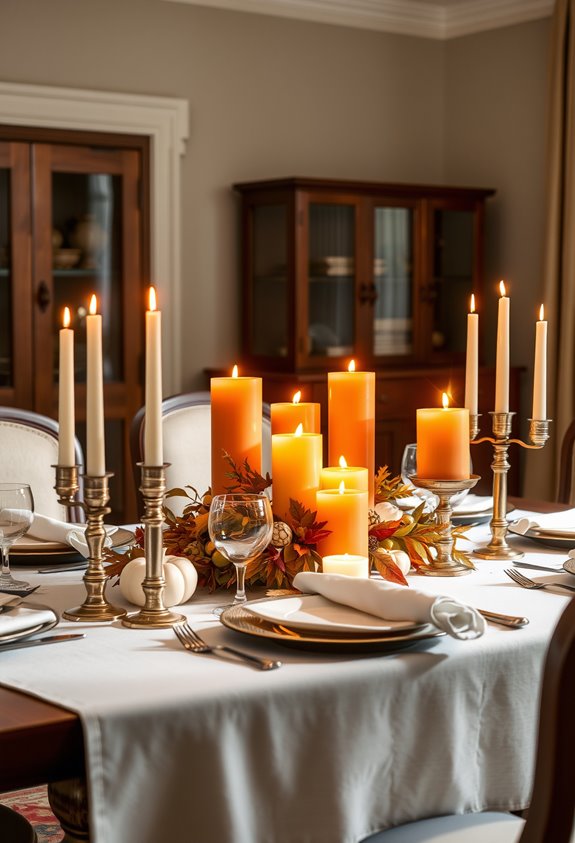
Candles are where Thanksgiving tables go from “fine” to actually memorable. Height variety is the move. Uniform candles look rigid and flat — mix it up. Group them in odd numbers, because that’s just how it works visually.
Candles take your Thanksgiving table from forgettable to unforgettable — vary the heights and group them in odd numbers.
Here’s what actually matters:
- Vary the heights so your arrangement has depth and draws the eye across the table
- Group in threes or fives for a balanced, dynamic look that doesn’t feel overcrowded
- Match the mood — shorter candles feel cozy and intimate, taller ones signal something special
- Keep them proportional to your table size so nothing feels overwhelming
One non-negotiable: keep flames away from anything flammable and never leave them unattended. Gorgeous table, yes. Fire hazard, no. You can also tuck floral accompaniments among the candles at different levels to make the whole arrangement feel more intentional and layered.
Use Place Cards to Seat Guests With Intention
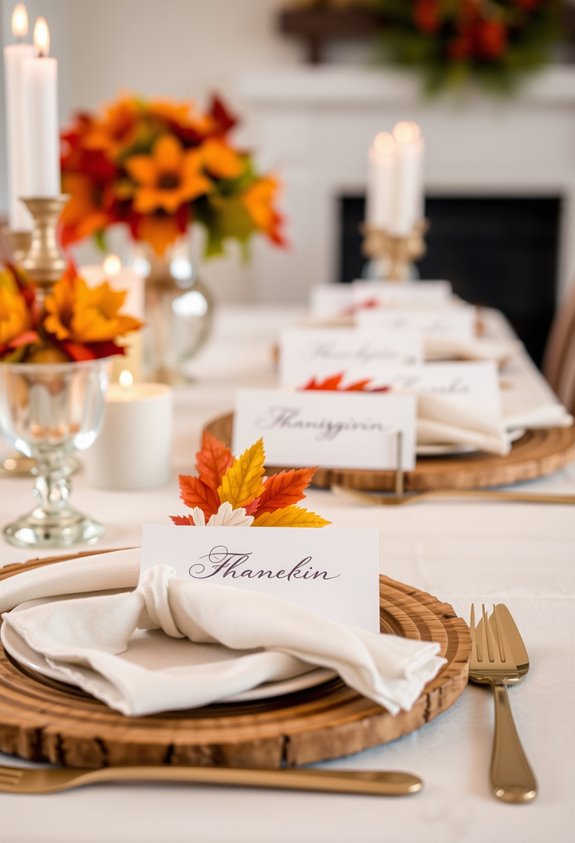
Once you’ve got the candles set, there’s one more detail that quietly pulls the whole room together — place cards. Simple. Intentional. Surprisingly powerful.
Place cards tell your guests they were thought about before they even walked through the door. That matters. Assigned seating keeps couples together, controls conversation flow, and eliminates that awkward hovering moment where everyone pretends they don’t care where they sit. Spoiler: they do.
Tent-fold cards work great on plates or napkins. Tie them with twine, tuck them into pinecones, or attach them to silverware bundles for buffet setups. Use cardstock — regular copy paper won’t hold its shape. You can handwrite, stamp, or print them.
Some designs even include gratitude prompts. Function meets feeling. That’s the goal. Free turkey place cards are available as a JPG download, making them easy to open, edit, and print from common image programs right at home.
Add Place Cards, Napkin Folds, and Gratitude Notes Last
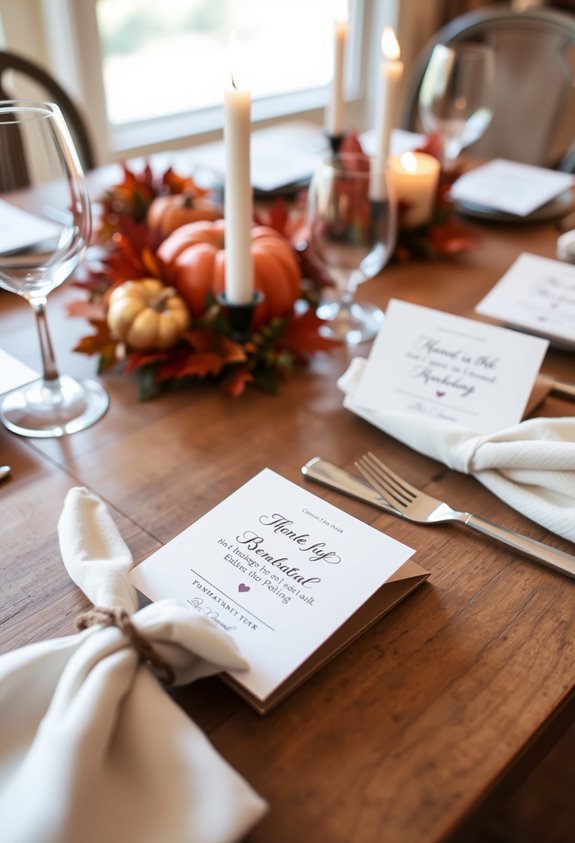
These three details — place cards, napkin folds, and gratitude notes — get finished last, and that’s not an accident. They’re the most personal parts of your table, and they depend on everything else being settled first — guest count, seating, the whole layout.
Here’s why the order matters:
- Place cards shift once your final headcount locks in
- Napkin folds stay neat only after dishes and serving pieces are already down
- Gratitude notes need to land where guests can actually see and use them
- All three work together to make each seat feel claimed, not just filled
That last part’s the point. You’re not decorating. You’re telling every person at that table they belong there. Finish these last, and they’ll land exactly right. Some place cards, like the Thankful For format, even double as a Thanksgiving activity where guests write down what they’re grateful for and share it at the table.
Frequently Asked Questions
How Far in Advance Should I Set up My Thanksgiving Table?
Yes, you’ll still have time to cook — setting the table early doesn’t eat into your kitchen prep. Set it the day before, minimum. That’s the practical sweet spot.
Two days ahead works great for elaborate setups with candles, florals, and place cards.
Use the week before for planning — seating charts, polishing silver, matching serving dishes to your menu. Save the full setup for Thanksgiving Eve. Done.
Can I Mix Different Dinnerware Sets for a Thanksgiving Table?
Yes, you can absolutely mix dinnerware sets. No matching required.
The trick? Pick a unifying color — warm tones like burgundy, brown, or orange work great for Thanksgiving. Keep one element consistent, like the same base plate for everyone, then vary the rest. Balance patterned pieces with solid ones. Mix textures like fine porcelain with rustic ceramics. It creates depth.
Your mismatched collection isn’t a problem — it’s actually the vibe.
What Is the Best Way to Store a Tablecloth Without Wrinkles?
Roll it, don’t fold it. Seriously. Rolling your tablecloth around a cardboard tube eliminates those stubborn crease lines that folding creates.
If you must fold, follow the original fold lines — don’t invent new ones.
Store it somewhere cool, dry, and ventilated, around 45–55% humidity.
Skip plastic bags; use breathable fabric storage instead. Trapped moisture equals mold. Nobody wants that surprise before guests arrive.
Label it by size so you’re not unfolding everything unnecessarily.
How Many Place Settings Should I Prepare for Unexpected Guests?
For Thanksgiving, aim for 12 place settings minimum. That’s your safety net when unexpected guests show up — and they will.
Eight to twelve works if you’re hosting a smaller core group, but 12 gives you breathing room for seconds, dessert service, and the cousin nobody confirmed.
Four settings? That’s barely survival mode. You don’t want to scramble mid-meal borrowing forks from the kitchen drawer. Plan ahead. Your table will thank you.
Should Charger Plates Be Removed Before or After the Meal?
Remove charger plates before dessert. That’s the consistent rule across etiquette sources.
Most formal settings keep them through the main course, then clear them when you remove the entrée plate. Simple, clean changeover.
Some caterers pull them earlier — right after guests sit — especially for buffet-style or casual events. It depends on your vibe and service style.
But dessert? Chargers are never part of that course. Not ever.