
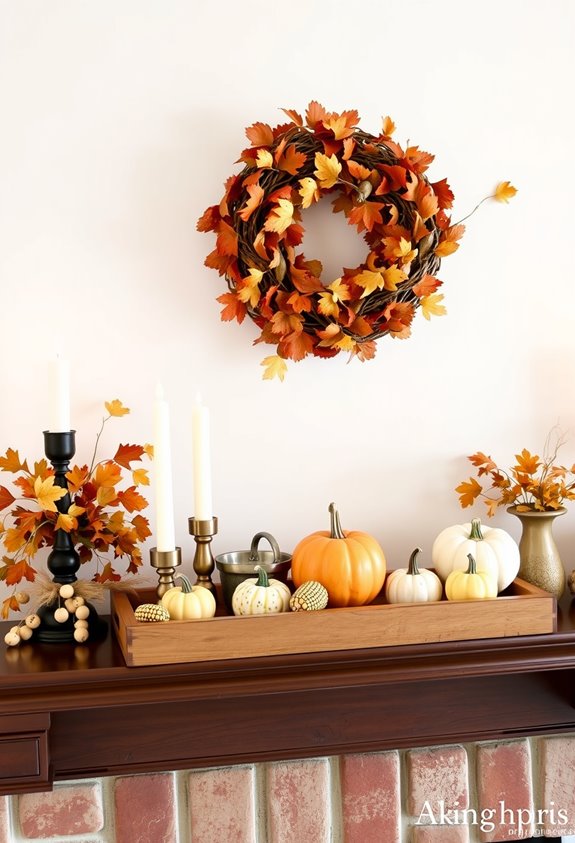
Your Thanksgiving mantel probably looks decent. But decent isn’t the goal. Most mantels are missing a bold focal point, a cohesive color palette, natural textures, varied heights, odd-number groupings, candles, personal touches, and a real editing pass. Skip even one of these, and the whole thing reads as random seasonal clutter. The good news? Each fix is straightforward once you know what to look for — and that’s exactly where this goes next.
Start With One Bold Thanksgiving Mantel Focal Point
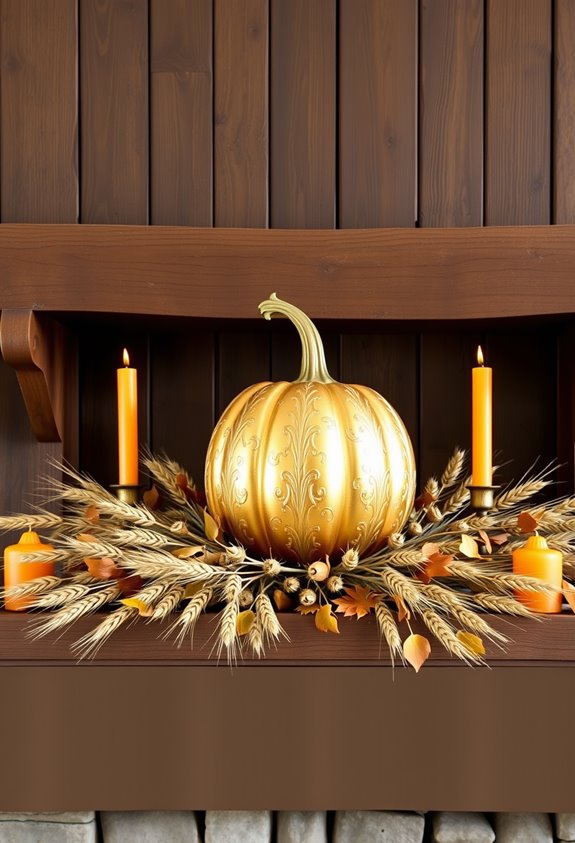
Every great Thanksgiving mantel starts with one thing: a bold focal point. Without it, your display just looks like a pile of stuff you found in a storage bin. Not a great look.
Every great Thanksgiving mantel needs one thing first: a bold focal point. Skip it and the whole display falls flat.
A focal point anchors everything. It’s the first thing eyes land on — a large wreath, a framed mirror, a piece of art, or a painted sign. One strong centerpiece pulls the whole arrangement together and makes it feel intentional rather than scattered.
Size matters here. Your focal point needs to be proportional to the mantel and fireplace. Too small, and it disappears. You want contrast, presence, and visual dominance.
Hang it above the mantel or place it directly on the surface. Either works. Just commit to one anchor. Everything else builds around it. If your focal point sits slightly off-center top-to-bottom, try raising it six inches to improve the visual balance.
Choose Your Thanksgiving Mantel Color Palette First
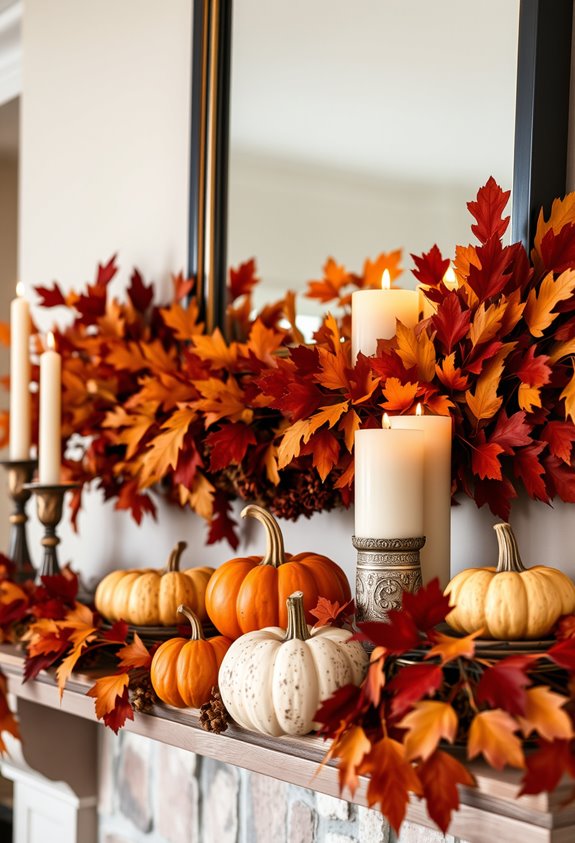
Once you’ve nailed your focal point, color is your next decision — and honestly, it should’ve been your first. Start with a warm base: browns, ivory, cream, beige, or tan. These aren’t boring choices. They’re smart ones. They blend with what you already own, which saves you from buying a whole new life.
Layer in classic autumn hues next — burnt orange, deep burgundy, mustard, rust, terracotta. These are the colors people *associate* with Thanksgiving. They feel familiar. Safe. Welcoming.
Add olive or sage green to keep things balanced. Without it, orange-heavy palettes get exhausting fast.
Then finish with gold, copper, or bronze accents. Small touches only. Metallics support the palette — they don’t lead it. Keep your color story tight and cohesive. Fragmented palettes just look confused. If you’re drawn to a more subdued look, whitewashed brick backdrops pair especially well with neutral palettes built around ivory and brown, letting your chosen accents do the quiet, purposeful work.
Layer in Natural Textures and Seasonal Materials
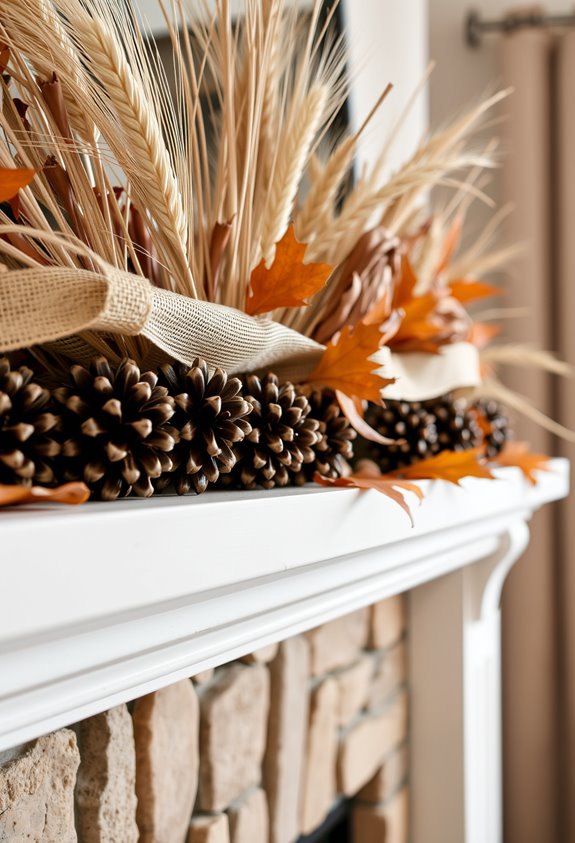
Layering natural textures is where your mantel stops looking like a store display and starts feeling like an actual home.
Grab some branches. Seriously, just go outside. Different heights create visual structure, and dried branches hold up longer than fresh ones. That matters.
Pinecones, acorns, and seed pods aren’t filler — they’re the connective tissue between your bigger pieces.
Collect them from your yard. Free. Done.
Tuck in dried wheat, eucalyptus, or preserved leaves for softer contrast against hard surfaces.
Add mini pumpkins and gourds in mixed sizes, because identical pieces look staged. Nobody wants staged.
Then layer your materials — burlap runners, wicker trays, wooden candleholders.
Rough textures against smooth ceramics creates depth. Woven, natural, cozy. That’s the whole point.
Treat your mantel as a tableau with candelabras, vessels, pumpkins, and autumn leaves working together as a unified seasonal display.
Vary Your Heights for Visual Interest
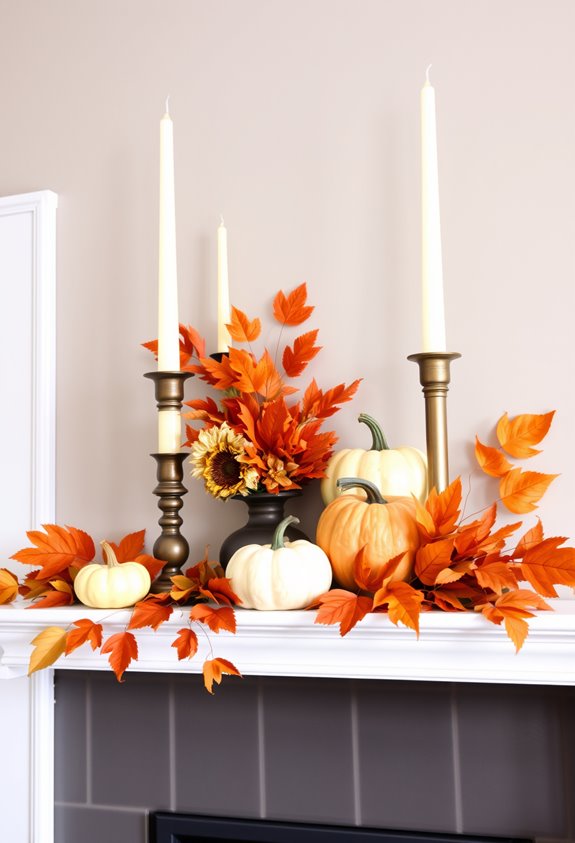
Height matters. A flat row of same-sized decor is the fastest way to make your mantel look forgotten. Nobody wants that. Varying your heights creates visual rhythm, and rhythm is what makes people stop and actually look.
Start with a central anchor — a mirror, artwork, something substantial. That piece sets the scale for everything else. Then build around it using a wave pattern: low, high, lower again. Short, medium, and tall pieces working together create real depth.
Don’t overthink symmetry. Asymmetry actually looks more natural and keeps the eye moving. Stack smaller objects on books for extra height without bulk. Horizontal book stacks can also elevate smaller decorative objects like gourds or candles, creating layered visual depth without adding bulk. And leave breathing room. Negative space isn’t empty — it’s intentional. Fewer, well-spaced pieces hit harder than a crowded shelf every time.
Group Smaller Pieces in Odd Numbers
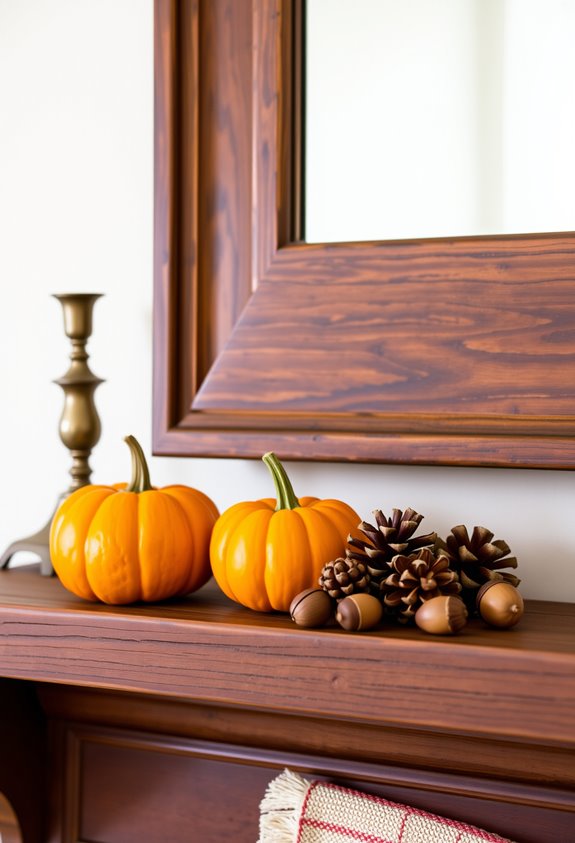
Once you’ve got your heights sorted, the next question is how many pieces to actually put on that mantel. Odd numbers. That’s it. That’s the rule.
Mantel styling has one unbreakable rule: odd numbers only. Three, five, or seven — pick one and commit.
Three, five, or seven items consistently outperform even-numbered groupings because they create natural balance without feeling staged. Your brain actually reads odd groupings more easily — less rigid, more organic.
Here’s how to make it work:
- Start with three pieces if your mantel is small
- Scale up to five or seven for longer surfaces
- Cluster tiny items on a tray so they read as one unit
- Mix heights, shapes, and textures within your grouping
Small pieces placed alone disappear. Group them. Odd numbers give your Thanksgiving mantel that effortless, pulled-together look everyone notices but can’t quite explain. Keep in mind that paired candlesticks or other thin grouped items often read as a single visual footprint, so you can use them without throwing off your odd-number count.
Add Candles to Your Thanksgiving Mantel for Warmth
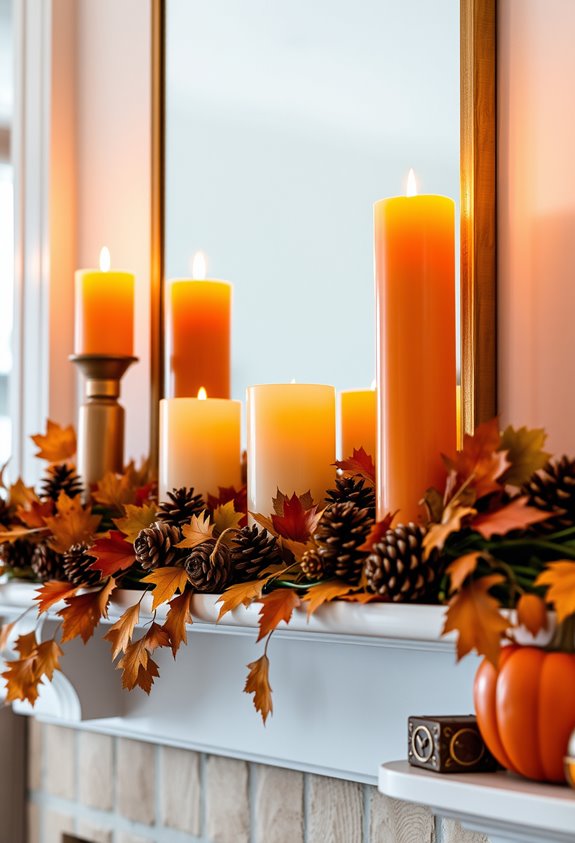
Candles almost always make the biggest difference on a Thanksgiving mantel — not the pumpkins, not the garland, not the artfully placed pinecone you agonized over. Candlelight creates warmth. Full stop. Pillar candles anchor the whole display. Tapers add height and a little formality. Votives layer in softer glow. Mix the heights. It matters more than you’d think.
Use hurricane glass or deep holders. They protect your mantel surface, catch wax drips, and reflect the flame so the whole setup looks richer. Near a working fireplace? Pull real candles back or swap in flameless LEDs. Same glow, lower risk.
Pair your candles with pumpkins, wheat, or pinecones. Metallic accents — brass, copper — amplify the warmth. You’re not just decorating. You’re setting a mood everyone will feel. For added peace of mind, always use flame-retardant décor pieces alongside your candles to reduce fire risk near the hearth.
Personalize With Meaningful Thanksgiving Accents
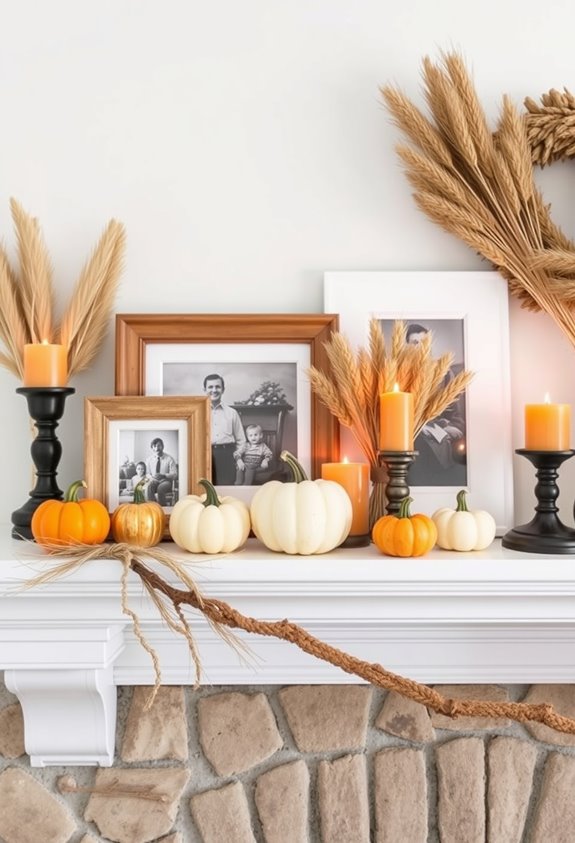
- Framed family photos that turn your mantel into a living timeline
- Handwritten gratitude notes or name cards that make every guest feel seen
- Heirloom dishes or passed-down décor that quietly say we’ve been doing this for years
- Small signs with words like “thankful” or “gather” that echo real Thanksgiving language
Specific people. Specific moments. That’s the formula. A mantel built around family stories doesn’t just look good — it feels like somewhere you actually belong.
Don’t overthink it. One meaningful piece beats a dozen forgettable ones every time. Try weaving in a cornucopia filled with seasonal fruits and vegetables as a timeless symbol of abundance that anchors the whole display.
Edit Your Mantel Until Nothing Feels Out of Place
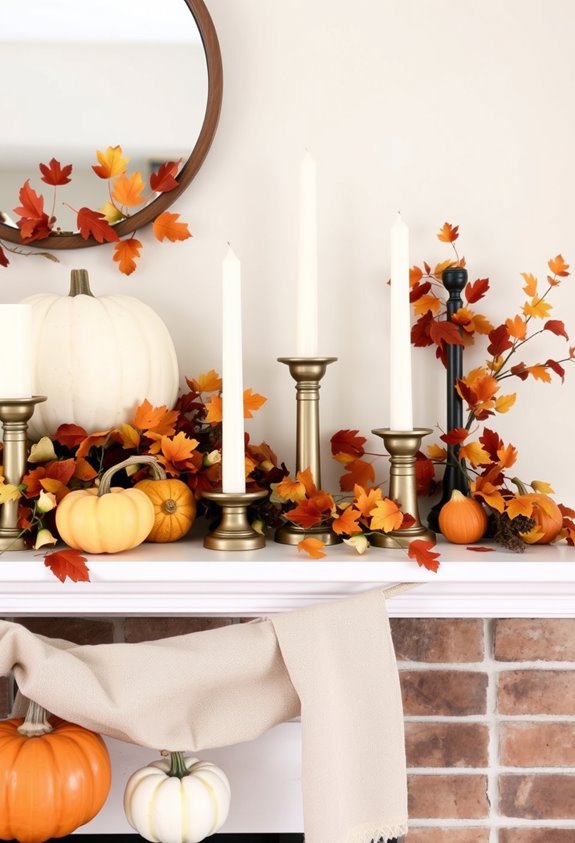
Before you call your mantel done, step back and actually look at it. Not a glance. A real look. Something will feel off, and you’ll know it immediately.
Before you call your mantel done, step back and truly look. Something will feel off — trust that.
That’s your instinct telling you to edit.
Pull out anything that doesn’t belong. Crowded mantels don’t feel cozy — they feel chaotic. Nobody wants that, especially during a holiday built around togetherness. Less really does work better here.
Check your groupings. Three items read stronger than one awkward solo piece sitting there doing nothing. Make sure heights vary. Make sure textures mix. Make sure your color palette stays consistent instead of wandering into randomness.
Then step back again. If everything feels connected and intentional, you’re done. If something still bugs you, trust that feeling. Remove it. Place taller items like candlesticks toward the back and let smaller pieces like mini pumpkins or lanterns sit in front to create natural visual flow.
Frequently Asked Questions
How Do I Safely Secure Decor on a Narrow Mantel Ledge?
Start with a focal point — a wreath or framed art anchors everything.
Group three to five items in odd numbers, tall pieces toward the back, shorter ones in front.
Stick to broad-based decor that won’t tip.
Skip real candles; flameless LED ones work better on tight ledges.
Keep combustibles away from the firebox.
Before lighting any fire, remove decor closest to it.
Simple, composed, secure.
That’s it.
Can I Combine Thanksgiving and Fall Decor Without It Looking Cluttered?
Blending both themes beautifully? Totally doable. Start with a fall base — pumpkins, gourds, leaves — then layer in small Thanksgiving-specific pieces like a “Gather” sign or cornucopia.
You’re not decorating a museum, so keep it simple. Stick to warm, earthy tones: rust, gold, brown. Limit your palette.
Group objects together rather than scattering them. Fewer, well-chosen pieces always beat a crowded ledge. Cohesion comes from restraint, not abundance.
What Budget-Friendly Options Work Well for Thanksgiving Mantel Decorating?
You don’t need to spend much. Forage autumn leaves, pinecones, and acorns — they’re free.
Group gourds in a bowl. Repurpose mason jars as candle holders using cranberries or dried corn. A simple “give thanks” banner creates a focal point without breaking anything.
Layer burlap or raffia to make sparse displays feel fuller. Pile apples, pinecones, and candles together. Done. Your mantel looks intentional, not accidental.
How Early Should I Start Decorating My Mantel for Thanksgiving?
Late October to early November is your sweet spot. Don’t overthink it.
Starting in early November gives you the best balance — your mantel stays relevant through the whole holiday run-up without feeling like you jumped the gun.
Want fresh florals or greenery? Wait until Thanksgiving week so they actually look good for the holiday. You can also start small, add pieces gradually, and refine the whole thing as Thanksgiving gets closer.
Are There Child-Safe Alternatives to Traditional Thanksgiving Mantel Decorations?
Yes, there are plenty of child-safe alternatives. Swap glass and ceramic for felt, fabric, or wood.
Skip candles entirely — flameless battery-operated ones work great.
Let your kids make handprint turkeys or paper plate crafts and display them proudly.
Faux leaf garlands, decorated pumpkins, and gratitude jars look festive without the danger.
Avoid small parts, long ribbons, and anything resembling food.
Your mantel can look amazing without the ER visit.