Turning a plain guest room into a haunted retreat doesn’t require a gut renovation — just a system. Start with a black-and-orange anchor palette, layer cobwebs before any other decor, and build three tiers of warm, dimmable lighting. Dress the bed in deep seasonal textiles, style the nightstand like a vignette, and corral accents onto trays. It’s all connected. Stick around and you’ll see exactly how each layer pulls the whole thing together.
Design Highlights
- Anchor the palette in black and orange, then balance with neutrals like white or gray to prevent the room from feeling too dark.
- Layer ambient, task, and accent lighting with warm 2,700K bulbs and dimmers to build atmosphere without straining guests’ eyes.
- Start decorating with wispy cobwebs and layered bats before adding other accents to establish a cohesive haunted baseline.
- Swap bedding for deep seasonal tones and add velvet or chunky knit throws to make the space feel rich and seasonally immersive.
- Corral candles, mini pumpkins, and faux potion bottles on dark trays to create intentional vignettes rather than scattered clutter.
Start With a Halloween Color Palette That Actually Works
Before anything else, get your colors right — because nothing tanks a Halloween guest room faster than a muddy, mismatched palette that just looks sad.
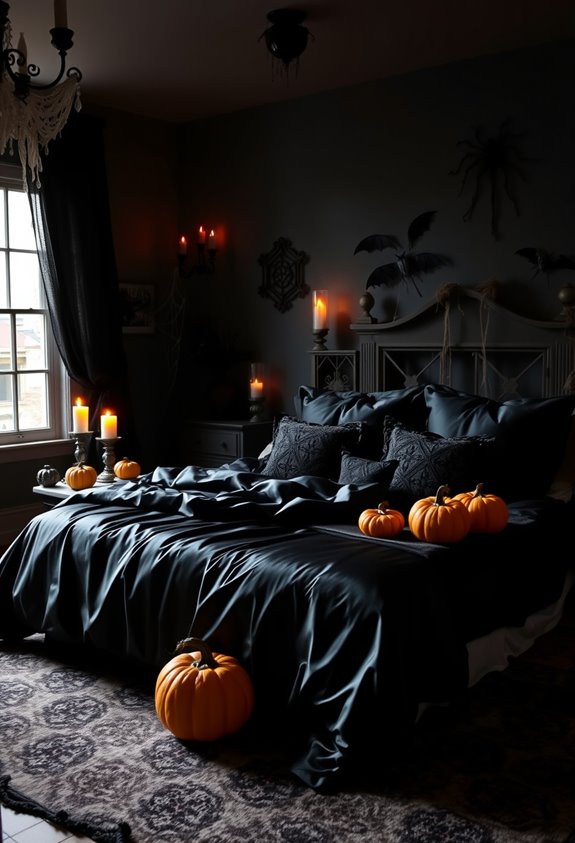
Black and orange. That’s your anchor. Always has been. Black brings the darkness, mystery, and drama. Orange signals autumn immediately — pumpkin, harvest, warmth. Together, they’re iconic for a reason.
Black and orange aren’t trendy — they’re timeless. Dark mystery meets harvest warmth. That’s the whole foundation.
But here’s where most people stumble: they go too dark and the room feels like a cave. Not cozy. Just depressing. Balance those deep tones with neutrals — white, ivory, greige, or gray fog. Light bedding helps. A lot.
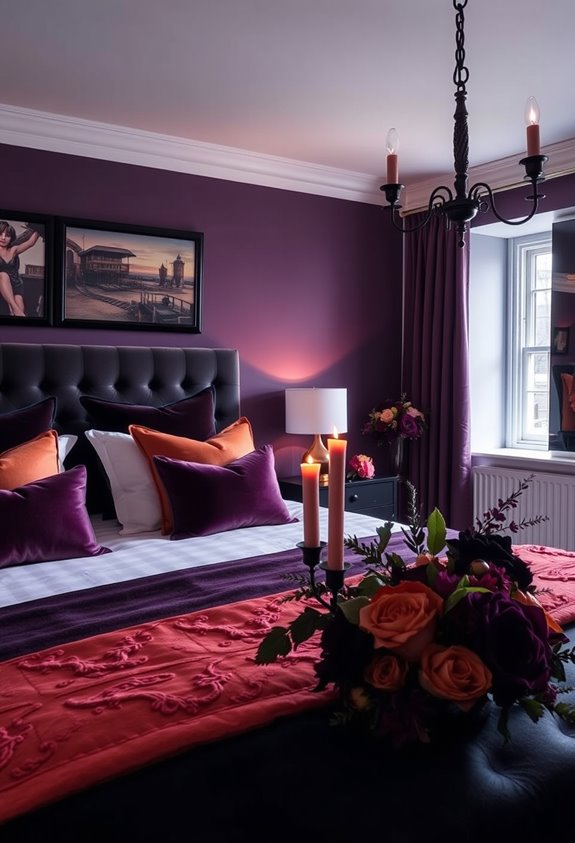
Want to add personality? Purple reads witchy. Gold feels haunted-vintage. Red hits dramatic.
Your working formula: one dominant neutral base, one seasonal main color, one dark tone, one accent. Simple. Intentional. Actually good. For quicker decisions, plug your chosen HEX codes directly into an AI image tool to rapid prototype the full composition before committing to a single throw pillow.
Hang Bats and Cobwebs Before You Style Anything Else
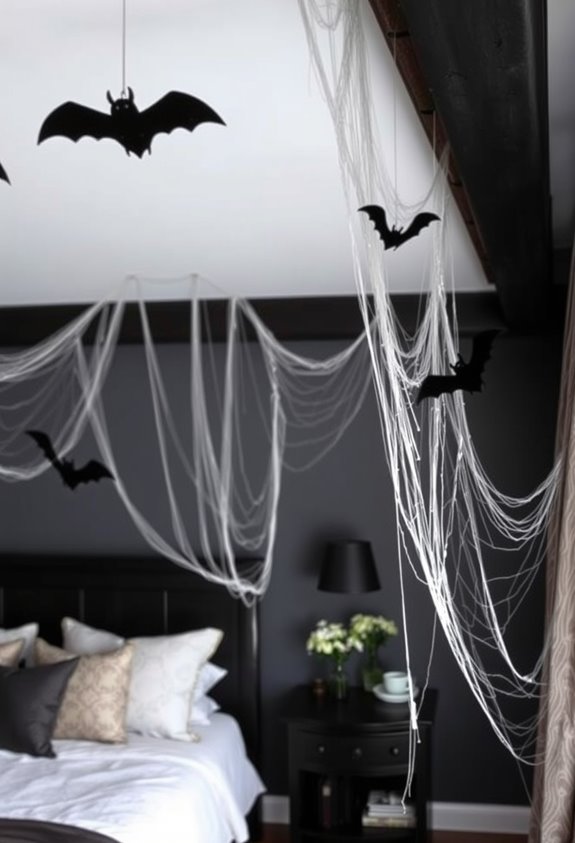
Once your color palette is locked, there’s a specific order you need to follow — and most people skip it entirely.
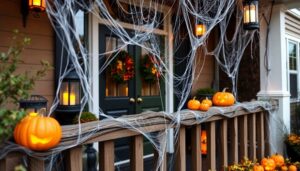
Start with cobwebs. Stretch them thin across corners, mirrors, doorframes, and shelves before anything else touches those surfaces. Thick clumps look cheap. Thin, wispy webbing looks genuinely eerie.
Then add your bats. Dense clusters trailing across a wall or window create motion — your eye follows them naturally. Slightly bend the wings so they lift off the surface. Flat bats are boring. Three-dimensional ones aren’t. Paper or felt bats can be placed in cloches, arranged on mirrors, or pressed onto branches for a low-effort, high-impact layer of depth.
Here’s why this order matters: cobwebs and bats create the haunted baseline everything else builds on. Skip this step, and your other accents just look scattered. Nail this first, and the whole room feels intentional.
Layer Your Lighting for a Hauntingly Cozy Glow
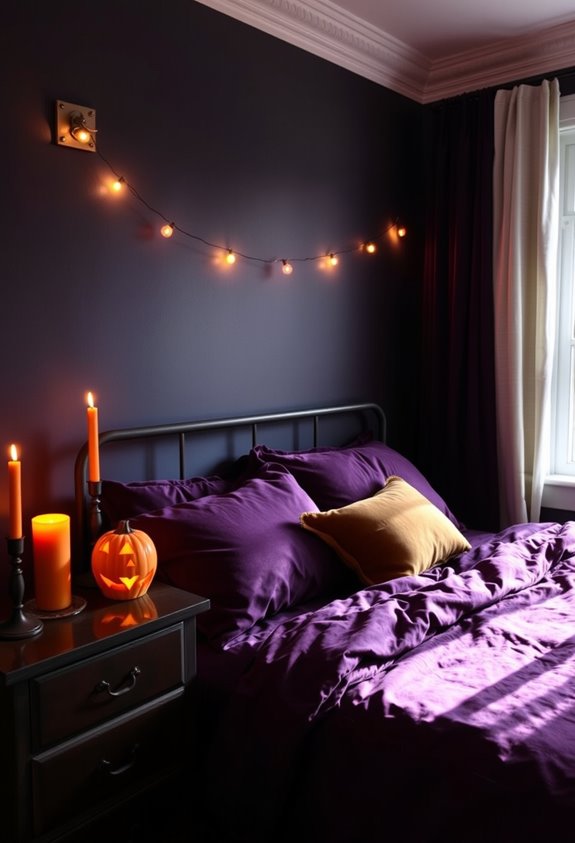
Most people hang decorations, toss on an overhead light, and call it done. Don’t be that host. One harsh overhead fixture kills the mood instantly.
Don’t be that host who tosses on one overhead light and calls it done.
Instead, build three layers: ambient lighting from ceiling fixtures, task lighting near the bed for reading, and accent lighting to highlight your spooky decor. Accent lights should actually be three times brighter than your ambient sources. That contrast creates depth.
Use bulbs around 2,700K. That warm glow mimics candlelight and feels genuinely inviting. Add dimmers. Seriously. Dropping brightness to 50% or lower transforms the entire atmosphere after dark.
Place wall sconces 55–60 inches above the floor, roughly 20–24 inches from the bed’s edge. Tuck smaller lamps into corners. Multiple light sources at different heights make guests feel enveloped, not interrogated. LED strip lights along baseboards or ceiling edges can subtly define the room’s perimeter without adding harsh brightness.
Dress the Halloween Guest Room Bed With Seasonal Textiles
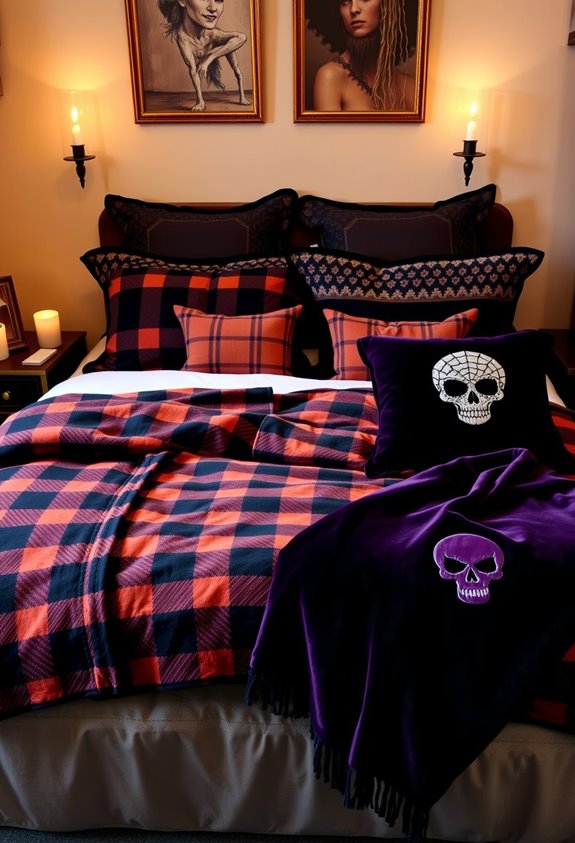
The bed is the centerpiece, so don’t waste it on plain white sheets and a sad beige blanket. Swap in deep, moody tones — burnt orange, olive, black, or burgundy. These colors set a Halloween vibe without making the room look like a Spirit Halloween clearance rack.
Layer a chunky knit or faux fur throw at the foot of the bed. Done. Instant atmosphere. Add decorative pillows in plaid, velvet, or fall-toned textures. Skip the novelty ghost prints — textured fabrics in seasonal shades land better every time.
Velvet adds richness. Flannel grounds things. A lumbar pillow in front of the shams makes the whole setup look intentional. Your guests will feel it — that rare mix of cozy and completely on-theme. Drape a deep purple throw across the corner of the bed for a theatrical, mysterious layer that pulls the whole seasonal palette together.
Style the Nightstand Like a Mini Haunted Vignette
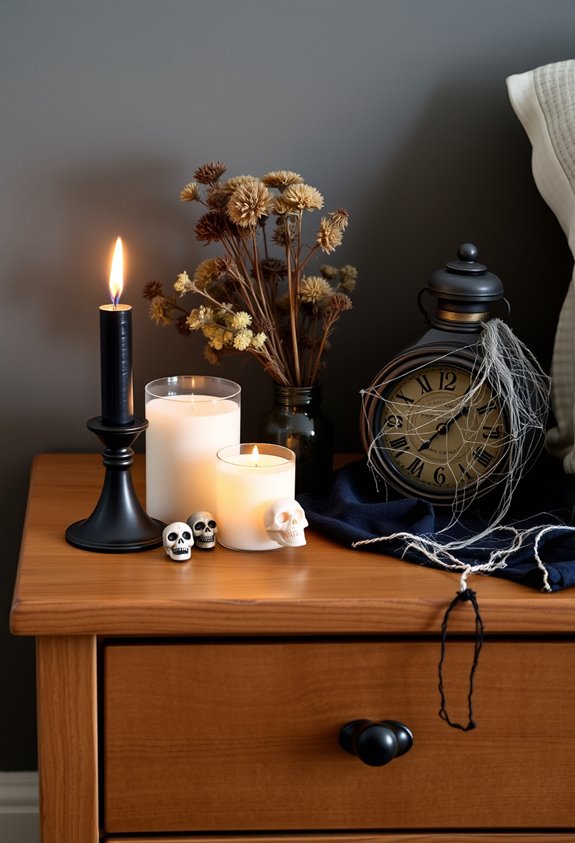
Your nightstand deserves better than a scented candle and a phone charger. Start with a small decorative tray. It contains the whole display and keeps things from looking like a yard sale.
Group three to five objects inside it — odd numbers work better, that’s just how styling goes. A mini ceramic pumpkin, a small black lantern, and an amber glass bottle already tell a story. Add a faux raven if you want people to feel something.
Keep heights varied: one tall anchor, one mid-height piece, one small accent. Stick to black, cream, muted orange, and warm wood tones. A flameless flickering candle pulls everything together with moody, low light.
The tray unifies mixed materials. The restraint makes it feel curated. That’s the difference between intentional and chaotic. Vintage potion bottles and small coffin boxes make surprisingly functional additions that stay fully in theme.
Set the Mood With Halloween Scents and Ambient Sound
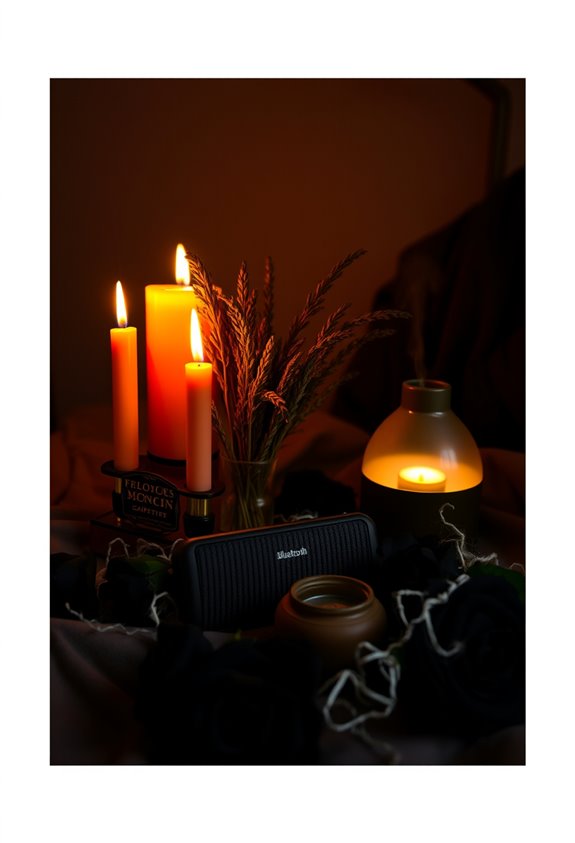
Scenting a guest room for Halloween isn’t complicated, but most people get it wrong by defaulting to one candle and calling it a day. Layering is everything. Start with a woody base — cedar, dark musk, pine — then add spice on top. Cinnamon, clove, nutmeg. Classic for a reason.
Want something moodier? Frankincense and patchouli shift the whole vibe toward something more ritual, more intentional. For a warmer, cozier feel, caramel and pumpkin spice work beautifully together.
Now here’s the part most people skip entirely: sound. A wood-wick candle crackles. That subtle sound reinforces the bonfire scent already in the air. Scent and sound working together creates atmosphere that guests actually *feel*. One candle won’t do that. Layered sensory styling will. If you want to lean further into that outdoor nighttime feeling, burning leaves carries a smoky nostalgic scent that pairs naturally with bonfire notes and deepens the overall seasonal atmosphere.
Stock the Room With Candy, Props, and Guest-Ready Details
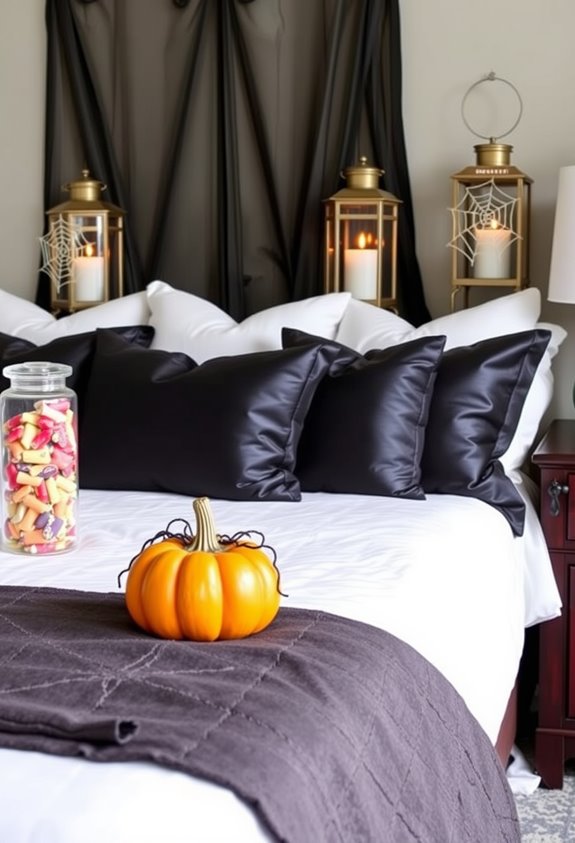
Most guests won’t say anything, but they notice when a room feels stocked versus staged. So stock it. Put candy in open bowls they can actually reach. Use themed labels like “Goblin Teeth” to make it feel intentional, not just dumped there. Add napkins, coasters, and a trash spot nearby. Because nobody wants to hunt for a napkin.
Here’s what pulls it together:
- Candy placement matters — coffee tables, mantels, and side tables keep treats visible and decorative at once.
- Mix sweet and savory — pretzels, popcorn, and cookies beside candy shows you actually thought this through.
- Props should work — cauldron dishes and labeled jars are functional and festive. Dead weight decor isn’t either.
Warm, welcoming, and Halloween-ready. That’s the goal. Try arranging orange textured bowls filled with candy corns and candy pumpkins on a tray alongside a candle and fresh wildflowers to keep the display both functional and genuinely festive.
Add Mirrors, Trays, and Finishing Layers to Tie It Together
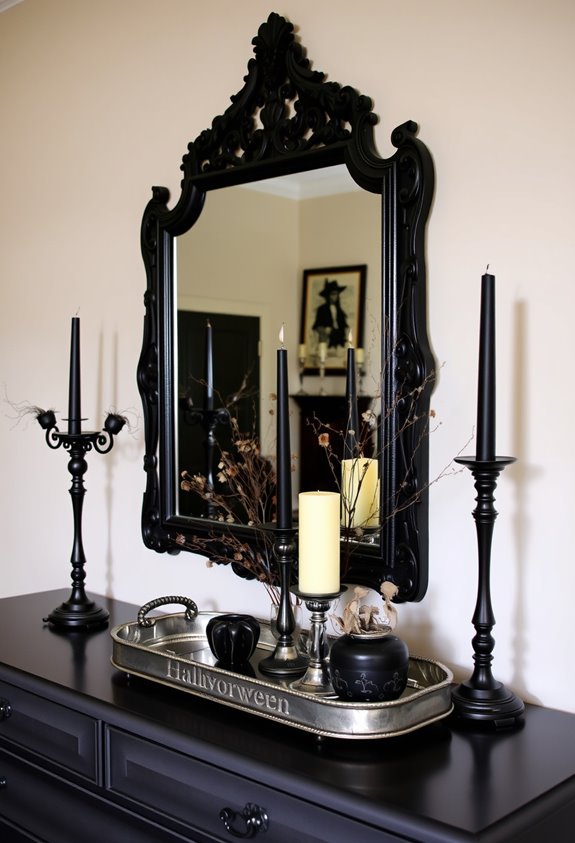
When everything else is in place, mirrors and trays are what make the room look finished instead of just decorated. Skip the shattered glass. Cracked-glass decals give you the broken-mirror effect without the liability. Add a distressed black or dark wood frame, drape some cheesecloth over the corner, and suddenly it’s haunted. Done.
Trays do the heavy lifting nobody talks about. A dark or mirrored tray corrals your candles, mini pumpkins, and faux potion bottles into one intentional vignette instead of scattered chaos. Guests notice that. They feel it, even if they can’t name it.
Layer textures deliberately. Webbing over fabric. Decals over dark frames. Mix matte with reflective. That contrast is what makes small accents actually register. It ties everything together without trying too hard. For a deeply unsettling focal point, a frosted vinyl decal applied to a mirror with the word “HELP” centered on the glass makes guests do a double-take every time they pass it.
Frequently Asked Questions
How Early Should I Start Decorating a Guest Room for Halloween?
Start decorating your guest room in early October—it’s the sweet spot most experts recommend. You’ll enjoy a full month of spooky ambiance while keeping the space feeling welcoming and intentionally styled for the season.
Are Halloween Guest Room Decorations Safe for Young Children or Toddlers?
They can be—think of decorations like costumes: the right fit makes everyone comfortable. You’ll want to swap fragile or sharp pieces for soft, non-toxic alternatives, keeping little ones safe while still creating a festive, welcoming space together.
Can Halloween Guest Room Decor Work in a Small or Shared Space?
Yes, you can absolutely pull off Halloween guest room decor in small or shared spaces! Stick to vertical decor, string lights, and themed textiles to create a festive, welcoming vibe without crowding your room.
How Do I Remove Halloween Decorations Without Damaging Walls or Furniture?
Over 50% of renters fear decor damage! You’ll protect your walls by using removable adhesive strips, slowly peeling decals with gentle heat, and cleaning residue with warm soapy water—keeping your space damage-free for everyone.
What Budget Should I Set for Decorating a Halloween Guest Room?
Set your budget under £20 to keep things manageable! You’ll get great impact by focusing on lighting, window decor, and a few DIY touches like paper bats or painted jars—you don’t need to spend more to impress your guests.
Conclusion
Your Halloween guest room doesn’t need to be Haunted Mansion-level elaborate to make an impression. A few bats. Some moody lighting. The right scent. It’s that simple. You’ve got the palette, the vignettes, the layered details — now just execute. Guests who walk into a thoughtfully decorated room remember it. Make yours unforgettable. The season’s short, so stop overthinking and start decorating.