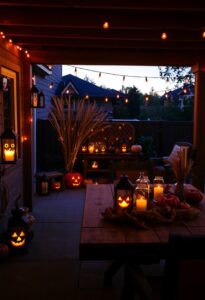
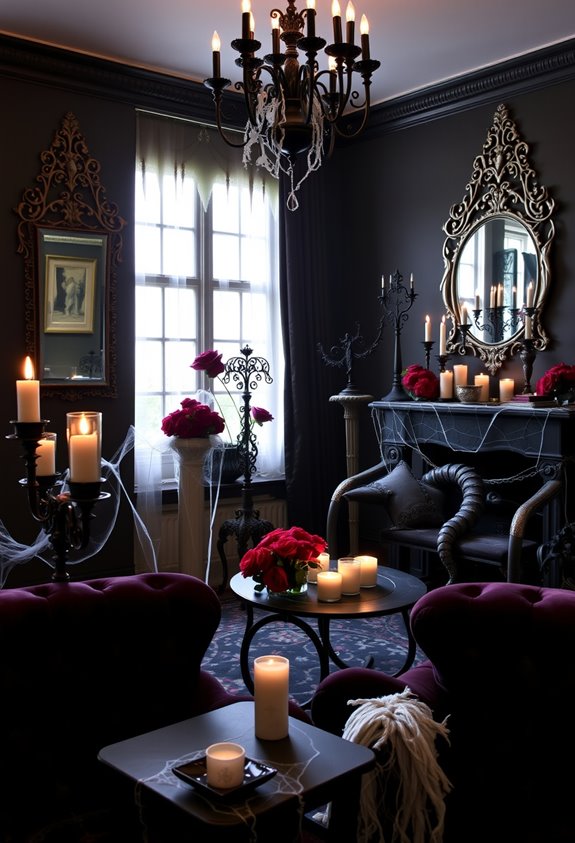
Gothic Halloween decor isn’t about plastic skeletons and dollar-store cobwebs — it’s about building a space that feels genuinely dark and atmospheric. Start with deep, moody tones like black, burgundy, and deep purple, then layer in velvet, lace, and warm candlelight. Antique gold accents prevent things from feeling like a cave. Ravens, skulls, and dried florals tell a story. Done right, it looks hauntingly beautiful. Keep scrolling and you’ll see exactly how it’s done.
Design Highlights
- Anchor the color palette in deep, moody tones like black, burgundy, and dark green, accented with antique gold to prevent a cave-like feel.
- Layer contrasting textures—velvet, black lace, and wispy cobwebs—to build atmosphere that feels curated rather than generic Halloween decor.
- Use warm, dim lighting through chandeliers, candelabras, and flameless flickering candles to create dramatic shadow and chiaroscuro effect.
- Style key vignettes on mantels and dining tables with clustered objects, varied heights, black tapers, and ornate antique-inspired tableware.
- Incorporate Gothic motifs—ravens, skulls, dark florals, and ornate carved frames—sparingly but deliberately for cinematic, story-driven visual impact.
Build Your Gothic Halloween Color Palette Around Deep, Moody Tones
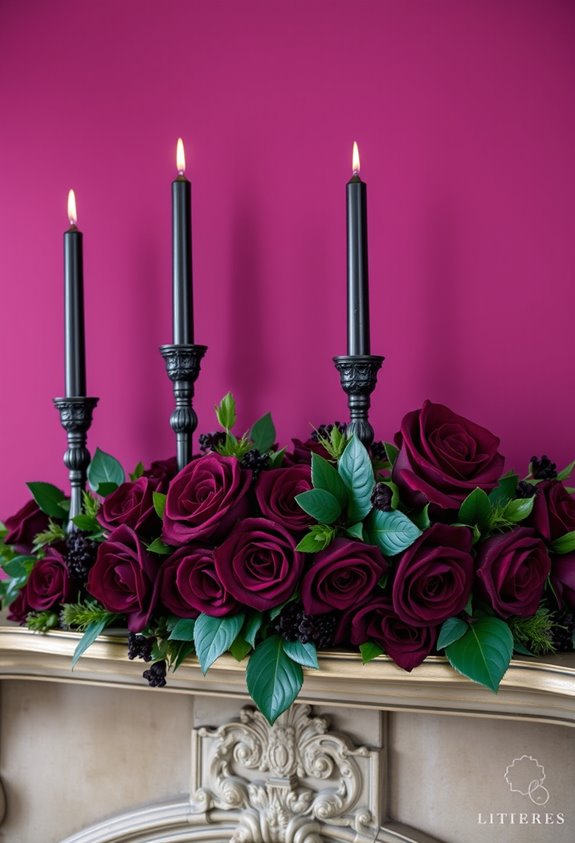
Color sets the entire mood—and gothic Halloween decor lives or dies by its palette. Get this wrong, and your whole room falls flat. No pressure.
The good news? The rules are simple. Stick to deep, moody tones—black, deep purple, burgundy, dark green, charcoal. These aren’t random choices. They pull from Gothic architecture, candlelit interiors, and old-world atmosphere. There’s real history behind them.
Pick one lead color. Support it with two or three secondary shades. That’s it. A crowded palette kills the vibe fast.
Balance matters too. One dominant dark shade needs lighter or metallic accents to keep things from feeling like a cave. And repeat each color several times across the room. Cohesion isn’t optional. It’s everything. Palettes like Classic Gothic pair black and deep crimson with antique gold to strike that exact balance between darkness and warmth.
Layer Velvet, Lace, and Cobwebs for Rich Gothic Texture
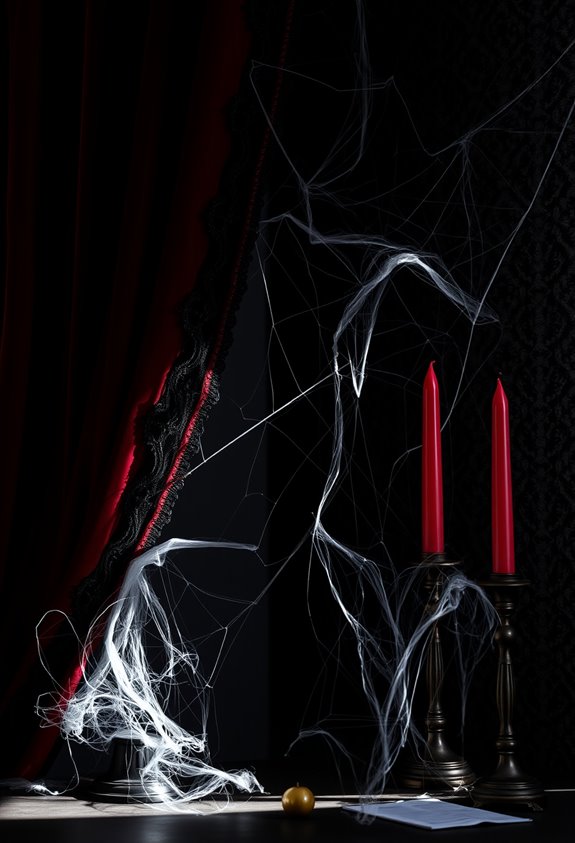
Most people nail the gothic color palette and then completely blow it by ignoring texture. Big mistake. Texture is what separates a genuinely moody room from a bedroom that just painted its walls black.
Start with velvet. It’s your anchor. Charcoal, burgundy, sapphire — velvet absorbs light, deepens shadows, and makes everything feel deliberately luxurious. Curtains, bedding, upholstered seating. Cover your bases.
Then layer in black lace. Sparingly. Accent pillows, trim details, decorative overlays. Lace introduces delicacy without overwhelming the room’s heavier elements.
Finally, add cobwebs. Yes, the wispy fake ones. Place them on mirrors, frames, and corners where side lighting catches the strands. They suggest age and abandonment without requiring a single large prop.
Soft. Heavy. Fragile. Three textures. That’s the formula.
Set the Mood With Low-Key Gothic Lighting
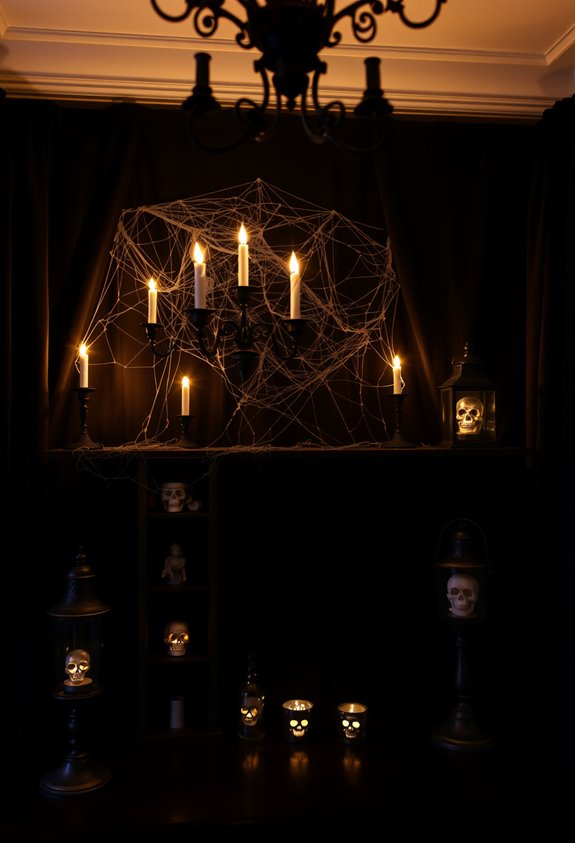
You’ve got the textures locked in — velvet, lace, cobwebs, the whole moody trifecta. Now light it properly. Bright, even lighting? Absolutely not. Gothic spaces live and die by shadow.
Go warm and dim. Create pools of light, not a showroom. The chiaroscuro effect — sharp contrast between light and dark — is your visual goal here.
Build your lighting in layers:
- Chandeliers or candelabras as dramatic focal points
- Ornate wall sconces with intricate metalwork for hallways
- Flameless flickering candles inside dark or blood-red glass jars
- Floor lanterns with gothic patterns for grounded glow
- Tunable LED strips (2700K–4000K) tucked away for flexible mood control
Dark charcoal walls only hit right when indirect warm light skims across them. That’s the whole point. For authentic Gothic fixtures, look to materials like wrought iron and stained glass — stained glass produces a mystical glow that mirrors the luminous atmosphere of cathedral interiors.
Make Your Entryway Dark and Dramatically Gothic
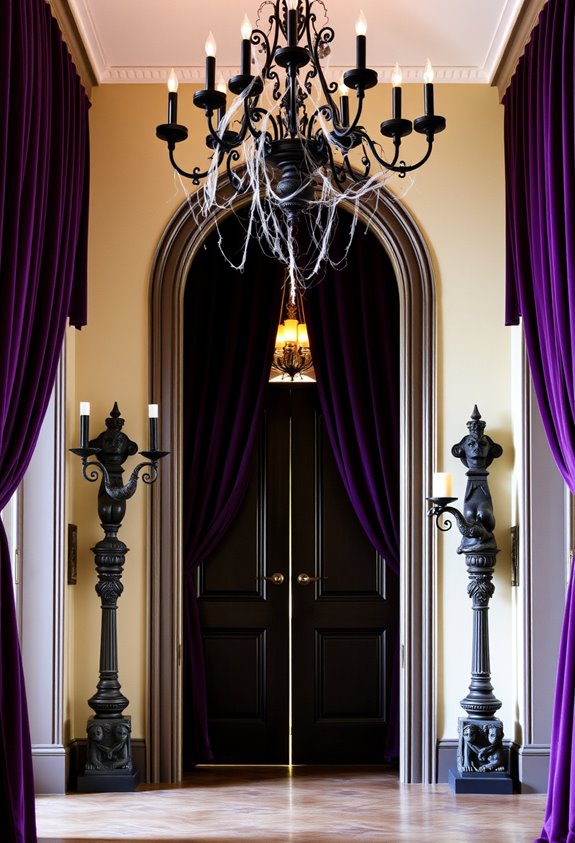
Your entryway sets the tone for everything — get it wrong and the rest of your Gothic decor is just playing dress-up. Start with the doorway itself.
Black-painted trim or dark mahogany stain immediately signals that something intentional is happening here. Add wrought-iron hardware. Done. That’s half the battle.
Layer your color palette carefully — black as the anchor, then deep burgundy, midnight blue, or plum for richness. Gold or antique brass accents keep it from feeling like a cave.
Texture matters too. A Persian rug with deep reds and blacks grounds the floor instantly. Throw in a gilded mirror, a carved console table, and a candelabra. Suddenly your entryway isn’t just a hallway. It’s a statement. Welcome to the dark side — you belong here. Pulling it all together doesn’t have to break the bank — a full Gothic entryway transformation can be achieved for as little as $1,000 to $3,000 with smart shopping and DIY options.
Style a Gothic Mantel That Commands Attention
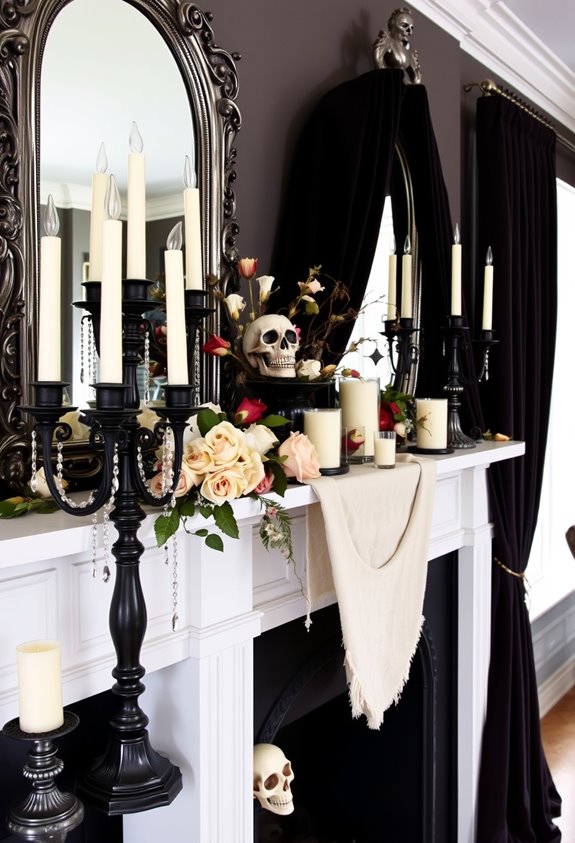
The mantel is where your Gothic decor either pulls together or falls apart. No pressure. Start with one dominant focal point — an oversized arched mirror with intricate scrollwork works beautifully. Build everything else around it.
The mantel makes or breaks your Gothic aesthetic. Choose one bold focal point — then let everything else bow to it.
Layer in these essentials:
- Tall black taper candles at varied heights for shadow and depth
- Clustered black iron or brass candelabras for old-world vertical drama
- Dried black or burgundy roses for that bruised, melancholic vibe
- Stacked antique books in crimson, black, or navy
- A velvet or lace runner to soften the hard mantel edge
High contrast matters. Black decor pops against a white mantel. Antique gold accents warm up dark wood surrounds. Keep one focal point strong. Everything else supports it. For an extra layer of atmosphere, drape warm white fairy lights along the back of the mantel to add a subtle, twinkling glow that plays beautifully against darker decor elements.
Create a Gothic Dining Table That Looks Hauntingly Good
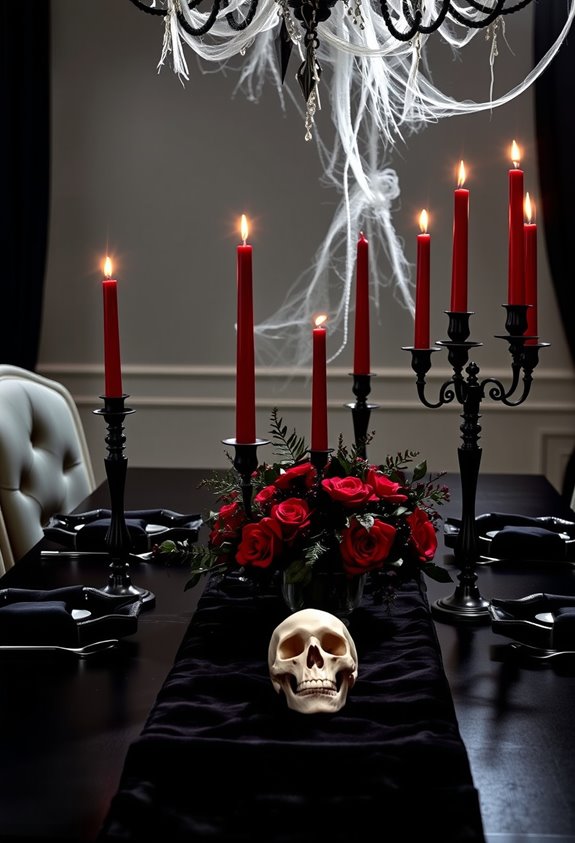
Once the mantel’s locked in, the dining table is where Gothic decor really gets to perform.
Start with a black velvet tablecloth. Layer black lace over burgundy underneath it. Instantly dramatic. Build your centerpiece with height — use a cake riser, black taper candles, and a dark urn packed with crimson flowers, twigs, and moss. Mix candle heights so the whole thing feels architectural, not flat. Let wax drip. It’s supposed to look that way. Add skulls or birdcages sparingly — one strong macabre accent beats ten competing ones. Swap regular glasses for amber goblets or skull-shaped ones. Use ornate, antique-inspired tableware to keep things feeling luxurious rather than cheap. Spray-paint chargers matte black if needed. Finish with dark velvet or lace napkins. Silver skull napkin rings make a bold accent that ties the macabre theme together without overwhelming the rest of the table. Done right, this table stops people cold.
Use Ravens, Skulls, and Dark Florals to Tell a Gothic Story

Gothic decor without a narrative is just expensive clutter. Ravens, skulls, and dark florals only work when they’re telling a story together. Think watchfulness. Mortality. Elegance slowly decaying.
Here’s how to build that story intentionally:
- Ravens suggest a sentry-like presence — perched, waiting, watching
- Skulls anchor mortality as classic memento mori focal points
- Dark florals like black roses and burgundy dahlias soften the scene with haunting beauty
- Layered heights create a cinematic, story-driven vignette that feels curated
- Candlelight and shadow transform objects into atmosphere
You’re not decorating a shelf. You’re composing a scene. Black plumage against bone-white skulls. Dried eucalyptus trailing past iron candleholders. Every element earns its place. That’s the difference between Gothic and just… dark.
Hang a Gothic Gallery Wall With Dark Frames and Eerie Prints
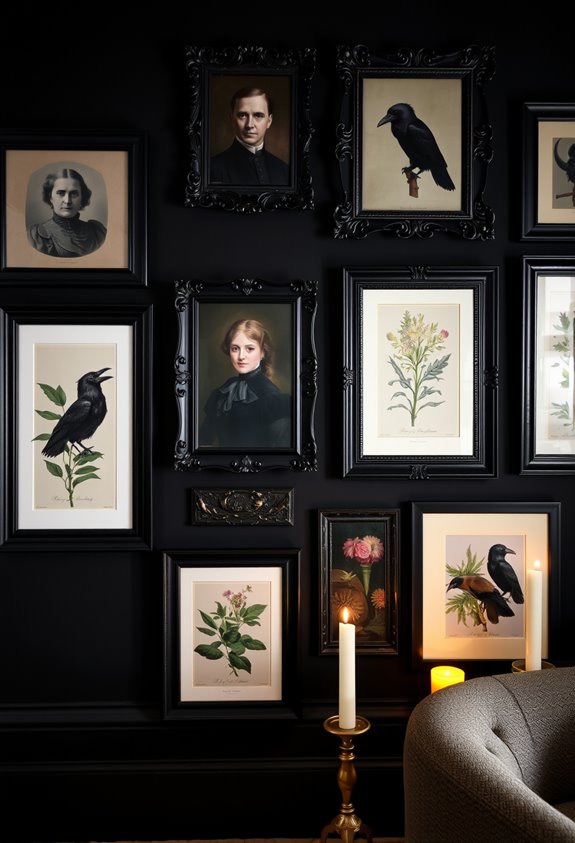
A gallery wall done wrong is just a random collection of stuff nailed to drywall. Don’t be that person. Gothic frames need ornate details — think intricate carvings, pointed arches, decorative flourishes. That’s what separates a curated display from a mess.
Gothic frames demand ornate details — intricate carvings, pointed arches, decorative flourishes. That’s what makes a wall curated, not chaotic.
Mix frame sizes. Seriously. Combine 4×6, 5×7, and 8×10 pieces for contrast. Keep spacing consistent at 2–3 inches so nothing feels crowded. Place your largest frame off-center to create natural visual flow. Symmetrical layouts read formal. Asymmetrical ones feel alive.
Hang everything so artwork centers at 57–60 inches from the floor. Standard rule. Works every time.
Light it properly. Dark frames on dark walls disappear without illumination. Track lighting at 30–45 degrees cuts glare and highlights your eerie prints beautifully. Your wall deserves that attention. For color, deep reds, blacks, and antique golds work best, but lighter colors with intricate designs can provide striking contrast against dark walls without losing that Gothic drama.
Use Antique and Vintage Pieces to Deepen Gothic Atmosphere
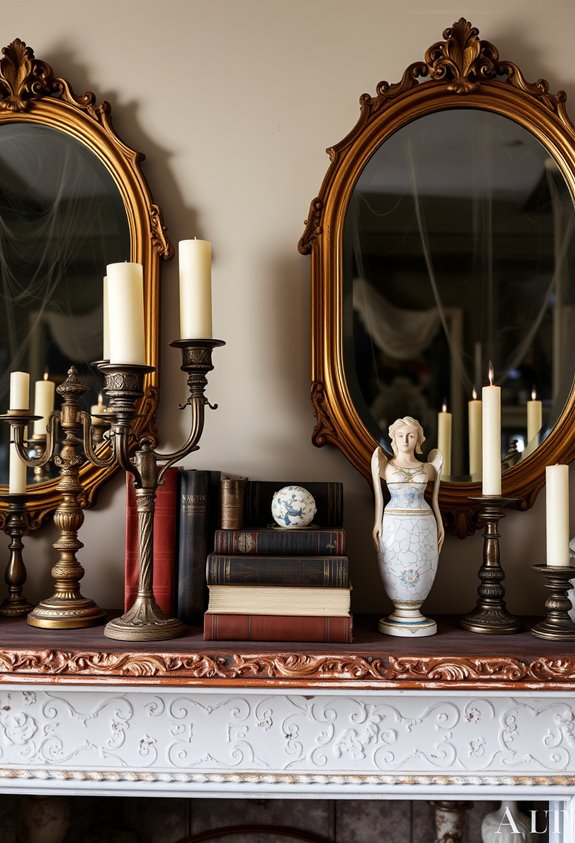
Your gallery wall sets the mood, but the frames and prints are only part of it. Real Gothic atmosphere needs objects with age, texture, and history baked in. Antique and vintage pieces do that work fast.
Look for items featuring:
- Pointed arches or finials that echo church and castle architecture
- Heraldic motifs for old-world formality and a sense of lineage
- Linenfold carving that signals genuine craftsmanship and period authenticity
- Dark-stained wood with worn finishes that suggest timeworn character
- Floral carved details to soften severe silhouettes without losing ornate drama
Group smaller carved pieces into dense vignettes. Use statement arch or finial pieces on mantels and entryways. Mix textures and silhouettes deliberately. Generic black Halloween decor won’t get you here. These pieces will. For upholstery on seating and accent pieces, Gothic Revival furniture traditionally favored velvet or leather, which instantly deepens the brooding, period-authentic atmosphere you’re building.
Frequently Asked Questions
Can Gothic Halloween Décor Work Well in Small Apartments or Studios?
You can absolutely pull off Gothic Halloween décor in a small apartment! Use vertical hangings, mini skulls, LED candles, and dark textiles to create a moody, haunted atmosphere without cluttering your cozy space.
How Do You Store Gothic Halloween Decorations Without Damaging Delicate Pieces?
You’ve built something beautifully dark, so don’t let careless storage ruin it. Wrap fragile pieces in bubble wrap, use sealed bins with desiccants, remove batteries, and label everything clearly to protect your gothic treasures year-round.
Is Gothic Halloween Décor Appropriate for Homes With Young Children?
Yes, you can absolutely make Gothic Halloween décor work in your family home! Simply avoid sharp, breakable, or small pieces, use flameless lighting, and keep pathways clear so your little ones stay safe while you embrace the spooky atmosphere.
Can Gothic Décor Transition From Halloween Into a General Year-Round Aesthetic?
Nearly 60% of gothic enthusiasts decorate year-round! You can absolutely shift your Halloween aesthetic into a timeless, everyday style by swapping seasonal motifs for rich velvets, ornate mirrors, and deep jewel tones your whole community will admire.
How Much Does a Full Gothic Halloween Decorating Setup Typically Cost?
You’ll typically spend $1,800 to $8,000 on a full Gothic Halloween setup in Chicago, depending on your home’s size and design complexity. Elaborate, custom displays with dramatic lighting push costs toward the higher end.
Conclusion
You’ve got everything you need to transform your home into a gothic Halloween masterpiece. Deep colors, moody lighting, rich textures — it all works together. Don’t overthink it. Layer what you love, embrace the darkness, and let the atmosphere do the heavy lifting. Even Edgar Allan Poe would’ve Instagrammed this setup. Your home doesn’t have to be a haunted house. It just has to *feel* like one.