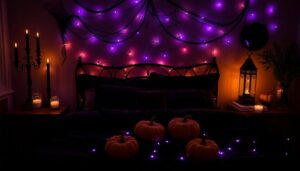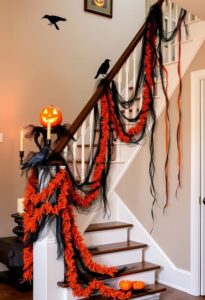
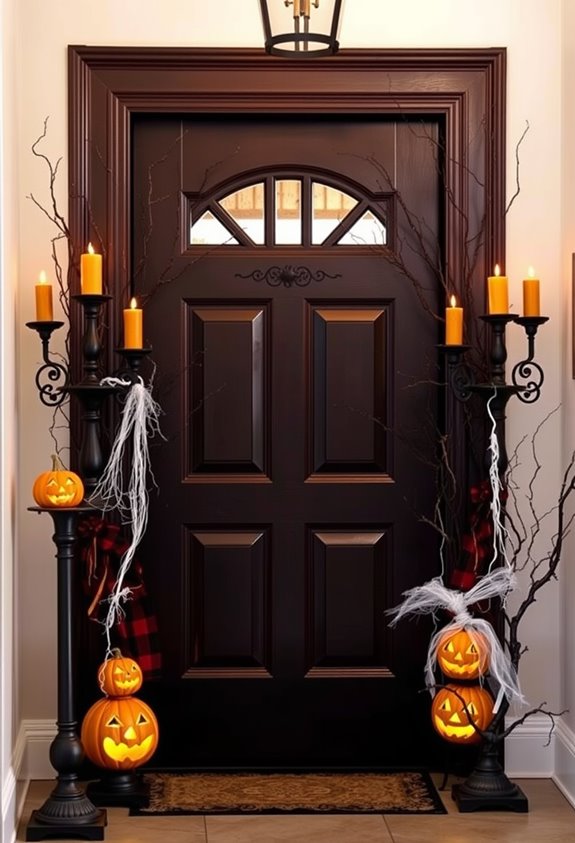
Your foyer sets the tone before anyone knocks. Swap bright bulbs for dim, warm lighting around 2000K, stretch cobwebs into sharp triangles instead of sad blobs, and pose skeletons with real props so they tell a story. Frame your doorway like a portal with draped gauze and arching garlands. Small details — flickering LEDs, fogged mirrors, ghostly handprints — do the heavy lifting. Seven specific ideas ahead will make your entryway genuinely unsettling.
Design Highlights
- Frame your doorway with draped gauze, spiderweb curtains, and arching garlands to transform the entrance into a theatrical, haunting portal.
- Replace bright bulbs with dim, warm 1800–2400K lighting and flickering LED candles to create an eerie, candlelit atmosphere.
- Stage skeletons interacting with real objects like chairs and railings to create memorable vignettes rather than isolated, unconvincing props.
- Stretch visual height using tall branches, life-size skeletons, and high-mounted garlands to make your doorframe feel dramatically imposing.
- Style foyer tables as mad scientist labs with labeled specimens, food-colored test tubes, and dry ice for smoky, bubbling effects.
Use Your Entryway’s Architecture Against Visitors
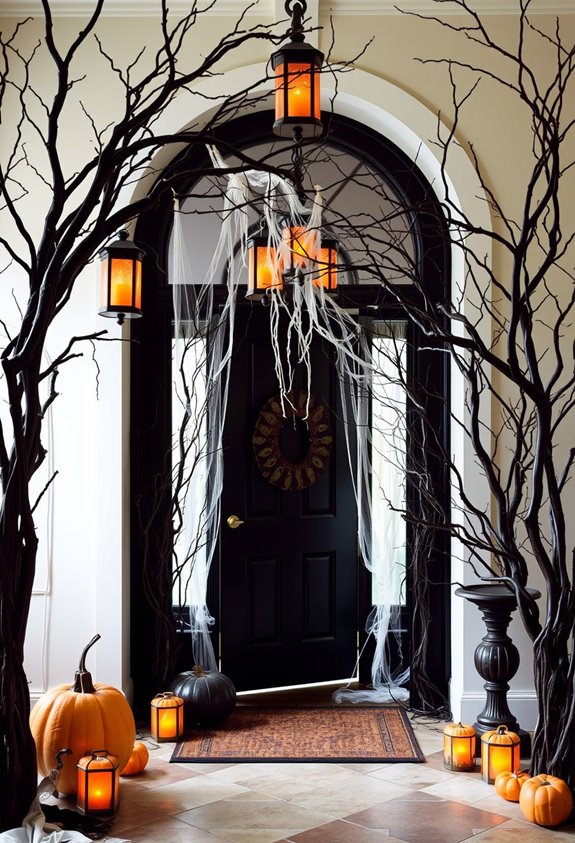
Your entryway already has bones — use them. Doorframes, columns, walls, railings — they’re not neutral background. They’re your canvas. Most people ignore what’s already there and pile stuff on the porch instead. Don’t do that.
Symmetry is your first weapon. Matching lanterns or planters on both sides of the entry create a deliberately staged look that feels controlled, formal, and honestly a little threatening. That’s exactly what you want.
Go vertical next. Tall branches, life-size skeletons, and high-mounted bat garlands visually stretch your doorframe upward. Suddenly your standard entry feels imposing.
Then frame the whole thing like a stage. Draped gauze, spiderweb curtains, arching garlands — treat that doorway like a portal. Because tonight, it’s one. A simple BOO doormat anchors the threshold and signals to every visitor exactly what kind of house they’re walking into.
Light Your Foyer to Feel Genuinely Haunted
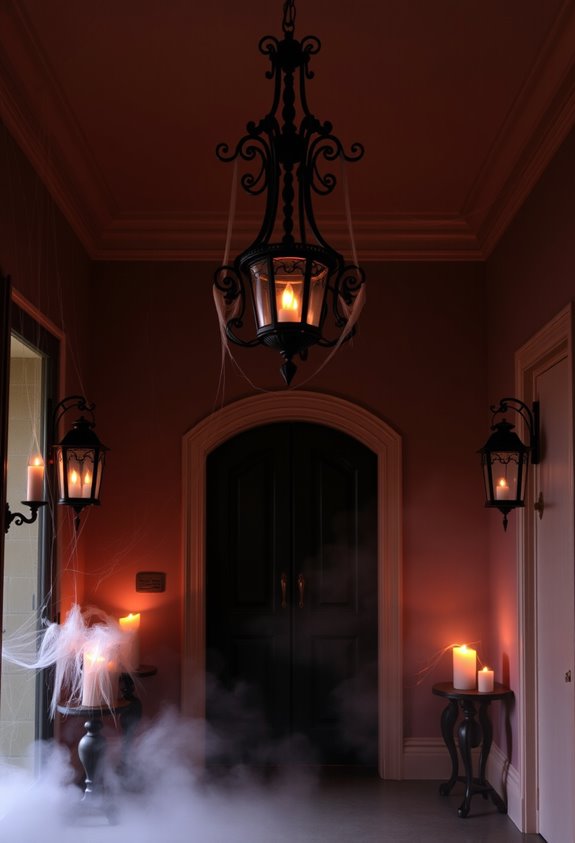
Architecture sets the stage. Lighting seals the deal. Swap out bright bulbs for dim, warm ones in the 1800–2400K range—that’s your candlelit sweet spot. Keep light levels between 1–5 foot-candles. Anything brighter? You’ve just built a waiting room, not a haunted foyer.
Dim it down. Warm it up. 1800–2400K is the difference between eerie and embarrassing.
Color matters more than people realize. Orange and red suggest fire and dread. Green and blue feel like a cemetery at midnight. Use them deliberately.
Add flicker. LED candles at varying heights create a floating, unstable effect that unsettles guests instantly. Pair them with black cardboard silhouettes in front of light sources, and your walls do the haunting for you.
Layer pathway lights to guide visitors in—then let the shadows swallow them whole. Consider using timers and dimmers to automate when your foyer lights activate and fine-tune their intensity for a more controlled, creeping atmosphere.
Stage a Skeleton Scene in Your Entryway That Stops Guests Cold
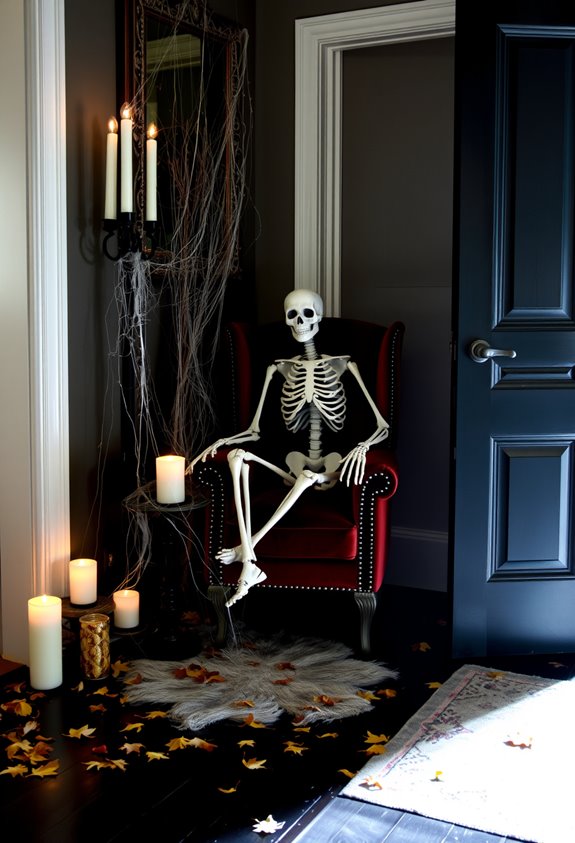
A skeleton standing alone in the corner isn’t a scene—it’s a sad prop. You can do better. Stage your skeleton where it interacts with something real: a chair, a staircase railing, a planter by the door. Unexpected spots hit hardest. A skeleton at the kitchen sink stops people cold every time.
Start with the hips and shoulders, then work outward. Add a hat, glasses, or a mug. Props that match the pose create a vignette guests actually remember. Multiple skeletons at different heights make the whole thing feel alive—chaotic in the best way.
Secure everything. Wind pulls figures over. Fishing line, zip ties, and floral wire are your friends. A clean base makes the scene look intentional, not thrown together. Moving your skeleton to a new spot each year keeps the display fresh and gives returning guests something unexpected to find.
Hang Cobwebs and Bats Across Your Entryway for Almost Nothing
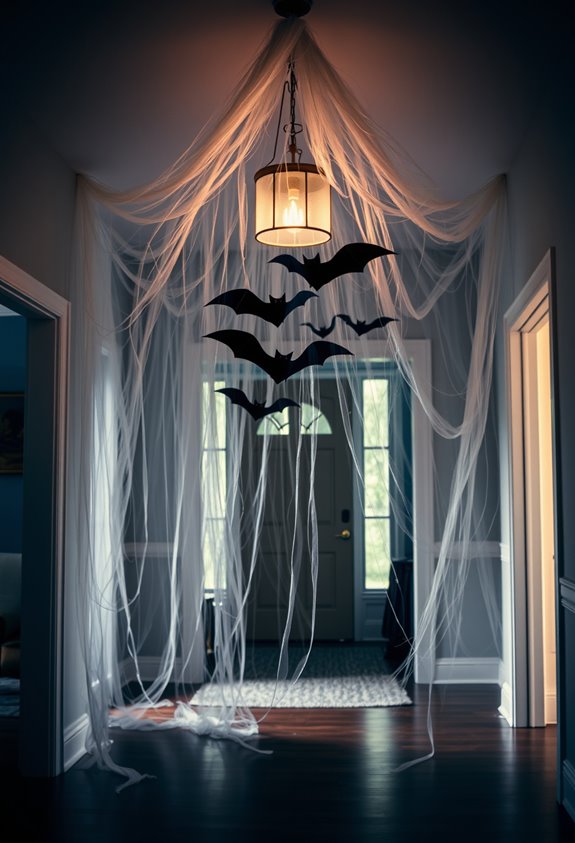
Skeletons take effort. Cobwebs and bats? Almost none. And yet they work.
The easiest decorations land hardest. Cobwebs and bats do more work than you think — for almost no effort.
A single bag of stretchy webbing can cover an entire entryway when you pull it properly — thin, angular, anchored at multiple points. Don’t clump it.
Stretch it until it fights back, then tease it apart. Triangular shapes read as realistic. Square blobs read as lazy.
Bats are even easier. Buy a mixed pack, hang the largest ones first, fill gaps with smaller ones, and stagger the heights. Nobody wants a bat parade.
Clear push pins, Command hooks, or even curtain rods handle the hardware. Focus everything on corners and edges. You don’t need to fill the whole space. For an extra layer of creepiness, add plastic spiders or cockroaches to the webbing once it’s in place.
Frame it. That’s the look everyone wants, and it costs almost nothing.
Style Your Foyer Table Like a Mad Scientist’s Lab
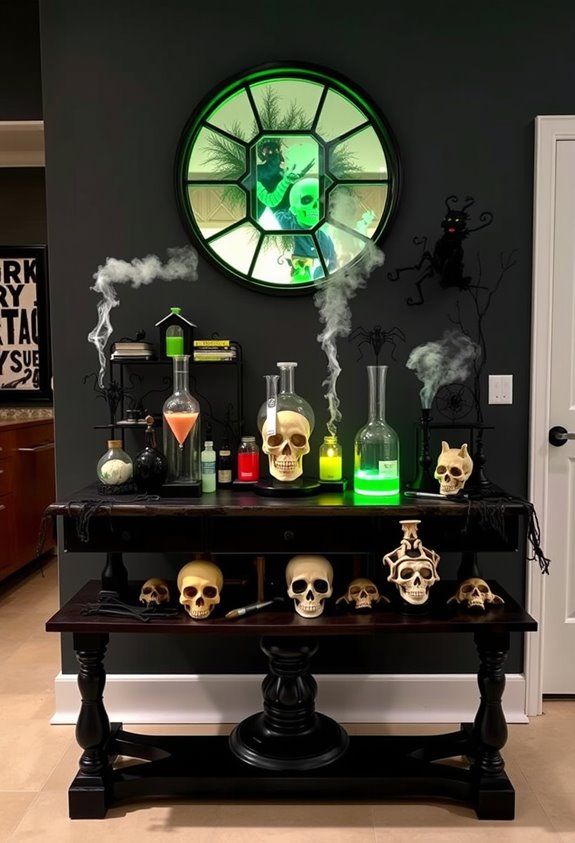
The foyer table is where this whole mad scientist fantasy either lands or collapses. No pressure. Get it right and guests stop dead in their tracks.
Here’s what actually works:
- Fill test tubes with food-colored water — different hues grouped together instantly read as reagents and samples.
- Add dry ice to water-filled vessels for that smoky, bubbling effect nobody ignores.
- Mix in dish soap to simulate reactive, foaming chemicals without any real drama.
- Label everything — periodic-table cards, element symbols, specimen jars — it ties the whole scene together.
Throw a black tablecloth underneath. Done. The dark base makes your glassware pop hard.
Arrange tools and utensils like someone’s mid-experiment. Organized chaos. That’s the vibe your people expect.
Mirror and Wall Staging That Unsettles on Sight
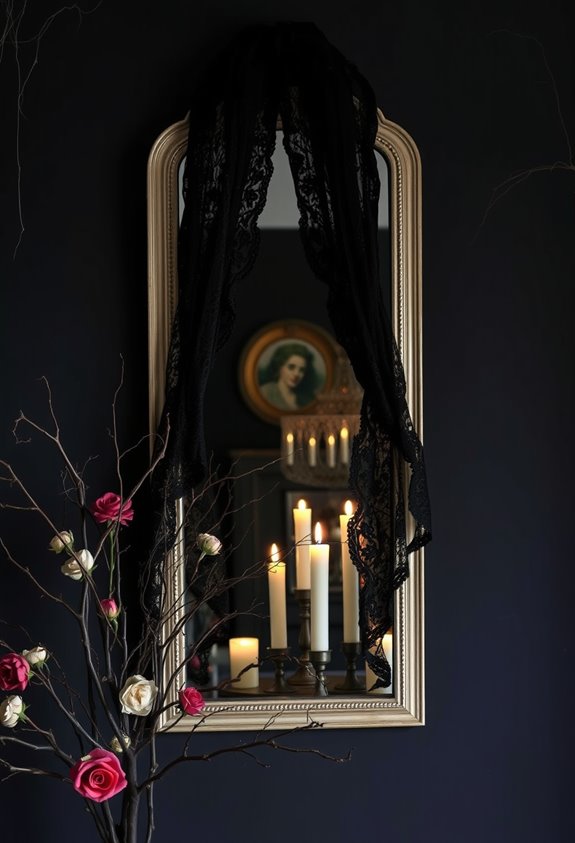
Your foyer mirror can do a lot more than show guests their reflection — it can make them question what’s looking back.
Fog the glass with hairspray or fog spray for that spectral, something’s-not-right look. Add ghostly handprints using white or red paint, then drag them downward. Creepy.
Tape black-paper silhouettes behind the glass — figures that appear to stand just beyond the surface. That’s the move everyone notices but nobody expects.
Frame the whole thing in a dark-painted, cobweb-draped border with plastic spiders tucked in for good measure. Then light it wrong. Use uplights or flickering LEDs to cast unnatural shadows across the frame.
Purple or red string lights shift the entire room’s mood fast. Your guests won’t just walk past it. They’ll hesitate. For maximum effect, position a large mirror here — it reflects and multiplies every spooky element you’ve placed around it.
DIY Paper Bats, Milk Jug Ghosts, and Other Cheap Finishing Touches
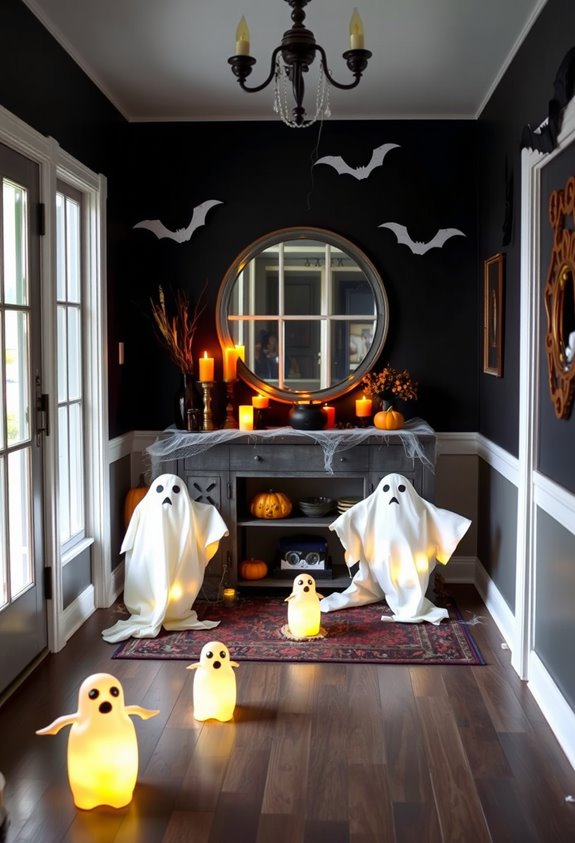
Not everything has to cost money to look good. Black paper, scissors, and removable adhesive are genuinely all you need to pull off a foyer that feels intentional.
Milk jugs become glowing ghosts with a marker and an LED light inside. Seriously, that’s it.
Here’s what actually makes cheap decor hit harder:
- Vary your bat sizes — larger low, smaller high — so the arrangement feels like movement, not a sticker sheet.
- Bend the wings slightly for dimension. Flat bats look amateur.
- Cluster pieces together rather than spacing them out lonely and random.
- Place glowing milk jug ghosts near your entry floor where the light draws people in.
You belong in this. No budget required. Fold your paper in half before cutting so every bat comes out symmetrical without any extra effort.
Frequently Asked Questions
How Early Should I Start Decorating My Foyer for Halloween?
You should start decorating your foyer in early October. Kick things off with subtle fall accents first, then layer in Halloween touches by mid-October so you’re right in step with what most decorators do!
Are Halloween Foyer Decorations Safe for Homes With Young Children?
Halloween foyer decor can be a safe haven for your little ones! You’ll want to choose foam, plush, and LED lights while avoiding open flames, small parts, and fragile items that could harm curious hands.
How Do I Store Halloween Foyer Decorations After the Season Ends?
Store your Halloween foyer decorations by cleaning them first, then wrapping fragile pieces in bubble wrap. You’ll want to pack everything into clear, labeled bins and keep them somewhere cool and dry until next season!
Can Renters Decorate Their Foyers Without Damaging Walls or Surfaces?
Yes, you can transform your foyer into a haunted haven without touching your walls permanently! Use removable adhesive hooks, Command strips, and low-tack tape to hang spooky décor safely, keeping your community of fellow renters worry-free this Halloween season.
What Halloween Foyer Themes Work Best for Apartment Entryways?
You’ll love how moody gothic, playful ghost-and-bat, and subtle autumn-spooky themes transform your apartment entryway. They’re perfect for small spaces, creating a welcoming, festive atmosphere that’ll make your neighbors feel the Halloween spirit too!
Conclusion
Your foyer is the opening line of your Halloween story. Make it count. With the right lighting, a few strategic props, and some genuinely creepy staging, you’ll turn a boring entryway into something guests actually talk about. It doesn’t take a big budget. It takes intention. So stop overthinking it, grab some fake cobwebs and a skeleton or two, and let your front door do the terrifying.