Your basement can be the scariest spot on the block — but only if you do it right. Start with warm, dimmable LEDs around 2700K–3000K, layer in cobwebs and distressed fabric, then add fog that actually crawls along the floor. Hang ghosts from the ceiling, build a cauldron focal point, and throw in interactive puzzles to keep guests engaged. Safety matters too — taped cords and lit exits aren’t optional. Keep going to find out exactly how.
Design Highlights
- Use recessed LEDs on dimmers with warm 2700K–3000K bulbs and LED strip underlighting to create eerie, adjustable basement ambiance.
- Route low-lying fog through ice-cooled PVC piping hidden behind tombstones for a creeping, ground-hugging effect.
- Frame your entrance with cobwebs, torn cloth, push-through curtains, and motion-activated sounds to signal a psychological shift.
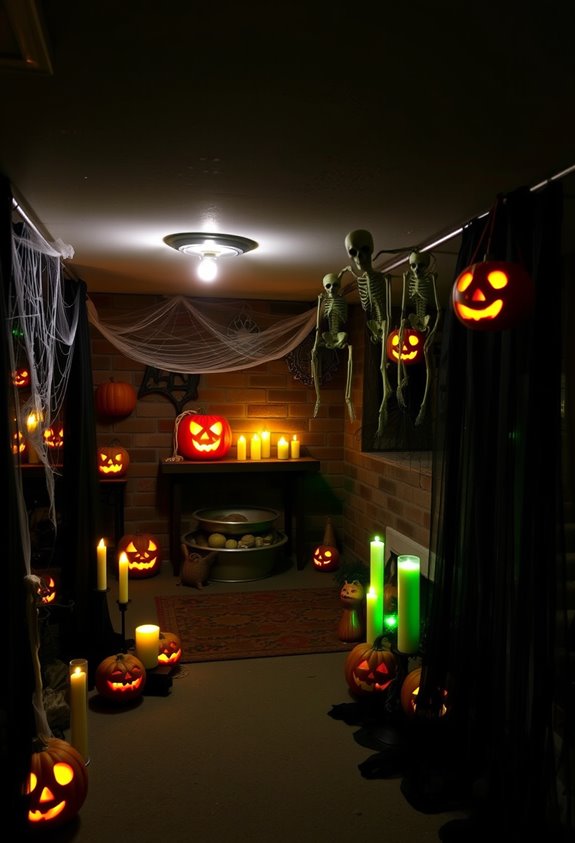
- Build a focal cauldron scene with fog, green uplighting, distressed mirrors, and life-sized skeletons to anchor your haunted story.
- Tape all cords, mark exits clearly, and keep paths unobstructed to maintain atmosphere without sacrificing guest safety.
Set the Mood With Eerie Basement Lighting
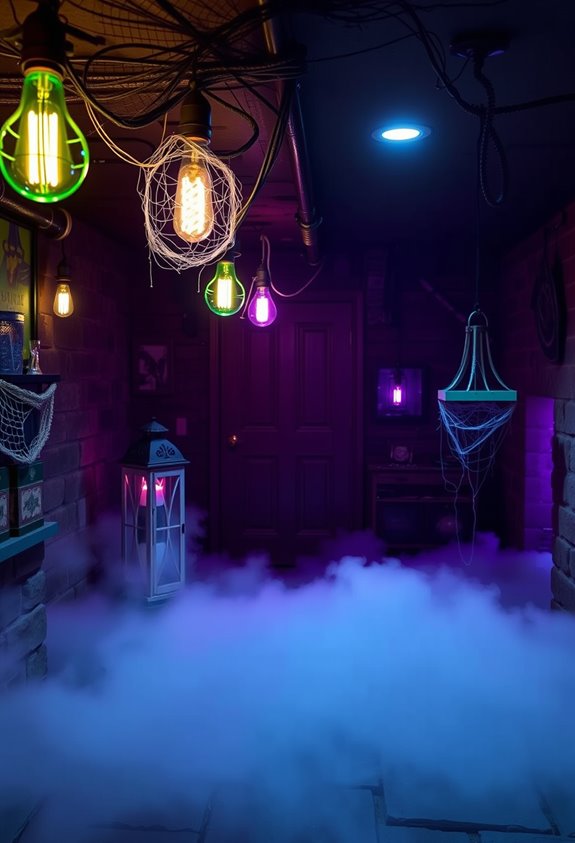
Lighting makes or breaks a haunted basement. Get it wrong, and you’ve just got a sad, dark room. Get it right, and you’ve got something people actually talk about.
Start with recessed LEDs on a dimmer. They spread light evenly, take up zero ceiling space, and let you dial the mood from “spooky gathering” to “full-on frightening.” Space them every four to six feet so you’re not dealing with awkward dark patches — unless that’s intentional.
Stick to warm-white bulbs in the 2700K–3000K range. That’s your sweet spot for creepy-but-cozy. Anything above 4000K and you’ve accidentally created a dentist’s office. Hard pass.
Layer in LED strips under shelves or along baseboards for that low, eerie glow. Indirect light leaves selective shadows. Shadows are your friends here. For an even more unsettling effect, position large mirrors across from your light sources so the reflected illumination doubles, making the space feel disorienting and endlessly deep.
Make a Scary First Impression at the Entrance
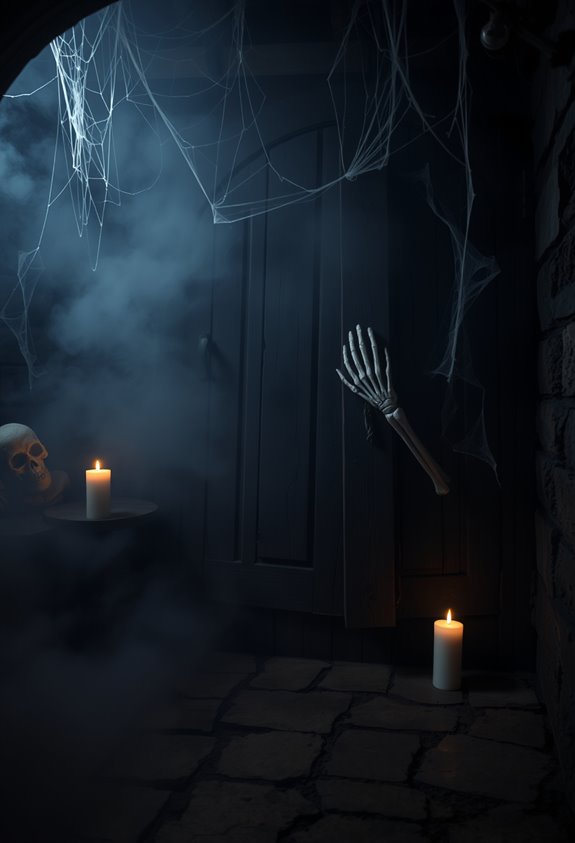
Before guests even step foot in your haunted basement, the entrance has already told them everything. Make it count.
Cover the doorframe with cobwebs and torn cloth. Add a push-through curtain so guests physically cross into something different. That barrier does a lot of psychological work. Trust it.
The doorframe is your first scare. Cobwebs, torn cloth, a push-through curtain — make guests earn their way in.
Hang a monster wreath with plastic teeth or black feathers. Position a skeleton nearby in a threatening pose. Use creepy crawlies and faux hands around the frame to increase visual unease. Motion-activated sounds near the threshold build anticipation before anyone touches the curtain.
Line the approach with tombstones or monster footprints. Add low-lying fog to hide edges and deepen the mystery. Scatter fake leaves and creepy signs along the path so the unsettling mood sets in before guests ever reach the door.
One rule that isn’t optional: mark every step with glow tape. Scaring people is the goal. Injuring them isn’t.
Add Cobwebs, Distressed Fabric, and Classic Haunted Textures
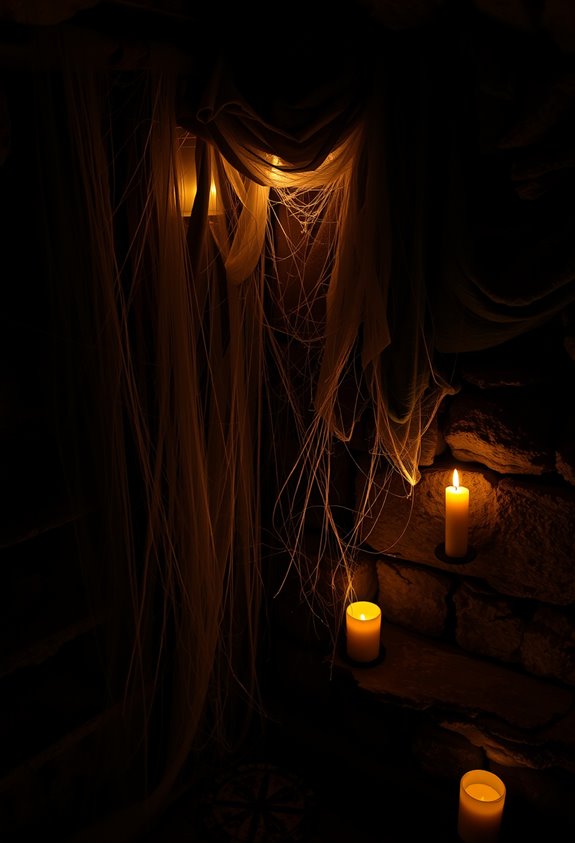
Cobwebs are the fastest way to make a basement look like no one’s touched it in decades. Drape them across corners, furniture, and mirror frames. Don’t just toss them on randomly — pull the material thin and wispy, because real webs aren’t perfectly symmetrical. Mix white and gray materials together. Add yarn or string for texture variation. Layer multiple passes instead of one sparse sweep.
Then come the fabrics. Torn, frayed, weathered cloth draped over shelves and furniture sells the neglected look instantly. Keep edges uneven. Pristine symmetry kills the vibe.
Combine webs and fabric together — that’s where the magic happens. Place textured decor near lanterns and mirrors for shadow play. Add colored lighting, and suddenly your basement feels genuinely centuries old. For an even more unsettling touch, string an illuminating spider web set across the ceiling to cast a ghostly, otherworldly glow over the entire space.
Hang Bats and Ghosts From Your Haunted Basement Ceiling
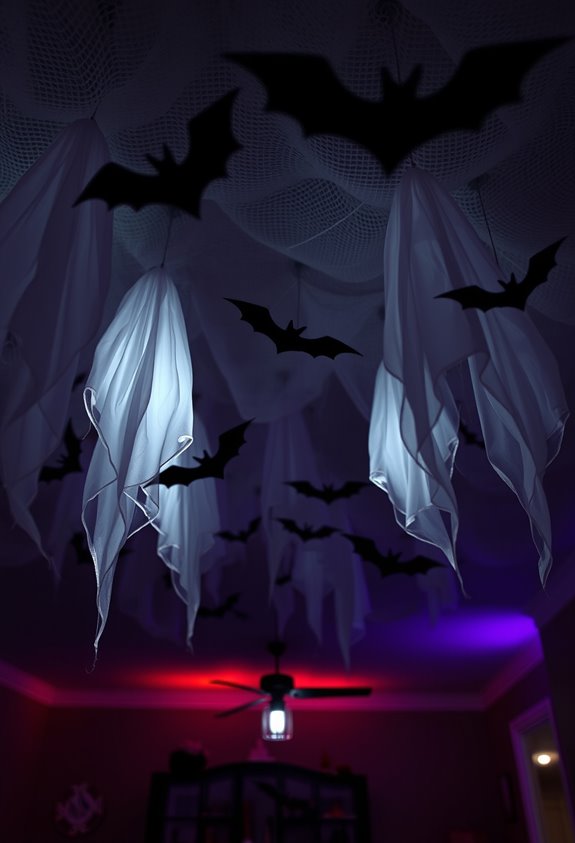
The ceiling’s your most underused real estate in a haunted basement. Don’t waste it.
Clear fishing line creates that unsettling floating effect everyone’s chasing — props appear suspended mid-air with no visible support. Cut bat silhouettes from black construction paper or foam sheets for quick, inexpensive results.
Here’s what works best overhead:
- Black foam bats on monofilament for a clustered, swarming effect
- Cheesecloth ghosts stuffed with cotton balls for rounded, spectral shapes
- Fishing line anchored to small ceiling hooks in inconspicuous spots
- Staggered drop lengths so bats and ghosts hang at different heights
Even slight airflow makes cheesecloth ghosts sway. That movement sells the whole scene. Keep everything lightweight — ceiling installations aren’t the place for heavy props. For added impact after dark, apply glow-in-the-dark paint to your ghosts and bats for an eerie nighttime effect without any additional lighting.
Build a Focal Point With Cauldrons and Spooky Mirrors
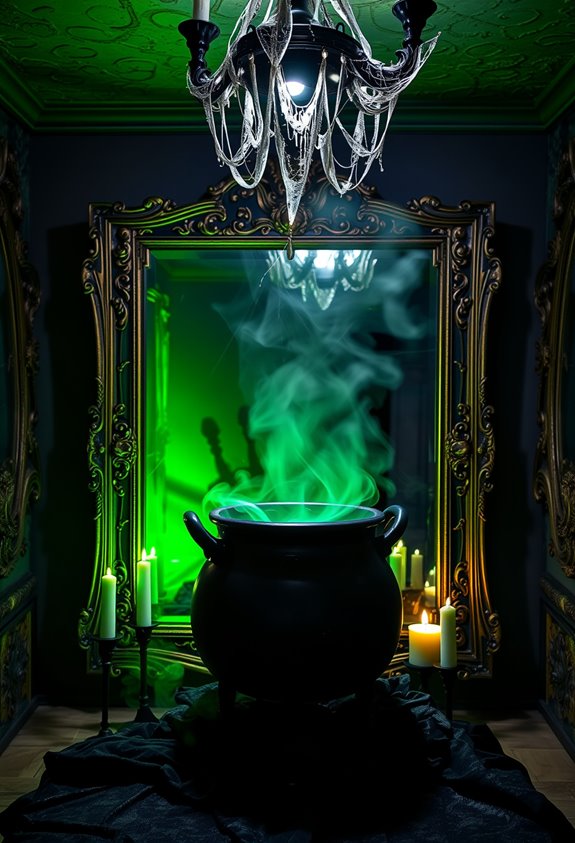
Once you’ve claimed the ceiling, it’s time to work the floor — specifically, the part your guests actually stare at. Put a large cauldron front and center. Raise it on a crate so nobody misses it. Pair it with smaller cauldrons for depth — because one lonely cauldron is just sad. Paint everything black or weathered metal. Add rust highlights and grime. Make it look ancient.
Now add the mirror. Position it behind or beside the cauldron so it catches the fog, the light, the whole scene. Dark frame. Distressed finish. Let it reflect everything back at your guests.
Drop in dry ice or run a fog machine hose inside. Hit it with green or purple uplighting. Suddenly your basement isn’t a basement anymore. It’s a coven. For an even more dramatic effect, use expanding spray foam along the cauldron rim and paint it neon green to simulate a bubbling, overflowing potion.
Add Life-Sized Skeletons and Haunted Forest Backdrops
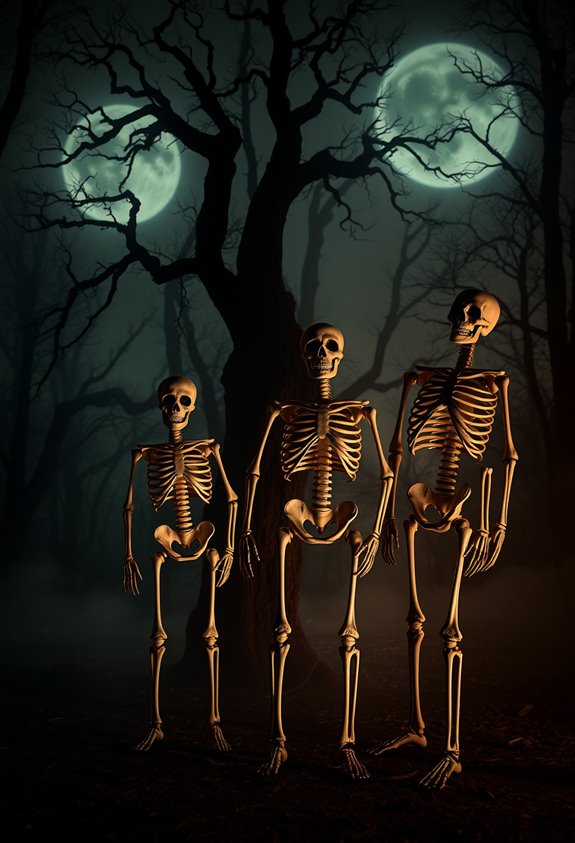
Skeletons do the heavy lifting here — literally. A life-sized skeleton reads as a human figure instantly — no imagination required. Pose yours to create a scene that tells a story:
- Standing near the entry with bamboo stakes for support
- Seated in a lawn chair, mid-activity, unbothered
- Hanging from a beam with S-hooks for maximum drama
- Mounted against a wall or window, watching
Behind your skeleton, add a haunted forest backdrop. Twisted trees and dark woodland imagery transform flat basement walls into something genuinely unsettling.
The forest stays in the background — your skeleton stays center stage. That contrast is the whole point. Shadowy textures make the figure pop. Props near the skeleton seal the deal, giving your display personality and implied story without extra effort.
Fill Your Haunted Basement With Fog and Spooky Sound Effects
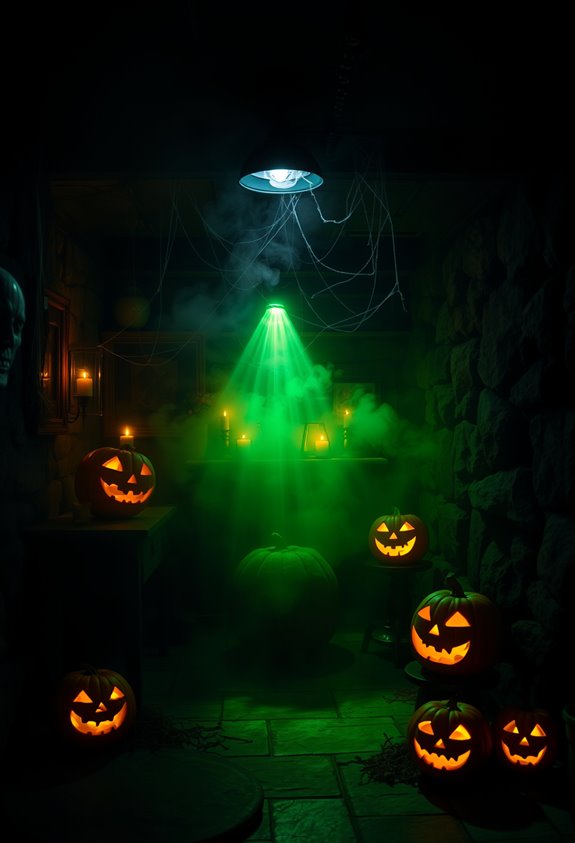
Layering fog into your haunted basement is where the atmosphere stops being decorative and starts being genuinely disorienting. Low-lying fog is the move here. Not the kind that fills the whole room like a sad nightclub — the kind that crawls along the floor like something’s actually wrong. Route your fog machine output through a cooler packed with ice or frozen water bottles. Cold fog sinks. Warm fog floats. Simple physics, big payoff.
Mix distilled water with food-grade glycerin at a 1:3 or 1:4 ratio for your fog juice. Add an ultrasonic mister for denser output. Hide everything behind tombstones or PVC piping so guests can’t see the machinery.
Then layer in sound effects. Fog without audio is just weather. Together, they’re genuinely unsettling.
Keep Guests Engaged With Interactive Haunted Basement Games
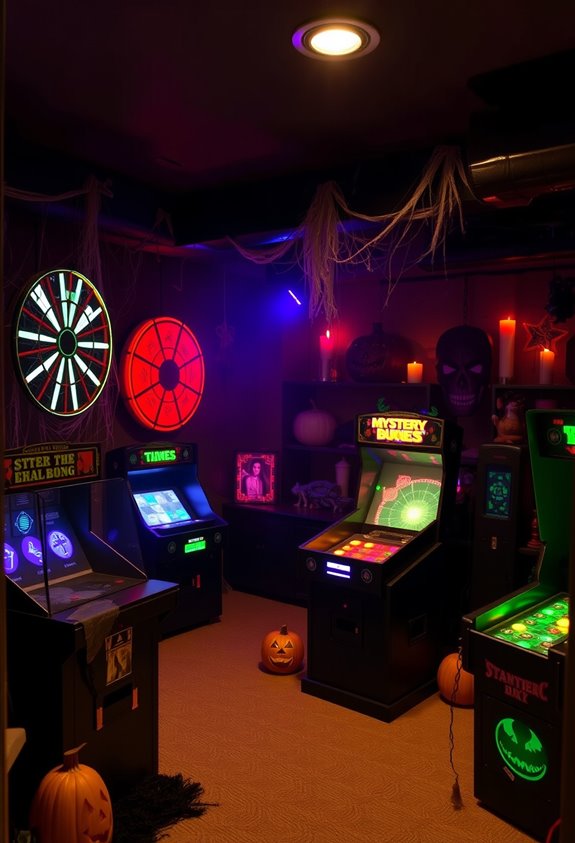
Fog and sound will set the mood, but if you want guests to actually do something down there, you need games. The basement is perfect for interactive play. Cluttered shelves, dark corners, hidden compartments—it’s already built for it.
Try these formats that actually work:
- Lockbox puzzles: Hide clues, crack codes, release props. Simple and satisfying.
- Hidden-object hunts: Send guests searching for cursed photos or ritual items tucked under tables and inside boxes.
- Code-breaking stations: Print ciphers on aged paper, keep codes short, and tie each solution to one opened compartment.
- Timed challenges: Add a countdown. Urgency makes everything scarier.
Assign roles too. Decoder, key carrier, lookout. Everyone stays involved, nobody stands around feeling useless. For a ready-made version of this concept, there’s even a game called The Basement Isn’t THAT Haunted where players search through boxes as a bunny character while avoiding ghosts lurking inside them.
Keep Your Haunted Basement Safe Without Killing the Vibe
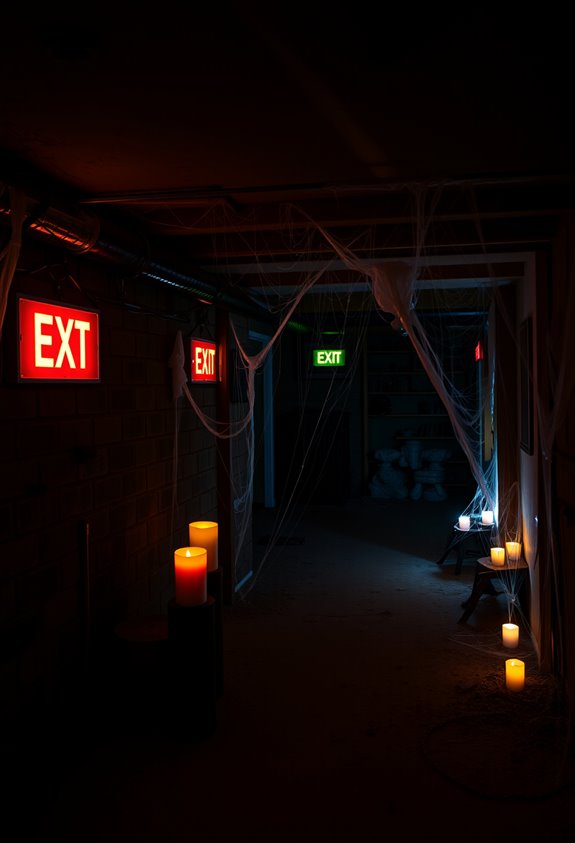
Games, puzzles, and timed challenges are great—until someone trips over a fog machine cord in the dark and eats the floor. Tape down every cord. Non-negotiable.
Keep exit signs lit and paths completely clear. No props, no furniture, no creative placement of décor blocking doorways. Mark dead ends as “NO EXIT” so guests aren’t panicking in a dark corner. Two ways out minimum—always.
Skip the candles. Use LED bulbs instead, and keep flammable stuff like straw and cotton batting far from heat sources. Mount a fire extinguisher near the exit path.
Have a charged phone, a first-aid kit, and an actual emergency plan. Train your helpers on exits and hazards. Wear comfortable, supportive shoes like tennis shoes or boots—appropriate footwear prevents falls on uneven or dark basement floors.
Safety doesn’t kill the vibe. A trip to the ER definitely does.
Frequently Asked Questions
What Is the Best Basement Size for a Haunted Walkthrough Setup?
You’ll want the largest space that still allows safe movement and hidden effects. Aim for multiple connected rectangles with clear pathways, letting you create turns, surprises, and decor on both sides for your crew’s best experience.
How Far in Advance Should You Start Decorating Your Haunted Basement?
Start decorating your haunted basement in late September or early October. Nearly 50% of people agree October 1–15 is ideal, so you’ll fit right in while enjoying your spooky setup for weeks!
Can Haunted Basement Decorations Work for Outdoor Halloween Spaces Too?
Yes, your haunted basement decorations work beautifully outdoors! You can hang ghosts from trees, stake skeletons in mulch, and drape cobwebs over bushes. Together, you’ll create a graveyard scene your whole neighborhood will love.
How Do You Decorate a Haunted Basement on a Tight Budget?
You don’t need a big budget to create a spine-chilling basement! Reuse cardboard, old sheets, and mason jars, add colored bulbs, stretch cobwebs everywhere, and you’ll transform your space into a hauntingly memorable experience everyone’ll love.
Are Haunted Basement Decorations Suitable for Young or Sensitive Children?
Like a warm hug on a chilly night, you can make haunted basement decorations suitable for sensitive children! Simply swap intense scares for friendly monsters, soft lighting, and playful props, so everyone’s included in the Halloween fun.
Conclusion
Your haunted basement won’t build itself — but now you’ve got everything you need to make it happen. Lighting, fog, skeletons, sound effects, interactive games — it’s all there. And yes, keeping it safe is part of the deal, because nothing kills the Halloween spirit quite like a lawsuit. So get to work. Your guests are expecting something terrifying. Don’t disappoint them.