For Thanksgiving centerpieces that actually impress, you’ve got five solid options. Stack white pumpkins and gourds in odd numbers for visual balance. Pile edible produce — pomegranates, artichokes, purple carrots — into wicker baskets. Build drama with dahlias in deep reds and burnt oranges. Cluster candles at staggered heights for warm, moody glow. Or layer free natural accents like pinecones and dried wheat for texture. Each option hits differently, and there’s more worth knowing about each one.
Design Highlights
- Pumpkin and gourd centerpieces work best with odd-number arrangements, varying heights, and a neutral or harvest-toned color palette for visual balance.
- Harvest produce centerpieces featuring pomegranates, artichokes, and root vegetables displayed in wicker baskets create stunning, edible Thanksgiving table arrangements.
- Fall floral centerpieces anchored by bold dahlias, amaranthus, and seasonal wheat stalks deliver dramatic color and symbolic abundance to any table.
- Clustered candles at staggered heights in amber, burnt orange, or deep red tones create warm, atmospheric Thanksgiving centerpieces with added fragrance options.
- Budget-friendly natural accents like pinecones, acorns, dried wheat, and branches layered together build effortlessly beautiful, texture-rich Thanksgiving centerpieces.
Pumpkin and Gourd Centerpiece Ideas for Every Table Size
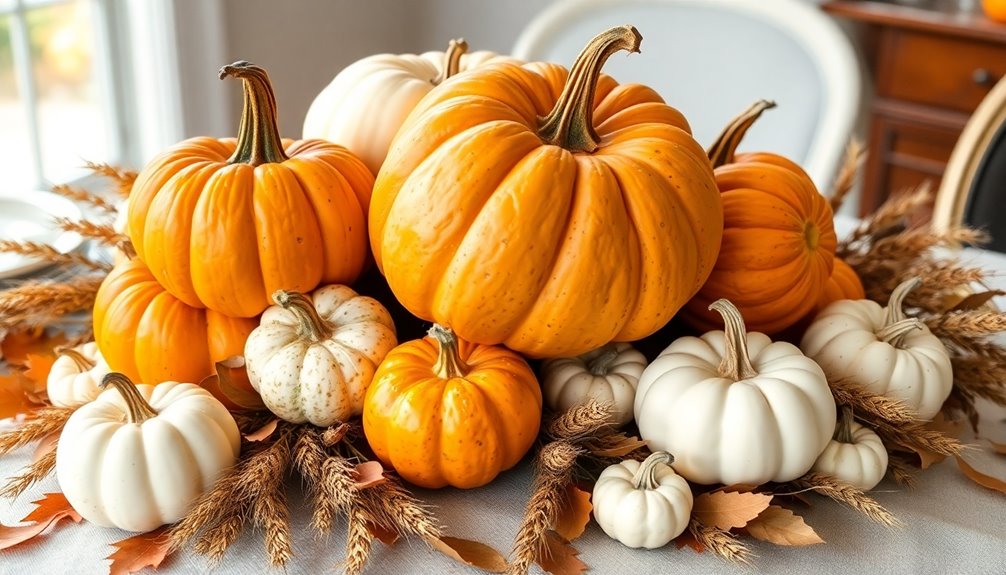
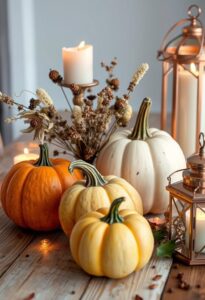
When it comes to pumpkin and gourd centerpieces, color palette is everything. Go neutral with green and white gourds, white baby boo pumpkins, and sage green buttercup squash. Soft, modern, cohesive. Done.
Or lean into classic harvest vibes with deep oranges, golds, and greens. Both work. Neither is wrong.
Size matters too. Bigger tables need bigger anchors. Start with large buttercup squash, then layer smaller varieties around them. Arrange in odd numbers — groups of three or five. It’s just more visually satisfying. Science, basically. Incorporating rustic elements from farmhouse crafts can enhance the overall aesthetic.
Don’t forget texture. White pumpkins paired with frosty gray leaves? Stunning contrast. Mix in white gourds for variety.
Keep heights alternating so your eye moves naturally across the arrangement. Low enough for actual conversation. Revolutionary concept, I know. For a finishing touch, tuck in short leaf branches to fill any bare spaces and add natural detail to the arrangement.
Harvest Produce Centerpieces That Double as Table Décor
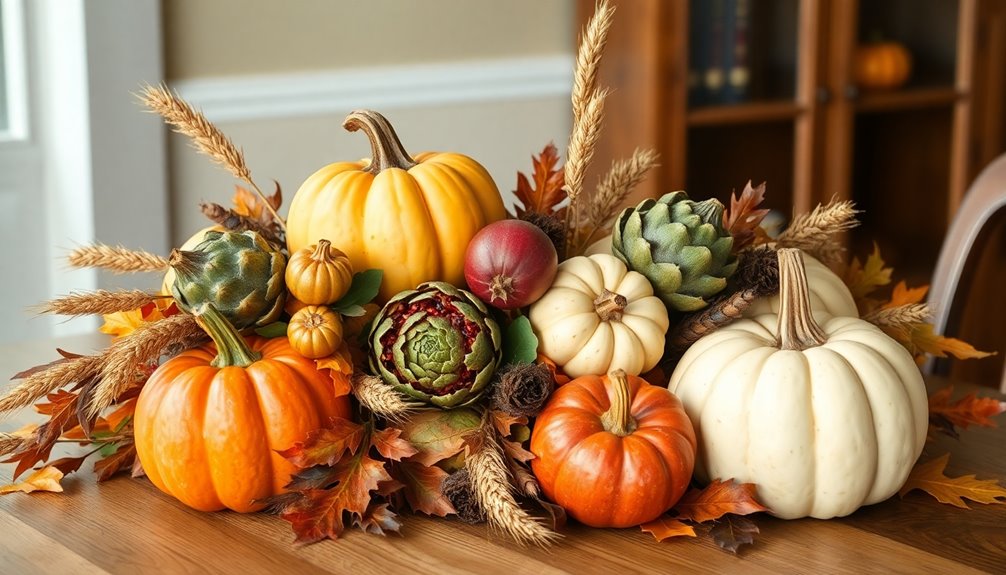
Pumpkins are great, but let’s be honest — they’re not exactly pulling double duty when dinner’s over. Harvest produce centerpieces? Different story entirely.
Watermelon radishes sliced open reveal gorgeous interiors. Purple carrots, pomegranates, persimmons halved — all stunning in low bowls with greens. They’re edible table accents. Actual food.
Root vegetables go further. Beets wired into Styrofoam, artichokes as focal points, Brussels sprouts clustered for texture. Wicker baskets lined with floral foil hold layered displays of cabbages and smaller produce.
Beets, artichokes, Brussels sprouts — root vegetables don’t just fill space. They anchor the whole arrangement with serious visual weight.
Moss hides the mechanics. Nobody sees the scaffolding. Additionally, consider incorporating seasonal elements like wheat stalks to enhance the organic feel.
Add grapes, figs, mushrooms, fresh herbs. Rosemary fills gaps aromatically. Sorrel leaves complement dahlias beautifully.
The whole setup symbolizes abundance — ancient cornucopia energy, honestly. Cornucopias have symbolized abundance since the second century C.E., making them one of the longest-standing harvest traditions in decorative history.
And after the party? You eat it. That’s liberation from pointless décor right there.
Fall Floral Centerpieces Built Around Autumn Blooms and Textures
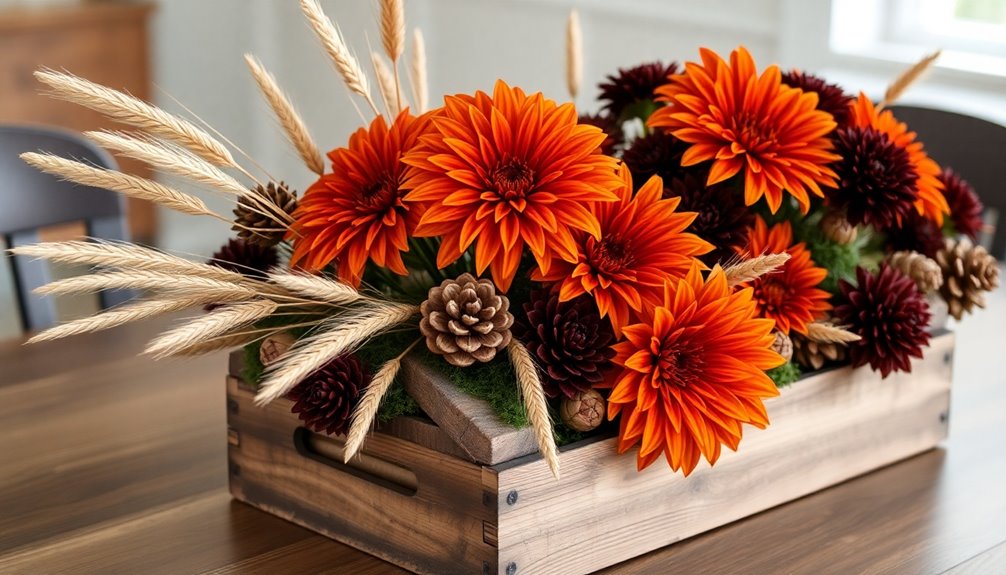
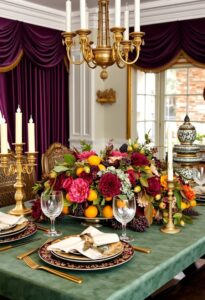
Flowers are where fall centerpieces stop apologizing for themselves. Dahlias lead the charge — deep reds, oranges, purples — bold, unapologetic, and peak-season affordable. No excuses needed.
Amaranthus brings cascading, tassel-like drama in burgundies and bronzes, pulling double duty as filler or statement piece. Helenium’s fiery red and orange petals look like someone bottled a sunset. Celosia? Feathery, velvety plumes in every warm shade imaginable. Pure texture luxury.
But here’s where arrangements get genuinely interesting — the accents. Seed pods, lotus pods, scabiosa pods. Eucalyptus weaving structure and fragrance through everything.
Wheat and barley, because Thanksgiving literally invented abundance symbolism. Statice adding feathery contrast that makes everything else pop harder.
Layered right, these materials don’t just sit on your table. They earn their spot. And the investment is worth it — 69% of people report that flowers genuinely improve their mood through sight and smell.
Candle Centerpiece Ideas That Add Height, Warmth, and Glow
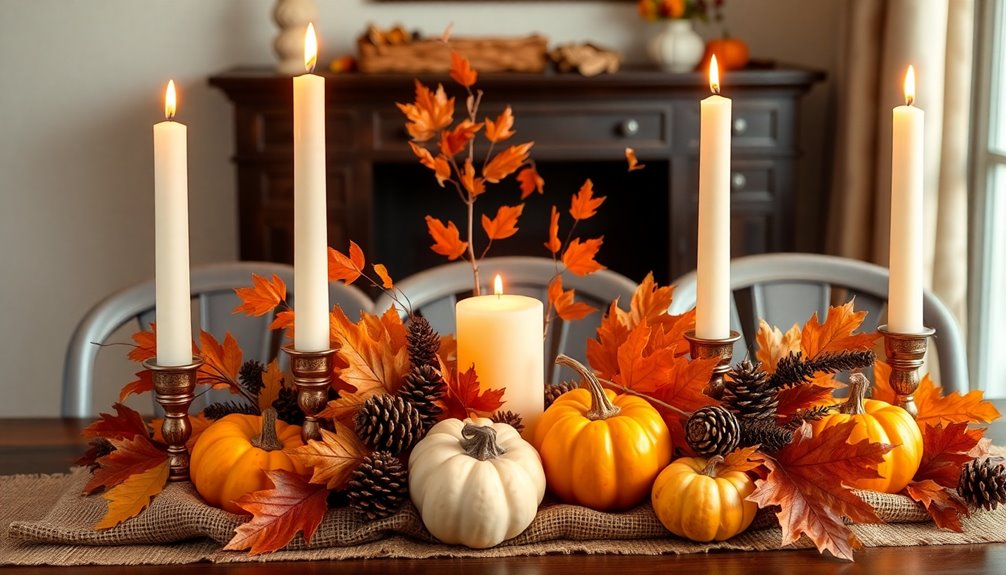
Florals set the stage, but candles own the room. Cluster pillars and tapers at staggered heights—suddenly your table has drama. Votives, tall tapers, lanterns. Mix them deliberately. Flat arrangements belong nowhere near a Thanksgiving table.
Color matters enormously. Amber, burnt orange, deep red. Ivory paired with deep orange. These aren’t suggestions; they’re the difference between cozy and forgettable.
Want fragrance? Cinnamon or clove-scented candles pull double duty—visual warmth *and* seasonal aroma.
Safety isn’t optional. Elevated holders keep flames away from linens. Lanterns block drafts. And honestly, flameless LED candles work surprisingly well. Don’t let ego about “real flames” burn your tablecloth.
Layer candles with fairy lights for something borderline magical. Add foliage, gourds, acorns. Rustic lanterns filled with seasonal items like mini pumpkins and dried leaves reinforce the harvest theme beautifully.
Done right, it’s completely transformative.
Natural Accents That Layer Depth Into Any Fall Centerpiece
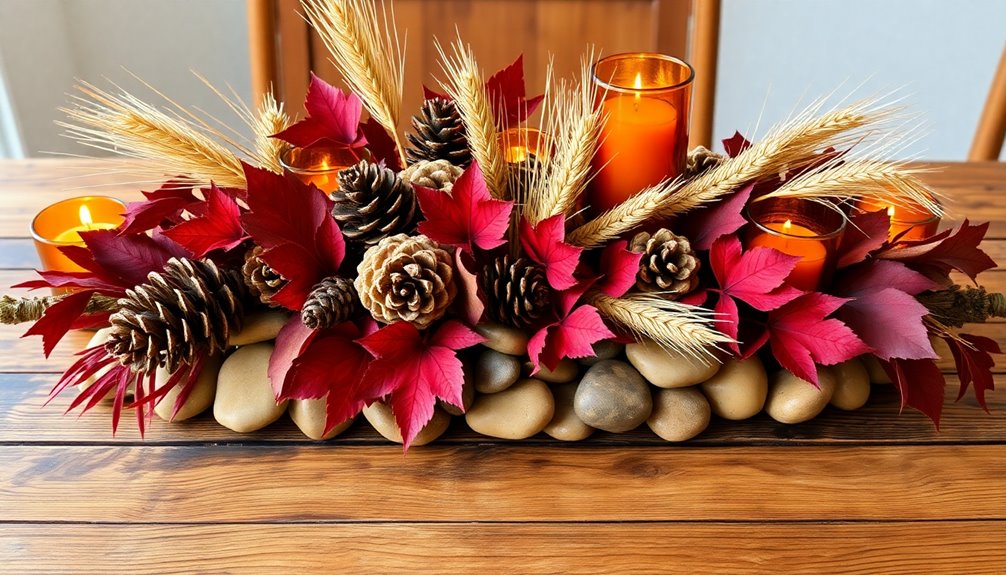
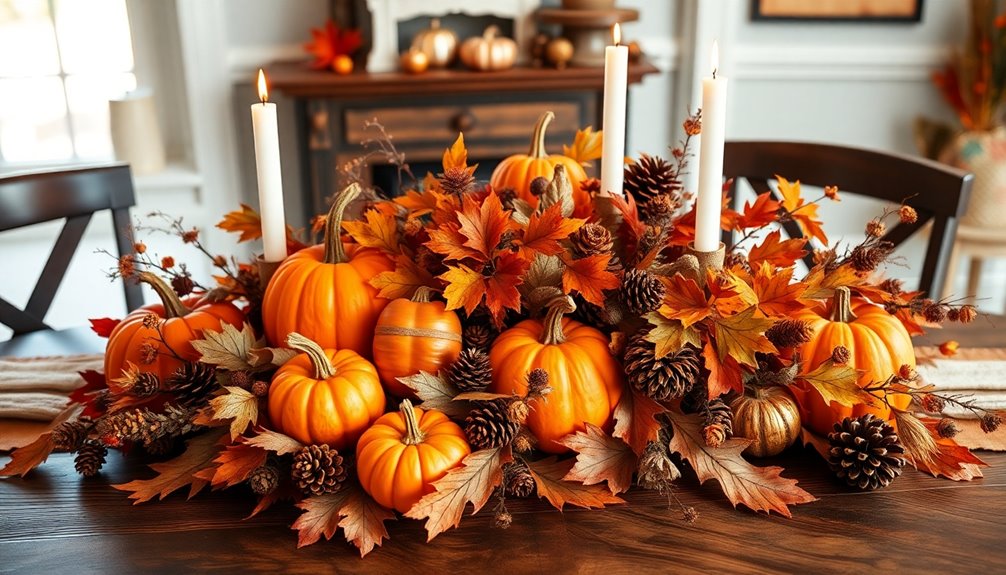
Nature’s doing most of the heavy lifting here—you just have to stop ignoring it. Pinecones, acorns, cotton bolls, dried wheat—free stuff sitting outside or dirt cheap at any craft store. Stuff them into lanterns. Fill baskets. Done.
Layer bark-covered branches into glass vases for height. Tuck faux dusty miller leaves around squash because not everyone has a garden and that’s fine. Cotton bolls bring fluffy texture without trying too hard. Dried berries in mason jars? Rustic. Effortless. Real.
Mix textures intentionally. Acorns beside pumpkins, pinecones beside candles—contrast is the whole point. Queen Anne’s Lace adds something delicate when everything else feels heavy.
Stop overcomplicating it. Nature already built the palette. You’re just arranging what already works. Votives, candlesticks, and lanterns bring varying levels of warm light that tie the whole natural arrangement together without overpowering it.
Frequently Asked Questions
How Far in Advance Can I Assemble a Thanksgiving Centerpiece?
You can assemble your Thanksgiving centerpiece a couple of days in advance. That’s actually the sweet spot for freshness.
Don’t wait until the last minute — florists get slammed during the holiday season, so order early.
After assembly, store it somewhere cool. Keep up with simple maintenance like water changes and misting.
Simple designs? They’ll take you under 10 minutes to pull together. Easy win.
What Centerpiece Materials Are Safe Around Young Children and Pets?
Better safe than sorry. For kids and pets, stick to sunflowers, snapdragons, rosemary, pumpkins, and gourds — all genuinely safe choices.
Roses cause mild stomach upset, but they’re non-toxic. Skip lilies, holly, and mistletoe entirely. They’re harmful or deadly.
Tinsel and small ornaments? Choking hazards.
Real talk: artificial flowers, shatterproof ornaments, and fake leaves eliminate most risks fast. Open flames stay out of reach, no exceptions.
How Do I Prevent Fresh Produce Centerpieces From Rotting Quickly?
Here’s how you keep your produce centerpiece fresh longer.
First, don’t pre-wash anything — moisture is your enemy.
Separate ethylene-producing fruits like apples and bananas from sensitive items.
Use breathable baskets, not sealed containers.
Inspect everything daily and rotate pieces to catch early spoilage.
Keep it out of direct sunlight.
Pat anything damp completely dry before arranging.
Simple steps, big difference.
Neglect these, and you’ll have a rotting centerpiece by Thursday dinner.
Can Thanksgiving Centerpieces Work as Hostess Gifts After Dinner?
Yes, absolutely. Your centerpiece can pull double duty as a hostess gift — no extra wrapping required.
A cornucopia with real fruit shifts straight from your sideboard to someone’s home. Dough bowls, bronze vases with pomegranates, dogwood berries in rustic boxes — all giftable.
Design it portable from the start. Removable trays and stable vase-in-vessel arrangements make transport easy.
One centerpiece, two purposes. That’s just smart planning.
What Is the Ideal Centerpiece Height for Comfortable Guest Conversation?
The single most important centerpiece rule in the universe? Keep it below seated eye level.
I’m talking under your guests’ sightlines when they’re sitting down. Do a simple test — sit in a dining chair and check your line of sight across the table.
Under that threshold, conversation flows freely. Tall elements work only if they’re slim and non-obstructive. Low profiles, like 3.5-inch boxes, keep the table open. Simple. Done.
Conclusion
Like the Pilgrims who made do with what the land gave them, you don’t need a florist’s budget or a design degree to pull this off. Pumpkins, candles, wildflowers, gourds, pinecones — it’s all right there. Pick one direction and commit. Mix textures. Add candlelight. Done. Your table doesn’t have to be Instagram-perfect. It just has to feel like *yours*. That’s what makes people remember the meal long after the leftovers are gone.