
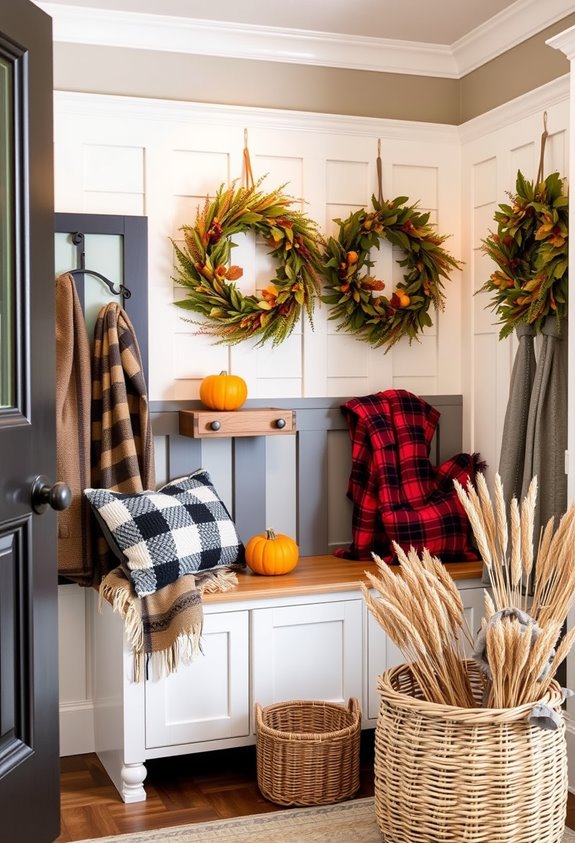
Your mudroom is the first thing guests see — and most hosts have been ignoring it for years. That stops now. Thanksgiving brings extra coats, muddy boots, and unexpected bags, and without a real system, that chaos bleeds straight into your dining space. Smart hosts are adding vertical storage, closed cabinets, labeled baskets, and seasonal touches like warm lighting and autumn textiles. Stick around — there’s a lot more ground to cover.
Why Hosts Are Rethinking the Mudroom for Thanksgiving
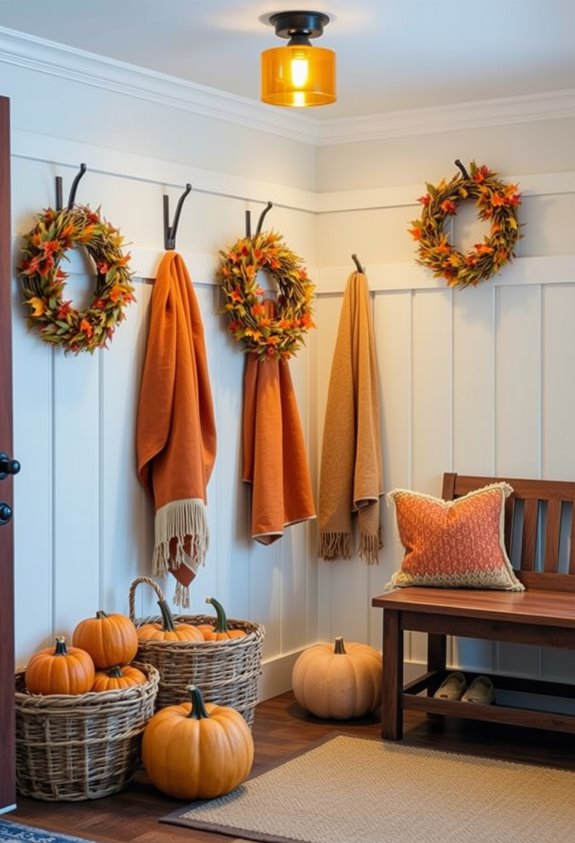
When Thanksgiving rolls around, your mudroom stops being background noise and becomes ground zero. Extra coats. More boots. Bags nobody planned for. Suddenly, that side-entrance space you’ve been ignoring is handling more traffic than a highway on-ramp.
Here’s the thing: mudrooms were always built for this. They sit between the outside chaos and your carefully set dining table, absorbing everything guests drag in before it reaches your good rugs. That’s not a small job.
And hosts are finally paying attention. They’re realizing the mudroom isn’t just a dumping spot — it’s a buffer zone that either holds everything together or quietly falls apart under pressure.
Thanksgiving doesn’t forgive a disorganized entry. Your guests notice. Your stress level definitely does. A well-planned space can go even further — individual lockers with assigned shoe drawers give every family member a dedicated landing spot so nothing spills into the rest of the house.
Small-Space Mudroom Fixes That Still Work for Gatherings
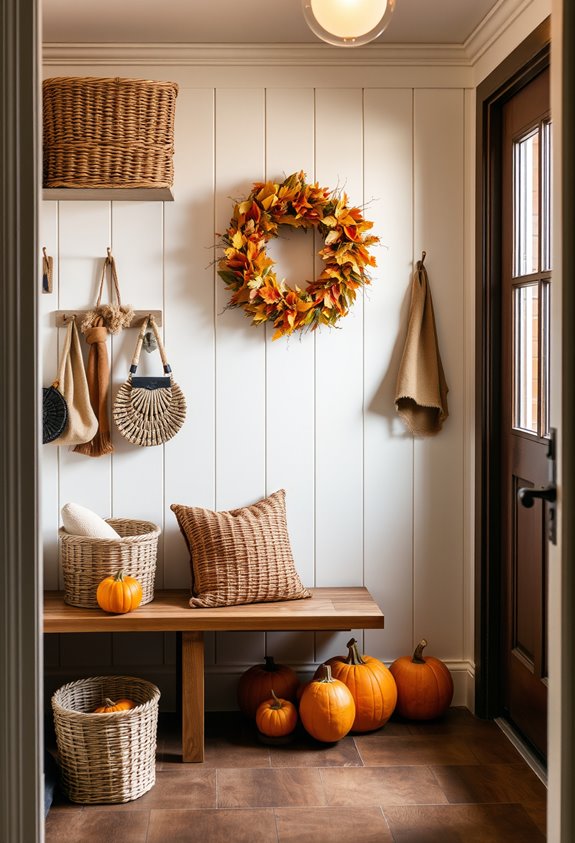
Not every home comes with a dedicated mudroom the size of a small bedroom. Most don’t. And that’s fine.
A 3–4 foot hallway can actually become a functional entry zone when you work vertically. Wall-mounted hooks, floating shelves, and slim cabinets keep things off the floor without eating your walkable space. Over-the-door organizers? Underrated. Seriously.
For gatherings, the goal is simple: keep the center line open. Guests need to move. Bottlenecks kill the vibe fast.
Benches with built-in storage pull double duty — seating for shoe removal and a hiding spot for seasonal clutter. Foldable chairs tuck away until you actually need them.
Small space doesn’t mean broken space. It just means intentional space. You’ve got more to work with than you think. Adding a mirror is a simple move that visually expands space while giving guests a quick way to check themselves before heading in.
Closed Mudroom Storage That Hides Holiday Clutter Fast
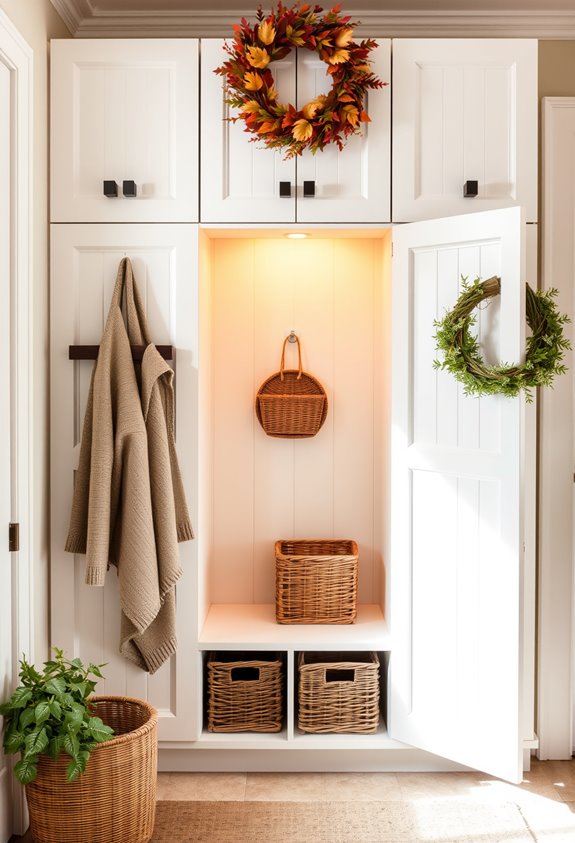
Closed storage exists for one reason: to make things disappear. Before guests arrive, that’s exactly what you need. Cabinets, armoires, lidded baskets, built-in closets — they all do the same job. Hide the mess. Fast.
Closed storage has one job: make the mess disappear before anyone walks through your door.
Here’s what deserves to go behind a door immediately:
- Hats, gloves, and scarves stuffed into under-bench drawers
- Shoes sorted and tucked into closed cabinet sections
- Backpacks, umbrellas, and sports gear into individual lockers
- Cleaning supplies shifted into any remaining closed mudroom space
Floor-to-ceiling built-ins maximize every inch while keeping your visual field clean. Pull-out drawers handle the small stuff without creating chaos. Label your baskets — yes, actually label them. It speeds everything up when hosting gets hectic.
Closed storage doesn’t just organize your mudroom. It protects how your home feels to everyone walking in. A three-door armoire works just as effectively as a built-in closet when no built-in exists, giving you full hidden storage without a renovation.
Built-In Lockers That Keep Every Guest’s Gear Separate
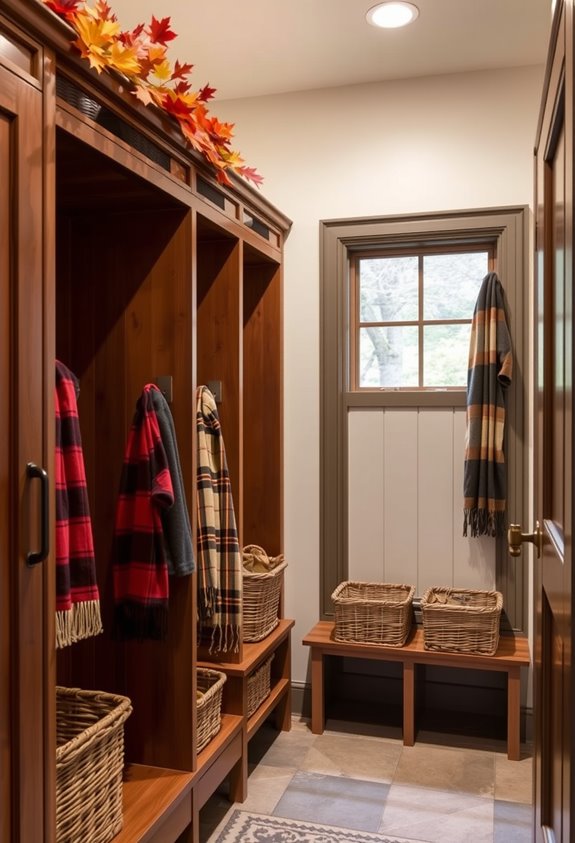
Built-in lockers solve a problem that open storage never can: they give everyone their own dedicated space. No more coat avalanches. No more “whose boots are those?” No more guests piling their bags onto your kid’s backpack. Each person gets a bay with hooks, shelves, and cubbies. That’s it. That’s the whole idea.
Designers size these units to fit your exact wall span—think five bays at roughly 29 inches wide, or custom proportions built around your ceiling height and door clearances. Lower sections handle shoes and boots. Upper sections catch bags and accessories. Some designs add drawers below for smaller items. Guest gear gets its own section, completely separate from daily household stuff. Everyone belongs somewhere specific. That feeling matters more than people admit. Before any cutting or assembly begins, the entire area gets cleared and baseboards are removed to create a clean starting point for a true built-in fit.
Mudroom Bench Seating That Makes Shoe Removal Easy
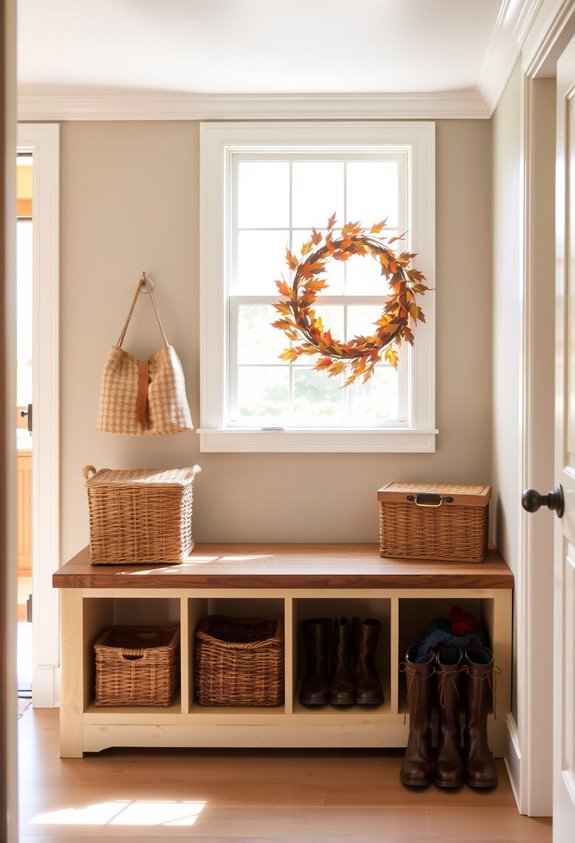
Lockers handle separation. But a bench? That’s where the magic actually happens.
Lockers organize. Hooks hold. But the bench? That’s where the real entryway experience begins.
When guests walk in, they need somewhere to sit and deal with their shoes — fast. A well-placed bench makes that shift seamless.
Here’s what makes a mudroom bench work for Thanksgiving traffic:
- Height matters — aim for 17–20 inches so everyone sits comfortably
- Under-bench storage keeps shoes off the floor immediately
- Open shelves beat drawers for quick grab-and-go access
- 2–3 inches of cushioning turns a hard surface into something people actually use
Without the right bench, guests drop shoes wherever. That’s just reality.
A sturdy, padded seat with accessible storage underneath keeps your entryway functional when it matters most — not decorative. Big difference. For a complete setup, consider designating a spot for each family member and guests so everyone knows exactly where their belongings go.
Labeled Baskets for Scarves, Gloves, and Seasonal Overflow
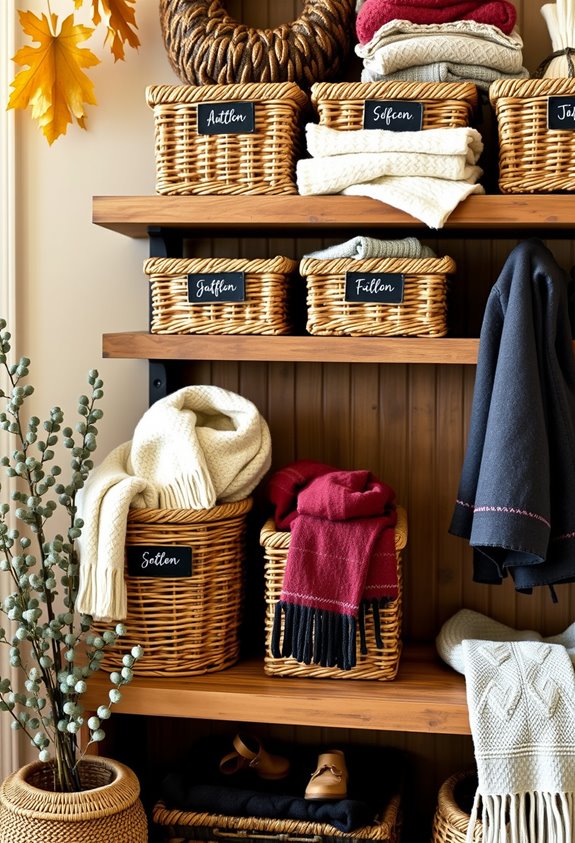
Most winter accessories don’t have a clutter problem — they’ve a landing zone problem. Fix that, and everything else follows.
Labeled baskets give each scarf, glove, and hat a fixed destination, so nobody’s digging through a pile at the door while guests watch. Assign one basket per family member. Add a name label. Done.
Transparent bins speed things up fast during busy arrivals. People see what’s inside without touching anything. Labels reinforce where items go *after* use — because yes, that part matters too.
Open woven baskets work best for gloves and hats. Airflow helps. Larger scarves need more room, so size your baskets accordingly.
Keep one overflow basket for stragglers. Just empty it regularly. Let it become a permanent dumping ground, and you’ve solved nothing. A small dedicated basket for reflectors and visibility items near the door also ensures the whole family stays safe on dark winter evenings.
Memo Boards That Coordinate the Holiday Chaos
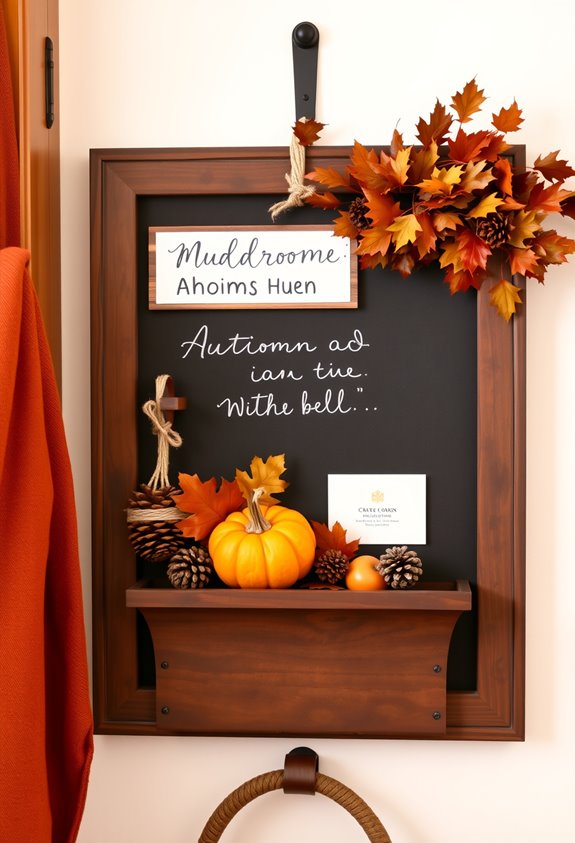
Labeled baskets handle where your stuff lands. But memo boards handle everything else. Thanksgiving coordination is a lot. A board keeps it from becoming a disaster.
Stick one on your pantry door. No wall space? No problem. Refrigerator door, cabinet front, foam board on a flat surface — it works.
Here’s what belongs on your board:
- Menu and cooking order — which dish hits the oven first
- Daily timeline — tasks tied to specific days and times
- Guest RSVPs — right next to your grocery list
- Shopping and prep checklists — two weeks out, not two days
Color-coded sticky notes make reorganizing effortless. Plans shift. Notes move. Everyone in your household sees it instantly. That’s the whole point. Pin up a gratitude list alongside your logistics — students and families alike find that writing down what they’re thankful for helps shift the mood of the whole season.
Autumn Accents That Make the Mudroom Feel Guest-Ready
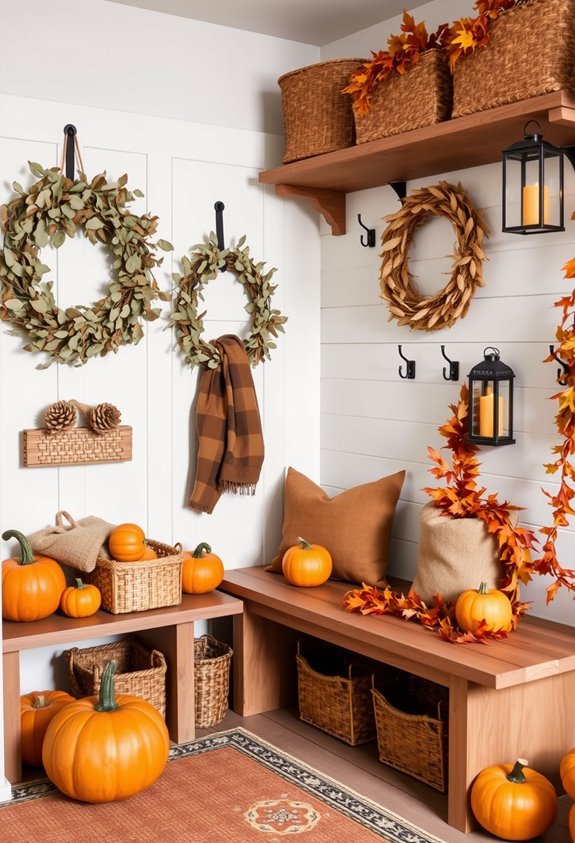
Start with textiles. A layered rug in rust or burgundy instantly signals fall. Toss a knit throw over the bench. Add a pillow with plaid or an autumn pattern. Done. It’s that simple.
Then go natural. Mini pumpkins on a shelf. Dried grasses for height. A wheat wreath on the door. These aren’t fancy moves — they’re just smart ones.
Don’t skip the light. A warm-toned lamp or a lantern makes the whole space feel intentional instead of accidental. Guests notice the glow before they notice anything else. That first impression? It matters. For an extra layer of welcome, add a small diffuser with cinnamon or vanilla to fill the space with a scent that feels unmistakably seasonal.
Frequently Asked Questions
How Much Does a Full Mudroom Renovation Typically Cost Homeowners?
You’re looking at $6,000 to $20,000 for a full mudroom renovation, with the national average hovering around $10,000 to $15,000.
Simple conversions of existing space run cheaper — $3,000 to $10,000.
Want custom built-ins and premium finishes? Costs climb fast. We’re talking $25,000 to $40,000+.
Square footage drives pricing hard. Remodels typically run $50 to $100 per square foot, while new additions jump to $100 to $300 per square foot.
Can Mudroom Updates Increase a Home’s Resale Value Over Time?
Yes, mudroom updates can boost your home’s resale value over time. Buyers love organized, functional spaces — it’s that simple.
You’re looking at roughly 50% ROI, which isn’t spectacular, but it’s real. Converting existing space keeps costs manageable and returns stronger.
Here’s the blunt truth: it’s not a guaranteed profit machine. It’s an appeal-and-function upgrade. Family buyers, high-traffic households, and cold-climate markets respond strongest. Longer ownership helps you actually see the payoff.
What Permits Are Required Before Installing Built-In Mudroom Cabinetry?
Before installing built-in mudroom cabinetry, you’ll likely need a permit — but the type depends on your project’s scope.
No structural changes? Possibly just a minor permit or simple communication filing.
Touching walls, structure, or layout? That’s major permit territory.
Historic building? Expect extra hoops.
Your local municipality decides everything here.
Don’t skip this step. Head to your ayuntamiento before starting anything. Seriously. Getting caught without proper permits isn’t a fun surprise.
How Long Does a Mudroom Transformation Project Usually Take to Complete?
Most mudroom transformations wrap up in 1 to 2 weeks. That’s the sweet spot for existing-space projects. No structural work? You’re looking at the shorter end. Simple built-ins can finish in 2 to 4 days. Pretty fast, honestly.
But add structural changes, and suddenly you’re at 3 to 6 weeks. DIY on weekends? Budget a full month. Materials delays stretch things further. Bottom line: scope determines speed. Know yours before you start.
Which Contractors or Professionals Specialize in Mudroom Installation and Design?
You’ve got four solid options.
General contractors handle full remodels, including layout changes and built-ins.
Closet and storage specialists focus on cubbies, shelving, and organization systems — they’re your go-to for maximizing tight spaces.
Interior remodelers tackle bigger jobs requiring structural changes or integrated cabinetry.
Flooring contractors specialize in durable, moisture-resistant surfaces.
Need everything done? Design-build firms manage it all, start to finish.
Pick based on your project’s actual scope.