
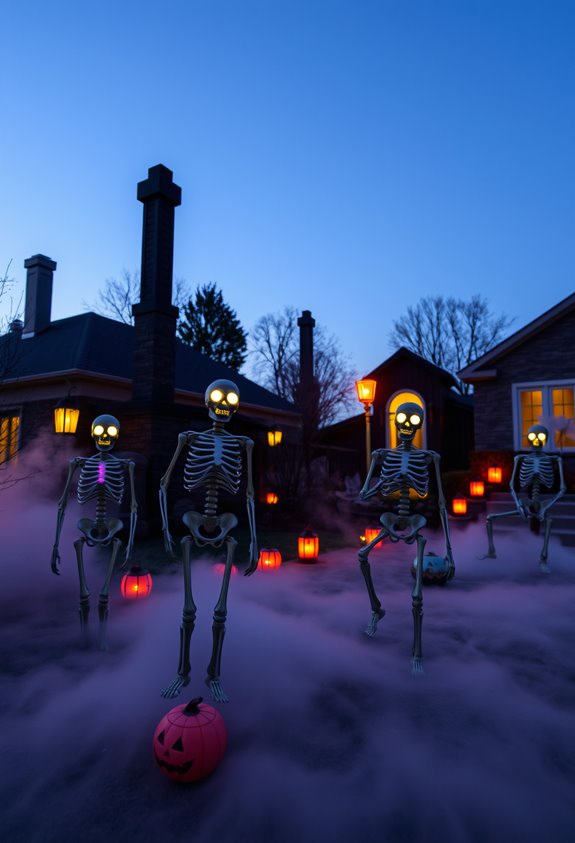
The drug store skeleton isn’t stopping anyone. If you want traffic-stopping Halloween animatronics, you need the right types, smart placement, and a scare sequence that escalates hard before it delivers the final hit. Distorted humanoids, predator hybrids, and large-scale monsters trigger the deepest instinctive fear. Layer in hidden triggers, synced sound, and strategic lighting, and you’ve got something genuinely unsettling. Stick around — there’s a lot more terror to unpack.
Design Highlights
- Distorted humanoids and human-beast hybrid animatronics trigger the deepest instinctive fear responses, maximizing emotional impact on passing crowds.
- Layered scare sequences—starting subtle and ending with a sudden aggressive lunge—create the most powerful, memorable audience reactions.
- Place large silhouette props near the sidewalk and use height variation to create an imposing, predator-prey scene composition.
- Synchronized sound timed within 10ms of movement, combined with low-angle colored lighting, dramatically amplifies each animatronic’s scare effect.
- Urlap finished with a unified spray coat and swappable wigs, masks, and clothing creates realistic, varied characters without rebuilding mechanics.
Which Animatronic Types Actually Scare People Most?
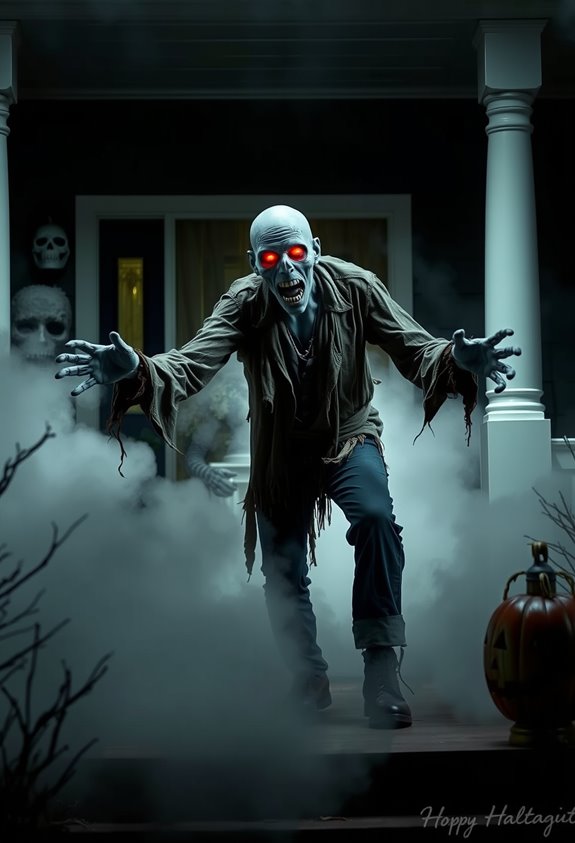
Not all Halloween animatronics hit the same. Some genuinely stop people cold. Others just stand there looking expensive and useless. The difference usually comes down to type.
Jump-scare humanoids work because sudden, fast motion triggers your startle response hard and fast. Your brain detects unexpected movement as a threat. It’s basically science exploiting you.
Jump-scare humanoids don’t just frighten you — they hijack your brain. Fast movement reads as threat. Science does the rest.
Distorted human figures hit differently. Twisted limbs, hollow eyes, wrong proportions — your brain *almost* recognizes them, and that almost is where the dread lives. Familiar enough to register. Wrong enough to disturb.
Predator-style creatures tap into something older. Fangs, claws, hybrid human-beast designs — your instincts react before logic catches up.
Large monsters intimidate through scale alone. Before they even move, you’re already feeling small. That’s not decoration. That’s dominance.
Build a Scare Sequence That Escalates to the Final Hit
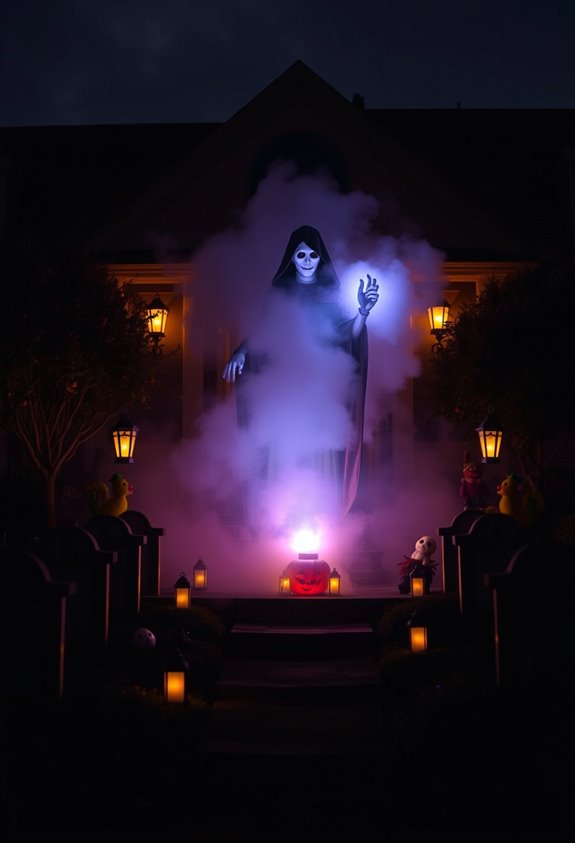
Knowing which animatronic scare people is only half the job. The other half is sequencing them correctly. Start subtle. A little motion, some drifting, maybe a soft sound cue. Then layer up gradually so each zone feels like a step above the last. That’s how anticipation builds.
Don’t blow your best scare early. Save the biggest lunge, loudest audio hit, and most aggressive movement for the final position. Hide it behind a blind turn or set dressing so nobody sees it coming. Add fog and a sudden lighting shift right before the trigger. Pure payoff.
Silence before the final hit? Yes. That pause makes the release hit harder. Space your scares far enough apart too, or you’ll just desensitize everyone walking through. Motion sensors allow you to adjust scare intensity by time of night, so early trick-or-treaters get a gentler build while the late crowd gets the full escalation.
The Graveyard Scene That Pulls Strangers Off the Sidewalk
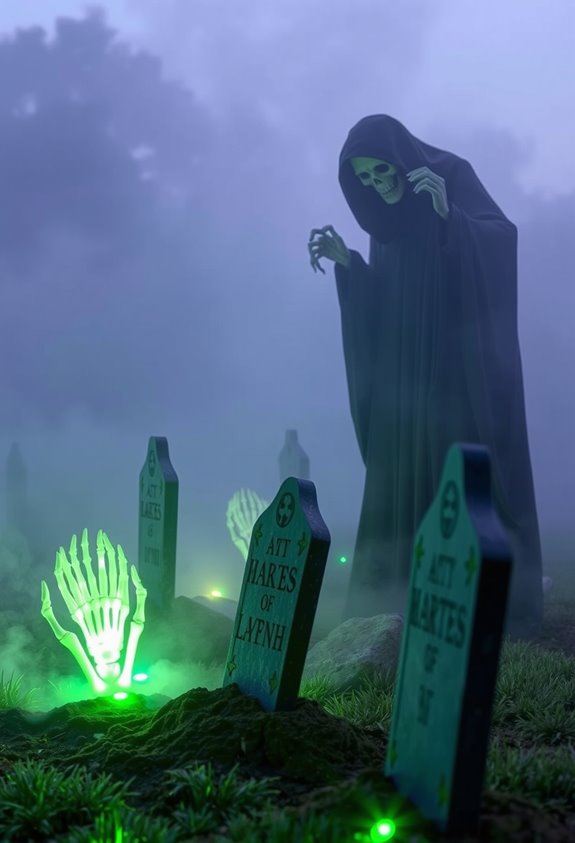
A graveyard scene either stops people in their tracks or gets ignored completely — there’s no middle ground. You want strangers crossing the lawn, not scrolling past. That means filling your frontage with tombstones, ground cover, and props that work as one cohesive visual field — not sad little isolated pieces scattered around.
Place your biggest tombstones toward the sidewalk edge. Oversized silhouettes read from distance. Small details don’t.
Here’s the real trick: one animated tombstone. A motor with an offset mount creates that slow, unsettling rise-and-turn movement. One active element pulls eyes to the entire scene. You don’t need everything moving. That’s amateur hour.
Layer foreground detail with midground depth. The yard feels twice as large. Strangers stop because their eye keeps discovering something new.
Stack Your Animatronics at Different Heights for Maximum Dread
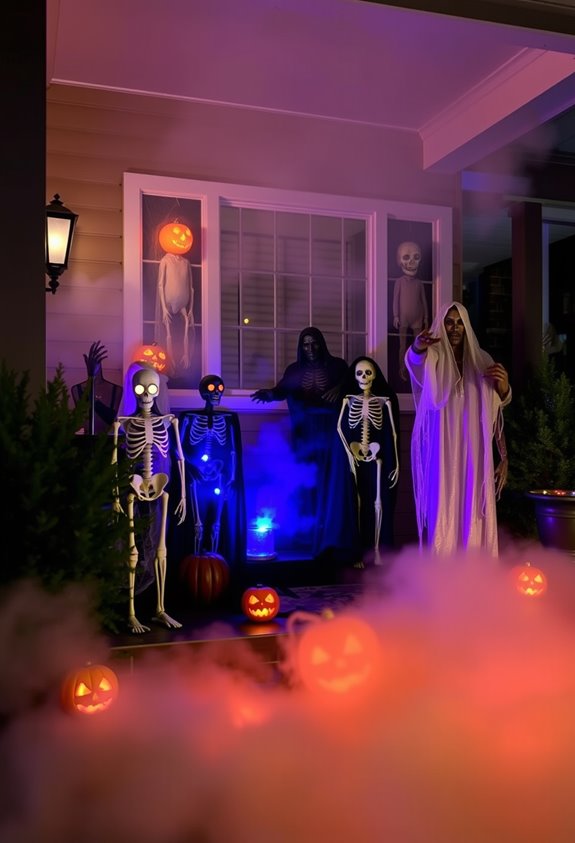
Everything on the same level kills the scene. Flat displays read as clutter. Height variation is what separates a real haunt from a sad porch setup.
Flat displays read as clutter. Height variation is what separates a real haunt from an amateur setup.
Stack your animatronics at different elevations and suddenly you’ve got something. Mount the tallest figure high where it’s visible from the street. Let it grab attention first. Then let the lower props deliver the actual scare up close. That’s a predator-and-prey composition, and it works every time.
Height separation also keeps each motion readable. When arms, heads, and rotating parts aren’t competing on the same plane, viewers can actually process what’s moving. The eye travels up, across, and down through the scene naturally.
More depth. More dread. Fewer people walking past without stopping.
Hide Your Animatronic Triggers Where Nobody Sees Them Coming
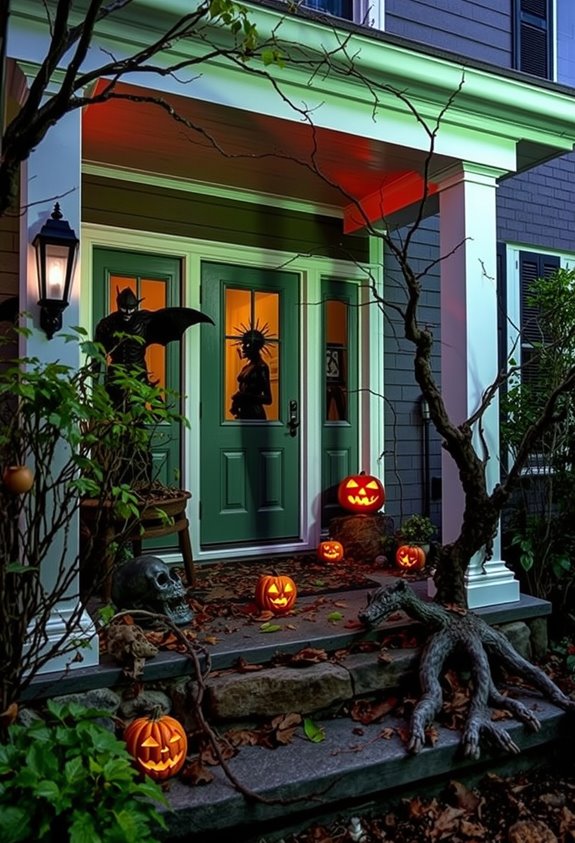
The trigger ruins everything if guests can see it coming. Obvious sensors kill the surprise before it starts. Don’t let that happen.
PIR sensors detect body heat, not cameras or sound, so tuck them behind scenery where nobody’s looking. Doorways and blind corners work perfectly because people naturally move through them without checking for hidden mechanics. The activation just *happens*.
Step pads under rugs are sneaky in the best way. Narrow hallways make foot placement predictable, so guests literally walk right into it. No clues. No warning.
Manual triggers give you precise control. Watch your guests, wait for that exact vulnerable moment, then fire. Delayed timing keeps everyone guessing.
Fog and low lighting seal the deal. Concealment isn’t optional. It’s the whole game. These sensors are also power-efficient enough to run outdoors on battery power for hours while waiting for trick-or-treaters to arrive.
Light Your Animatronics to Reveal Just Enough to Terrify
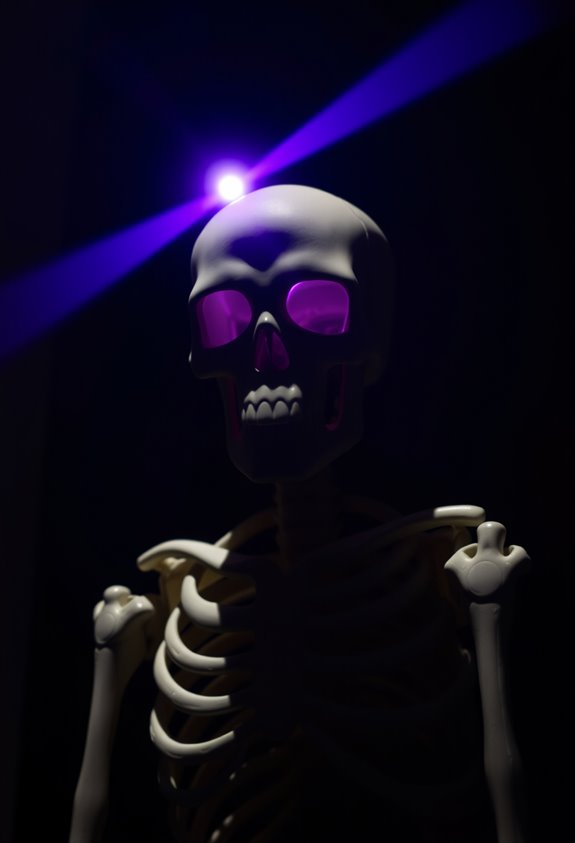
Hiding your triggers is only half the battle. Lighting makes or breaks your scare. Flood the whole scene with bright light and you’ve basically built a showroom, not a haunted yard. Nobody’s scared of something they can fully see.
Go localized. Small bursts of light focus attention on one element at a time. Keep the rest dark. That hidden, unfinished feeling? That’s tension doing its job.
Put your lights low. Ground-level angles stretch shadows, distort shapes, and make familiar props look genuinely wrong. It works. Trust it.
Color matters too. Blue mimics moonlight. Purple makes props pop. Orange flicker shifts shadows and makes still props appear to move.
Less is more. Brief, selective bursts beat constant strobing every single time.
Sync Sound to Your Animatronics for a Gut-Punch Scare
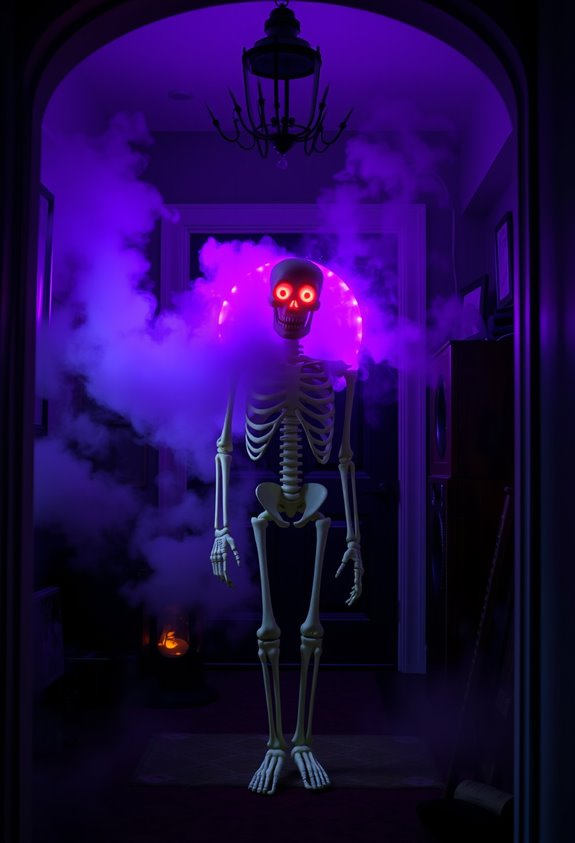
Sound is what separates a good scare from a forgettable one. Full stop. If your animatronic lunges in silence, you’ve already lost half the effect. Build your timing around audio first. Identify the exact sound moments, syllable peaks, loud hits, sudden pauses, then match movement to those cues. A half-second misalignment kills the impact completely. Not exaggerating.
Place speakers directly on or near each prop. That’s what makes sound feel like it’s *coming* from the creature, not a corner of your garage. Use waveform tools to zoom into timing windows as tight as 10 ms. Run it. Adjust. Run it again. First setups never land perfectly. The builders who get the gut-punch scare right are simply the ones who kept refining. If you’re syncing a jaw servo to an MP3, isolating center stereo field components can help reduce music interference when trying to trigger movement from voice alone.
DIY Finishing Tricks That Make Animatronics Look Like Real Threats
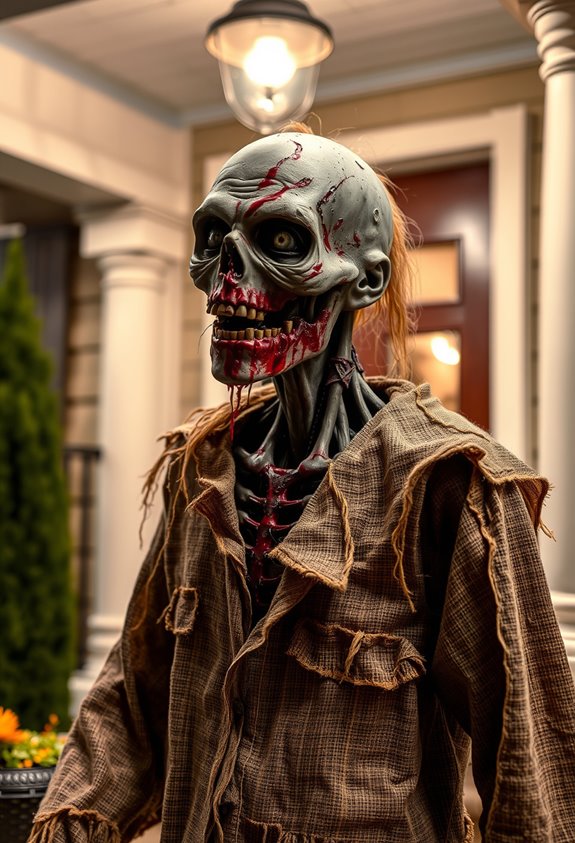
Once your animatronic is moving and synced, a flat paint job will absolutely undo all of that work. Seriously, one smooth coat screams “craft store clearance bin.” You’ve come too far for that.
Don’t let a flat paint job betray your animatronic. One smooth coat erases everything you built.
Layer your finishes like a pro:
- Stack crackle medium over a black base coat so fissures look genuinely dark and deep when the top layer fractures
- Paint deep crevices darker and highlight raised areas lighter so facial features hit hard from a distance
- Add dirt smudges under eyes and around creases to break up uniform color fast
Cover foam with burlap first. It takes paint beautifully and reads as organic skin. Then unify everything with a spray coat before adding detail work. Your crowd will feel it.
For builds like the Swaying Zombie or Animated Humanoid Head, dressing the finished prop with a wig and worn clothing pulls the whole illusion together once your paint layers are dry. Masks, wigs, and clothing can be swapped out to modify the character without touching the mechanics underneath.
Frequently Asked Questions
How Do I Safely Weatherproof Outdoor Animatronics Against Rain and Moisture?
Cover your electronics box with plastic sheeting, elevate all cord connections off the ground, and wrap plug junctions with zip-top bags. You’ll also want to inspect wiring for fraying before setup so everyone stays safe together.
What Is the Ideal Age Range for Children Visiting an Animatronic Display?
You’ll want kids aged 5–10—they’re the golden sweet spot! They can handle moderate scares without meltdowns, making your display unforgettable. Younger children need gentler effects, while teens thrive with maximum intensity.
How Much Does a High-Quality Halloween Animatronic Setup Typically Cost?
You’ll spend several hundred dollars for a solid consumer setup, but if you’re chasing a truly show-stopping display, premium professional animatronics can run anywhere from $13,000 to over $28,000.
Can Animatronics Be Stored and Reused Effectively After Each Halloween Season?
Like seasoned haunters before you, you can absolutely reuse your animatronics! Clean them thoroughly, store them in dry, padded containers, remove batteries, and test everything next season—you’ll keep your crew thriving year after year.
Are There Noise Ordinances That Could Affect Outdoor Halloween Animatronic Sound Systems?
Yes, noise ordinances can affect your outdoor animatronic sound systems. You’ll want to check your local decibel limits, quiet hours, and permit requirements before setup, since rules vary by jurisdiction and could restrict your evening Halloween display.
Conclusion
You’ve got everything you need to build a display that genuinely stops people cold. Use it. Studies show that 72% of trick-or-treaters remember one specific house each Halloween — make it yours. Stack the heights. Hide the triggers. Nail the lighting. It’s not complicated. It’s just execution. Your neighbors are already buying the same Spirit Halloween basics. You’re the one who’s actually going to scare somebody.