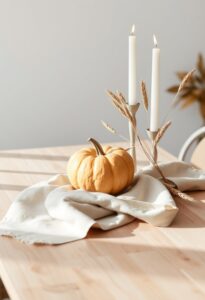
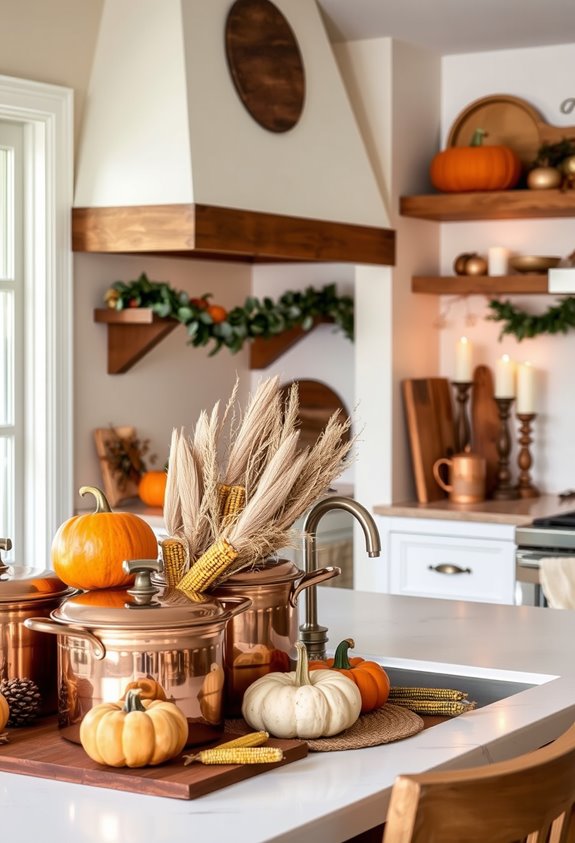
A perfectly decorated Thanksgiving kitchen starts with creamy whites, warm wood tones, and natural textures — stoneware, amber glass, brass — that make everything feel intentional rather than assembled in a panic. You’re using color as an accent, not wallpaper. Think pomegranates, rust napkins, a few dried botanicals. Lighting and scent pull the whole thing together faster than any decoration will. There’s a lot more strategy behind each of these eight ideas than you’d expect.
The Neutral Base That Makes Thanksgiving Color Work
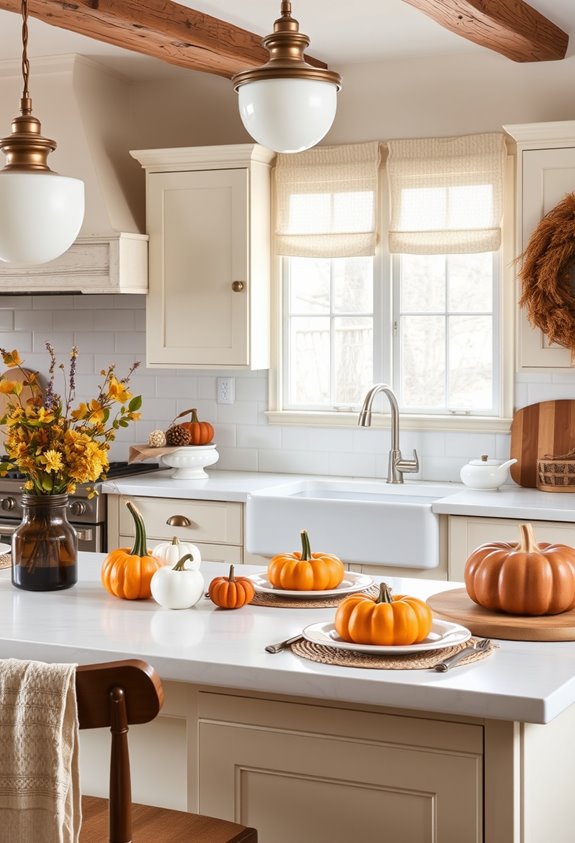
At the heart of every well-styled Thanksgiving kitchen is a neutral base — and it’s not nearly as boring as it sounds.
Creamy whites, taupes, and warm wood tones do the heavy lifting here. They create a foundation that feels seasonal without screaming “I bought every fall item at Target.” That’s the goal.
Here’s what neutrals actually do: they make your colorful accents pop harder. A white platter makes a pile of figs and pomegranates look intentional. A taupe runner makes rust-colored napkins look curated. Natural textures — stoneware, amber glass, brass — keep things warm instead of sterile.
The key is restraint. Holiday color works best as the accent, not the whole story. Your kitchen still needs to function. Keep that in mind. Arranging green foliage in varying shades from light to dark across the table creates a color-blocked runner that draws the eye without relying on traditional orange or red fall tones.
The Easiest Way to Start Decorating a Thanksgiving Kitchen
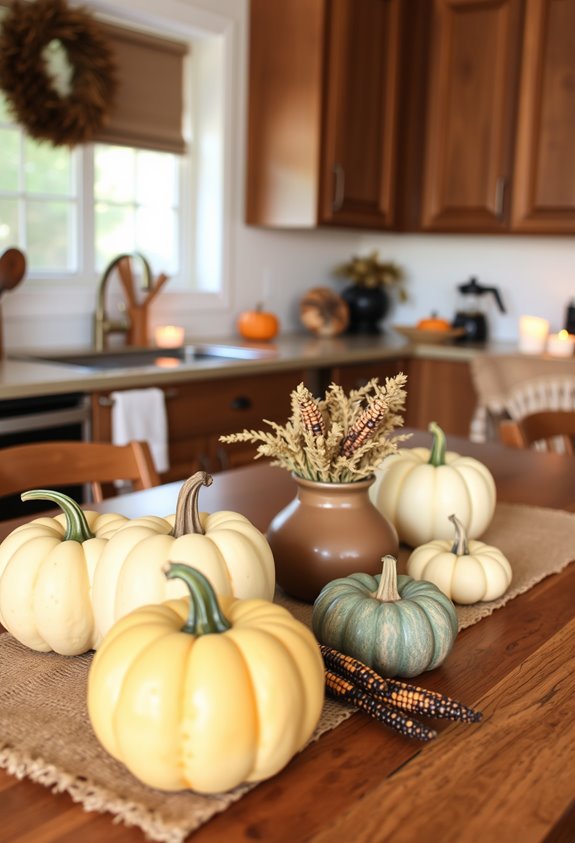
Decorating a Thanksgiving kitchen sounds fun until you’re staring at a counter buried under a stack of mail, three duplicate coffee mugs, and an air fryer you haven’t touched since March. Clear that stuff first. Seriously. A wiped-down, empty counter makes seasonal pieces feel intentional rather than desperate.
Once you’ve got a clean surface, your first moves are simple:
- Hang a Thanksgiving dish towel. It’s expected, it’s easy, and it counts.
- Place one tray on a counter to hold a small grouping of décor.
- Add a fruit bowl, fresh herbs, or a small vase as your focal point.
That’s your foundation. Three moves, minimal effort, real impact. You don’t need to style every surface—you just need to start somewhere honest. Try building your first vignette around glass vessels, dried stems, and one functional object like a recipe box or coasters.
Which Natural Materials Actually Belong in a Thanksgiving Kitchen
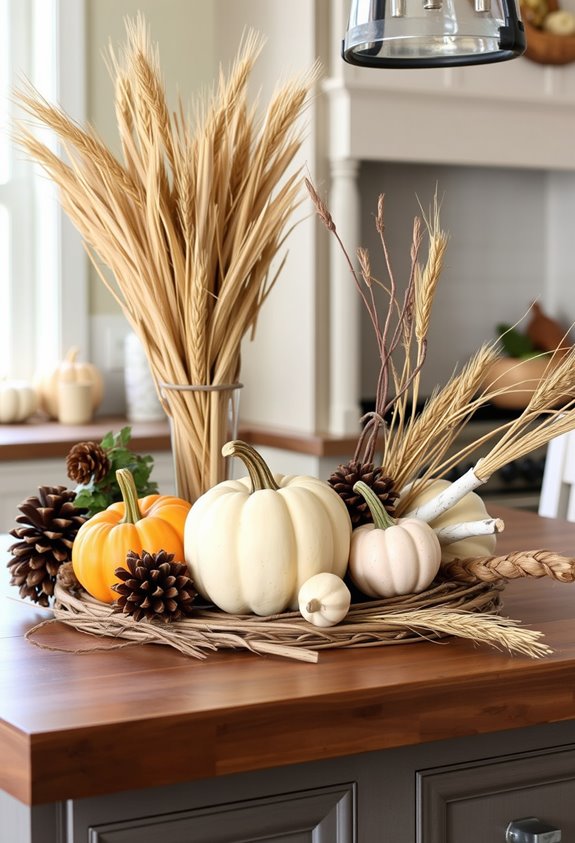
The craft store wants you to buy orange plastic garlands and a fake leaf wreath that’ll shed glitter for three weeks. Hard pass. Real Thanksgiving kitchens use real materials — and they’re easier to find than you think.
Start with untreated wood. Bamboo cutting boards, carved blocks, reclaimed wood pieces. Done. Layer in dried botanicals — wheat stalks, dried hydrangeas, seed heads, grasses. These aren’t precious. They’re just honest.
Add produce. Mini pumpkins, gourds, pomegranates, apples, pears. Fill a bowl. That’s a centerpiece. Scatter acorns, pinecones, and walnuts for small-scale texture that actually belongs here.
Finish with linen, burlap, cotton twine, and beeswax candles. No synthetics. No paraffin. No glitter.
Everything on this list is compostable, foraged, or edible. That’s the whole point. A butcher block made from edge-grain maple fits right into this aesthetic while pulling double duty as a functional prep and carving surface.
How to Build a Counter Vignette That Earns Its Space
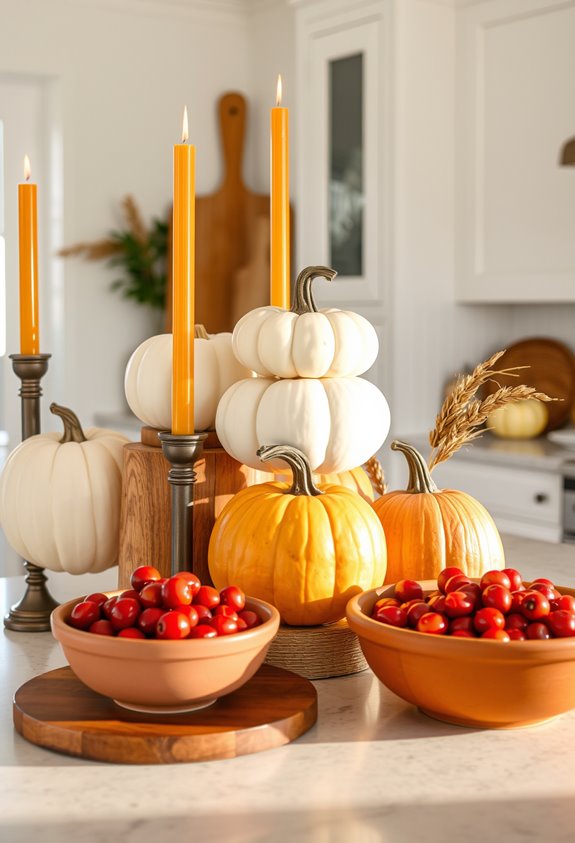
Most counter vignettes fail before they start because everything just gets piled on the surface with no logic. Sound familiar? Start with a tray or wooden board. That single move transforms random stuff into something that looks deliberate.
Then build with intention:
- Anchor with function — a pepper grinder, cookbook, or oil bottle earns its spot
- Vary your heights — one tall piece, one low, one medium keeps your eye moving
- Layer, don’t line up — tuck items slightly in front of each other for depth
Keep it to two or three objects. Seriously. Less is doing the heavy lifting here. Add a warm ceramic, some dried texture, maybe a pomegranate. Now it looks like you meant it. If you need a quick height boost without buying anything new, set a small bowl underneath a shorter piece to elevate it visually.
How to Style the Island Without Losing Your Prep Space
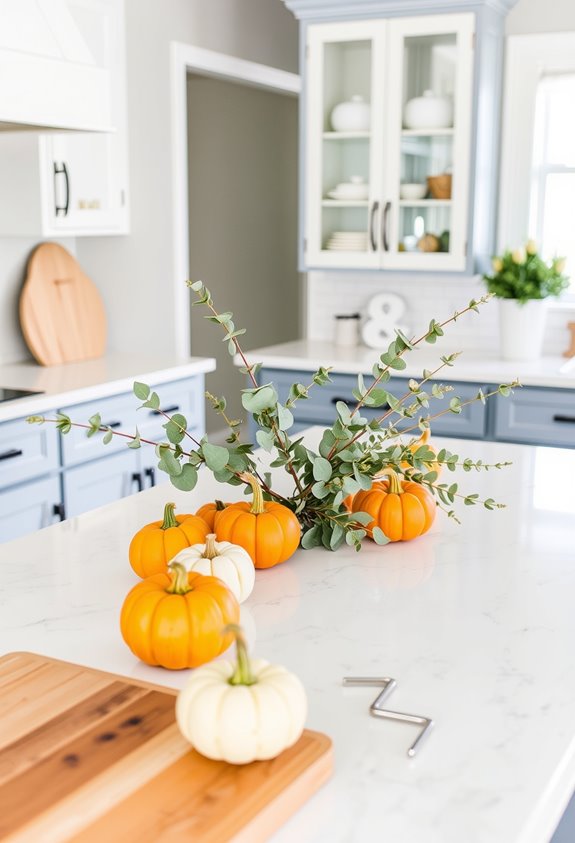
Your kitchen island can handle a lot — but it can’t handle everything. Map out where you actually work, then leave those spots completely clear. No exceptions. The center and prep-heavy edges? Off-limits for decor. That’s just common sense.
Concentrate your styling at one end that sees less daily action. A small, curated grouping works best — one horizontal item, one vertical piece, one sculptural object. Done. A tray keeps everything contained and intentional. A compact vase adds height without eating surface area.
If your island has a cooktop or prep sink, that section stays open. Full stop. Smaller islands need even lighter styling so they still read as usable workspace. You want the island to feel welcoming — not like a display case nobody can touch. Keep in mind that 36 to 42 inches of clear space around the island is the standard to maintain so the room never feels cramped, even when it’s dressed up for the holiday.
Why Lighting Does More Work Than Any Decoration
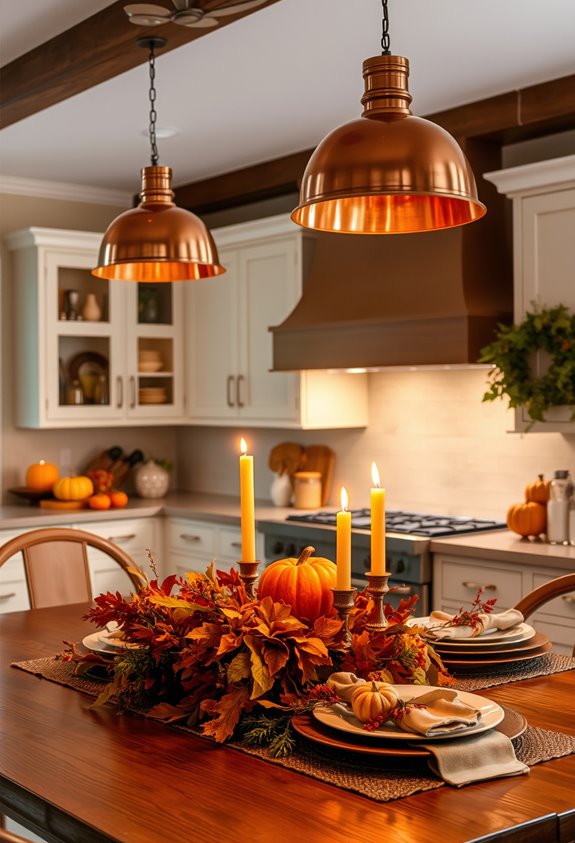
- Under-cabinet LEDs shine directly where you’re chopping and plating, making prep easier without cluttering surfaces
- Pendants on dimmers define your island or dining zone, then soften when guests arrive
- Candles and portable lamps add warmth that overhead fixtures simply can’t replicate
That shift from bright prep mode to cozy gathering atmosphere? Dimmers handle it instantly. You’re not rearranging decor. You’re just adjusting a switch.
Lighting makes your kitchen feel finished and festive. Everything else is just extra. If you’re still deciding on a fixture, consult the Complete Chandelier Sizing Guide before making a final selection to ensure the scale works for your space.
Scent and Simmers That Finish a Thanksgiving Kitchen
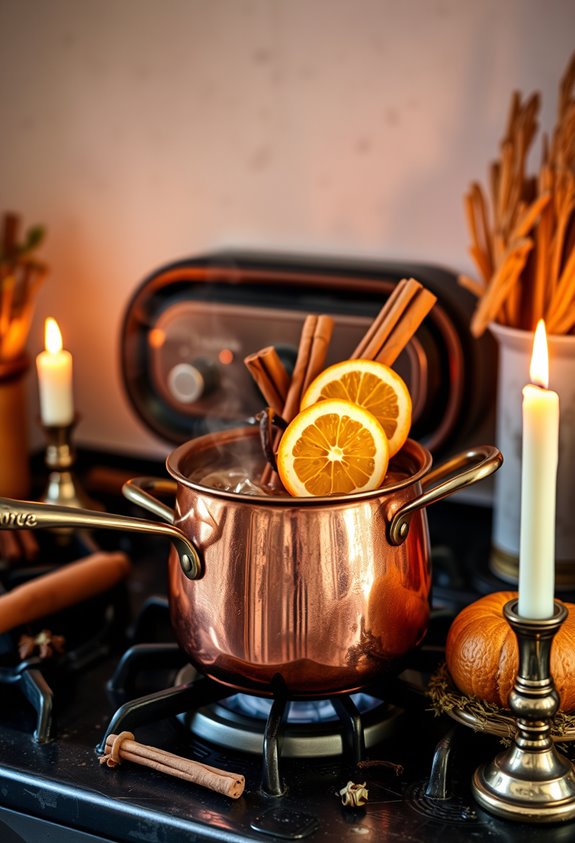
Lighting sets the mood, but scent closes the deal. Nobody talks about this enough. A beautiful Thanksgiving kitchen that smells like nothing? Wasted potential. A stovetop simmer pot fixes that fast.
Scent closes the deal. A beautiful kitchen that smells like nothing is wasted potential.
Fill your pot halfway with water, drop in orange slices, cinnamon sticks, and whole cloves, and set it on low. That’s your baseline. Want something warmer? Add vanilla. Want it earthier? Throw in rosemary or sage. Cranberries add color and fragrance simultaneously. Apples work too.
Keep the heat gentle. Watch the water level. Whole ingredients release scent longer than oils, which matters when guests are there for hours.
This isn’t complicated. It’s just one pot on the stove making your kitchen feel like somewhere everyone wants to be. If you’d rather skip the stovetop, a crockpot works equally well — fill it three-quarters full with water, add your ingredients, and let it run on low after the water heats up.
What a Well-Decorated Thanksgiving Kitchen Leaves Out
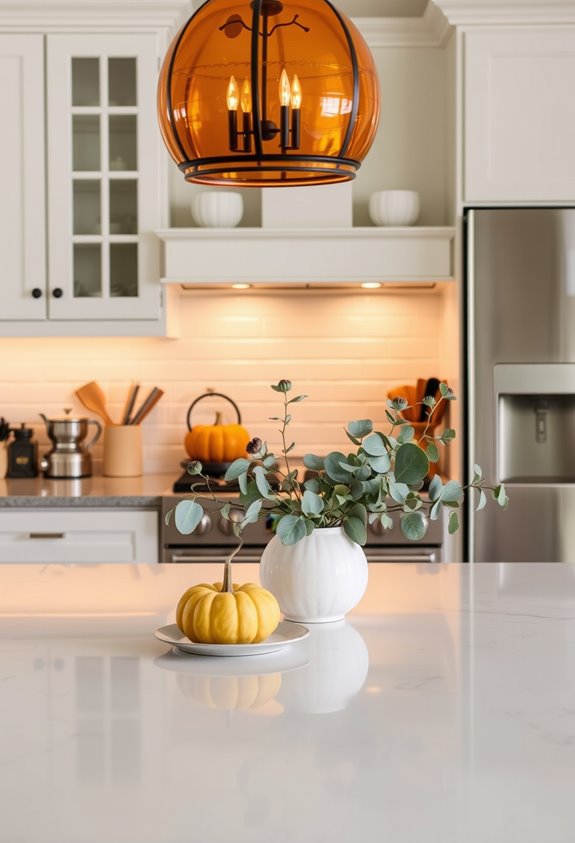
Most people think decorating means adding things. It doesn’t.
The best Thanksgiving kitchens leave stuff out. Deliberately.
Here’s what a well-decorated kitchen skips:
- Clutter-heavy themes — wall-to-wall pumpkins, novelty signs, and faux leaves everywhere don’t say “cozy harvest.” They say “I panicked at Target.”
- Obstructive decor — tall centerpieces blocking sightlines, candles near burners, anything that has to be moved six times before dinner hits the table.
- Harsh overhead lighting — cold, flat light kills the warmth you’re trying to build. It makes your kitchen feel like a fluorescent-lit break room.
You’re cooking a massive meal. Counter space is currency.
Every piece of decor that doesn’t earn its spot is just in your way. Every decorative piece should serve a purpose, whether it organizes, doubles as a serving item, or contributes to the atmosphere without interrupting the culinary process. Edit ruthlessly.
Frequently Asked Questions
Can Thanksgiving Kitchen Decor Work in a Very Small Apartment Kitchen?
Yes, it absolutely can. You don’t need a sprawling kitchen to make it feel festive.
Keep it simple: one tray, a bowl of pears or apples, a linen towel in warm fall tones. That’s it.
Don’t scatter stuff everywhere — that’s how tiny kitchens become unusable disasters. Protect your prep space.
A few well-placed pieces in overlooked spots, like a windowsill or open shelf, create real warmth without stealing your counter.
How Early in November Should Thanksgiving Kitchen Decorating Begin?
Most people wait until the last minute — big mistake. Start early November. That’s your sweet spot. If you’re hosting multiple times, go even earlier.
First week of November? Textiles only — towels, runners, napkins. No clutter, no commitment.
Mid-November, layer in pumpkins and candles.
Final week, add fresh produce and glassware. You don’t need weeks to pull it off, but starting early means you *actually enjoy* the result.
Are There Child-Friendly Thanksgiving Decor Options Safe Around Young Kids?
Yes, absolutely. Stick to fabric runners, dish towels, and placemats — they’re stylish and won’t shatter when tiny hands grab them.
Natural decor like apples, pears, and pumpkins pulls double duty as snacks. Skip glass vases and loose small parts entirely. Seriously, not worth it.
Use trays to keep everything contained and movable. Elevated surfaces are your best friend for anything breakable. Keep counters clear — clutter’s a real hazard when kids are around.
How Do You Store Thanksgiving Kitchen Decor After the Holiday Ends?
Clean everything first. Seriously, don’t skip that step.
Dry bowls, trays, and glass completely before packing.
Wrap fragile pieces individually.
Store textiles folded and flat.
Group items by category — greenery, serving pieces, accents — so you’re not hunting next November.
Use clear, labeled bins.
Keep heavy items on the bottom.
Store everything somewhere dry and temperature-stable.
Check for broken or stained pieces before boxing.
You’ll thank yourself later.
Can Thanksgiving Kitchen Decor Work Alongside a Modern or Minimalist Style?
Yes, it absolutely can. You don’t need to abandon your clean aesthetic just because it’s Thanksgiving. Keep surfaces clear, textures intentional, and pieces few. Think matte ceramics, dried stems, warm candlelight. One strong focal point beats a cluttered countertop every time.
Stick to neutrals like cream, taupe, and muted gold. You belong in both worlds — modern *and* festive. They’re not opposites. They actually complement each other beautifully.