Fall leaves work beautifully in Thanksgiving decor when you actually prepare them first — glycerin-soaked leaves stay pliable, while pressed and Mod Podge-sealed ones hold their shape for framed displays. From there, your options open up fast: centerpieces, garlands, jar wraps, place cards, napkin accents. Real leaves bring natural color variation; faux leaves hide floral foam and survive the entire holiday weekend without embarrassing you. Eight specific ideas below will show you exactly how to pull it all together.
Preserve Leaves With Glycerin or Mod Podge Before Crafting
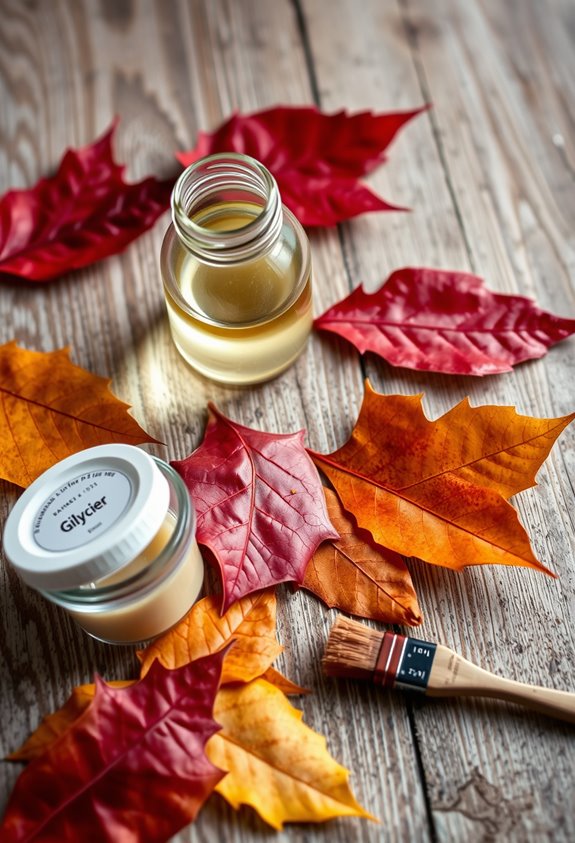
Preserving fall leaves before you craft with them isn’t optional — it’s the difference between a centerpiece that lasts and one that crumbles by Friday. Two solid options exist: glycerin or Mod Podge.
Skip preserving your fall leaves and watch your centerpiece crumble by Friday.
Glycerin’s the crowd favorite. Mix one part glycerin to two parts water, submerge your leaves, weight them down so nothing floats up, and wait three to five days. That’s it. The leaves come out soft, pliable, and actually usable. They don’t shatter when you touch them. Revolutionary, right?
Mod Podge works differently. You apply it after leaves are already pressed and dried. It seals the surface and holds the shape — great for display, not so great if you want flexibility.
Pick your method based on what your project actually needs. Keep in mind that larger leaves tend to perform better for preservation overall.
Build a Fall Leaf Centerpiece Around Seasonal Objects
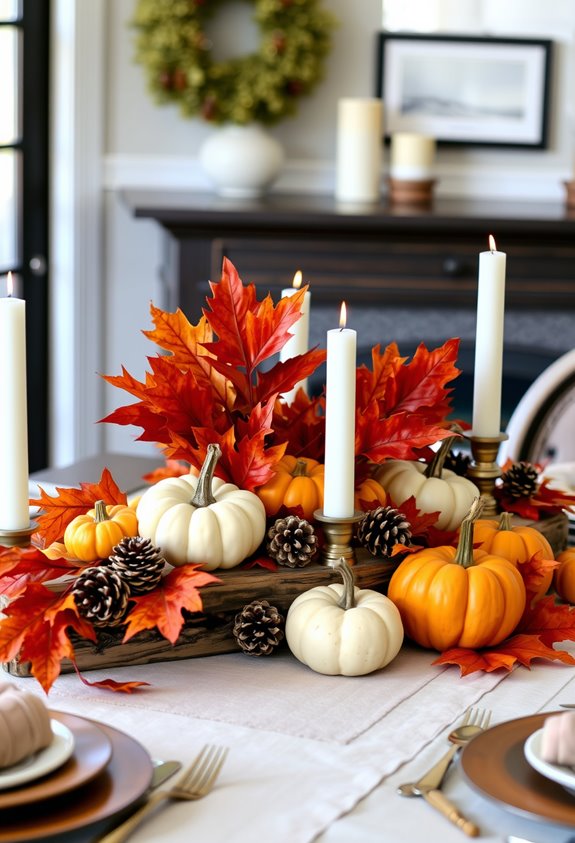
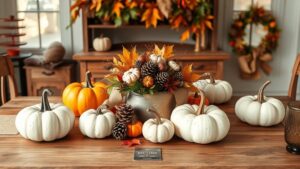
Once your leaves are preserved, the real work starts — building something that actually looks intentional. Grab a low-sided basket, dough bowl, or decorative tray first. That’s your foundation. Don’t skip it.
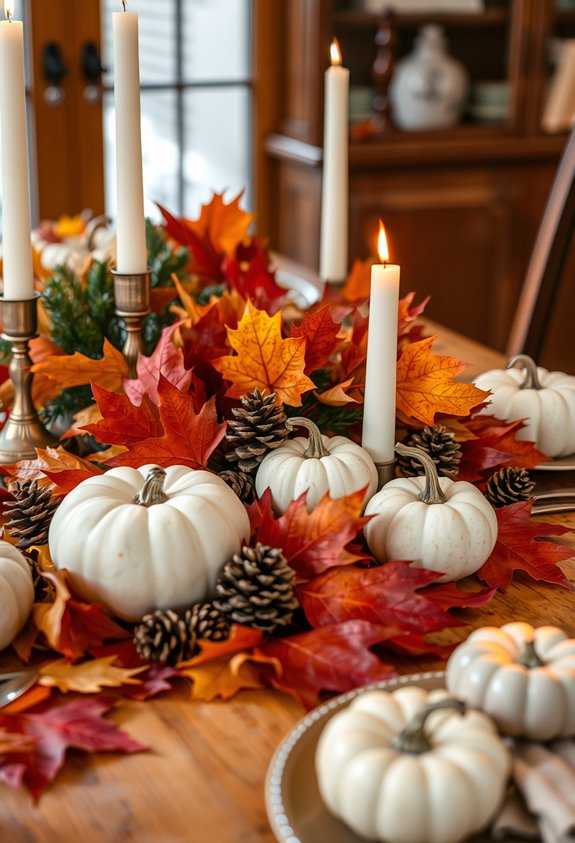
Place your larger objects — pumpkins, gourds, pinecones — first. They set the shape. Then tuck leaves around and between everything to connect the pieces. Overlapping leaves creates fullness. Letting some spill over the edge keeps it feeling loose and natural, not stiff.
Add candles or branches for height. Flat arrangements look lazy. Vary the levels. For branches, use a large, substantial vessel like a chalky urn or pitcher to give the arrangement visual impact and stability.
Keep the whole thing low enough that people can actually see each other across the table. Centerpieces that block conversation are the worst. Group everything tightly — clustered arrangements read as intentional. Scattered pieces just look forgotten.
Frame Pressed Leaves as Thanksgiving Wall Art
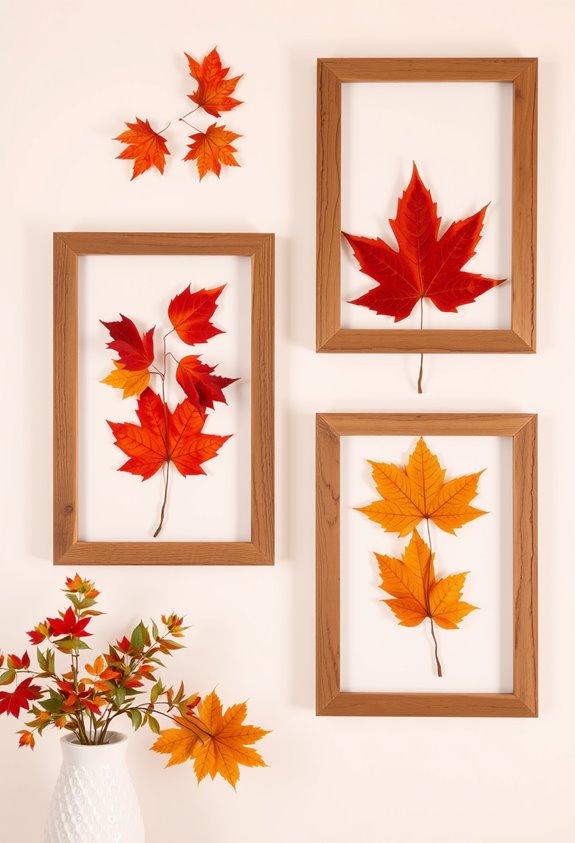
Not every leaf display needs to sit on a table. Pressed leaves framed on a wall make a statement that’s impossible to ignore.
Start by flattening your leaves between heavy books with parchment paper as your pressing layer. Give it time. Rushing this step means curled, messy edges — and nobody wants that.
Once they’re flat, arrange them on archival paper or card stock. Mix colors, shapes, and sizes so the composition feels alive, not boring. A single leaf in a clean frame looks minimal and intentional. A cluster reads bold and festive. Both work.
Double glass frames let leaves appear suspended, which honestly looks more impressive than it sounds. Add a mat for polish. Use Command strips to hang everything level. Done. For works placed in direct sun, use archival glue and varnish along with glass to help reduce fading over time.
Hang a Fall Leaf Garland Above Your Mantel or Doorway
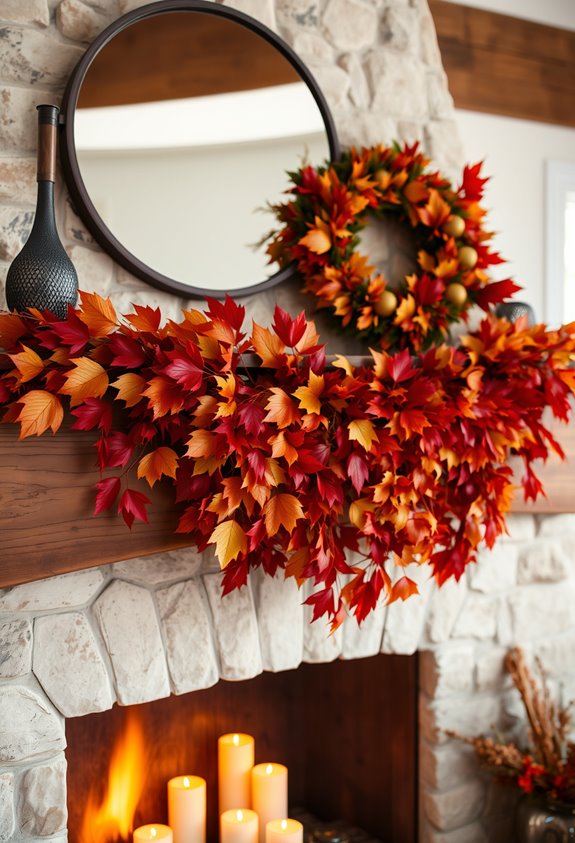
A fall leaf garland above your mantel or doorway is one of those moves that looks like you put in serious effort — even when you didn’t.
Pick a garland at least three feet longer than your mantel. That extra length creates the side drape everyone notices.
Clean the mantel first — rubbing alcohol before adhesive hooks isn’t optional, it’s just smart.
Place hooks on the top surface, not the front face. At least one inch back from the edge.
Command-style hooks work fine for lightweight garlands. Stone or brick? Use masonry hooks. Don’t skip that part.
Once it’s hung, fluff it. Separate the branches, angle them out, cover the hooks with leaves. Nobody should see your hardware. That’s the whole point. For heavier garlands, wire multiple strands together using 22-gauge floral wire before hanging to keep everything secure and uniform.
Wrap Glass Jars With Fall Leaves for Instant Table Accents
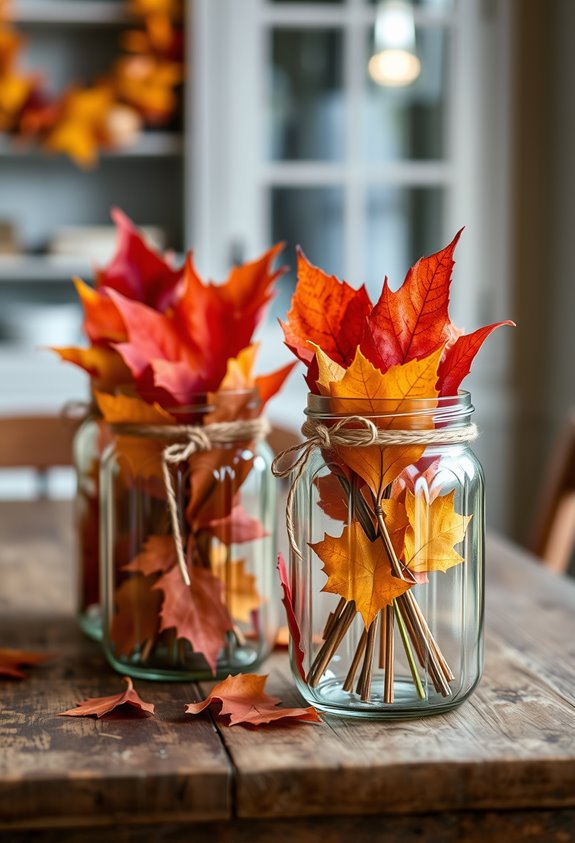
Garlands aren’t the only way fall leaves earn their place at the table. Glass jars work too — beautifully. Grab a clean, dry jar, brush on a thin layer of Mod Podge, and press your leaves directly onto the glass. Small or narrow leaves hug curved surfaces better. Flat, pressed leaves bond even more cleanly. Cover everything with another thin adhesive coat to seal it all in. Leave small gaps between leaves so light actually gets through. Skip the real candles — leaves and Mod Podge are flammable, full stop. Battery-operated tea lights are the move. Let the jar dry overnight before you touch it.
Group jars of varying heights together, and suddenly your table looks intentional. Like you planned this all along. For a finishing touch, wrap twine or ribbon around the mouth of each jar to pull the whole arrangement together.
Write Guest Names on Leaves for Easy Thanksgiving Place Cards
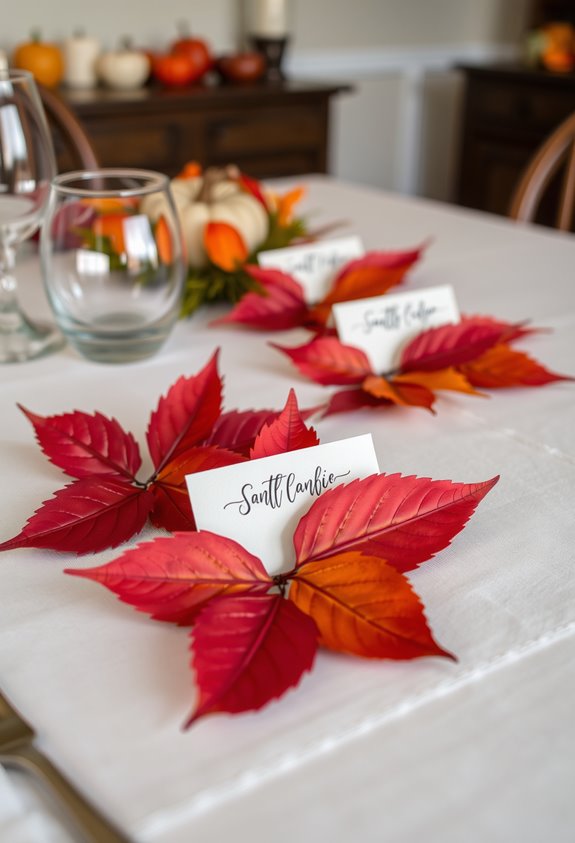
Leaves pull double duty when you write your guests’ names on them — suddenly they’re not just decoration, they’re place cards. Maple leaves work best. They’re flat, wide, and actually readable. Genius, right?
Write your guests’ names on leaves — instant place cards that double as décor. Maple leaves are perfect.
Pick your tools wisely:
- Metallic gold or silver markers pop beautifully against red, orange, and yellow tones
- White paint pens cut through darker or artificial leaves with strong contrast
- Black permanent markers keep things crisp on lighter leaves without smudging
Flatten your leaves under a heavy book first. Skipping that step means fighting curled edges while trying to write neatly. Not fun.
Rest the finished leaf on a plate or tie it to a napkin. Done. It’s personal, it’s seasonal, and it costs almost nothing. For extra texture and fragrance, try attaching a rosemary sprig alongside the leaf before placing it at each setting.
Tuck Fall Leaves Into Napkins for a Simple Place-Setting Accent
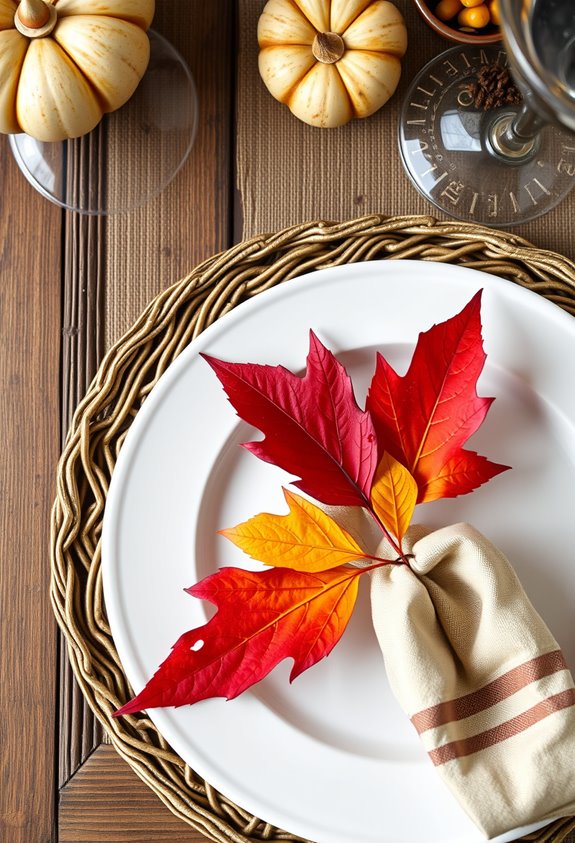
Tucking a fall leaf into a folded napkin takes about ten seconds and somehow makes the whole table look more intentional. No glue. No tools. Just a leaf. Magnolia leaves work especially well because they slide right into napkin ring holders without a fight.
Fresh leaves give you that just-foraged look, but dried ones hold up better through an actual meal. Alternate tan and green leaves across settings for instant visual rhythm. Use a color contrast between your napkin fabric and the leaf tones so the shape actually reads.
Repeat the same placement at every setting. Consistency matters here. It tells your guests that someone cared enough to be deliberate. That small detail contributes to a warm, harvest mood without crowding anything else on the table.
You can also pair the leaf with a cinnamon stick and pine bundle tied around the napkin to layer in a subtle seasonal scent alongside the visual detail.
Combine Real and Faux Leaves in Centerpieces and Garlands
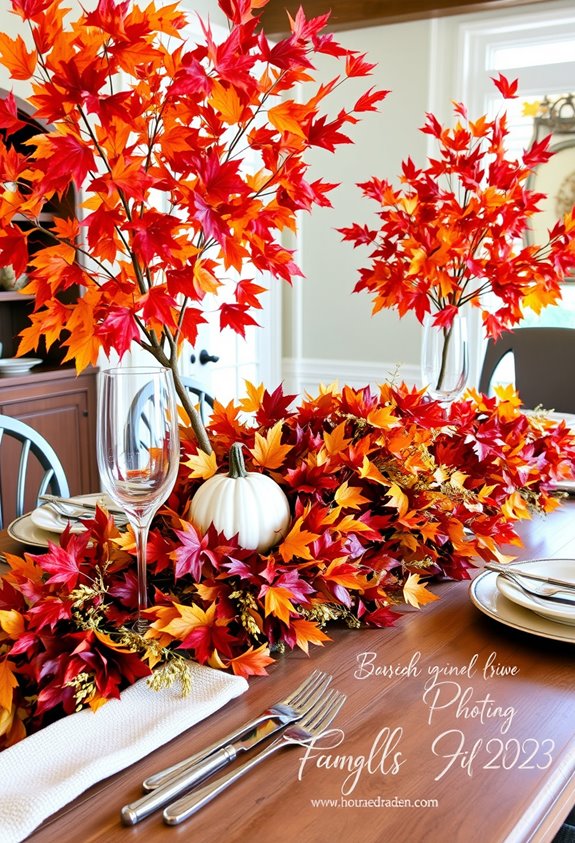
Mixing real and faux leaves sounds like cheating until you see the result. Spoiler: nobody’s inspecting your centerpiece with a magnifying glass. Real leaves bring natural color variation and seasonal authenticity. Faux leaves hold their shape, hide floral foam, and last through the entire holiday weekend without embarrassing you.
Here’s what actually works:
- Anchor everything in soaked floral foam, trimmed snug inside your container so nothing shifts
- Place tallest elements first, then layer leaves to spill over edges for that full, cascading look
- Extend the mix into a table runner, overlapping clusters secured with floral wire or twine
Asymmetrical arrangements still feel balanced when color and weight are distributed evenly. Faux stems bend to any angle you need, making them especially useful for filling awkward gaps around the arrangement’s perimeter. You belong at that beautifully styled table. Make it look intentional.
Frequently Asked Questions
Can Children Safely Help With Leaf-Based Thanksgiving Decorating Projects?
Yes, kids can absolutely help. They’re great at collecting leaves, pressing them between books, arranging them on tables, and writing names on dried leaves for place cards. Simple, safe, fun.
But keep them away from hot glue guns, utility knives, open candles, and spray sealants — those are adult-only territory. Assign your children the sorting, pressing, and arranging tasks. You handle the cutting, heating, and anything involving flames. It’s that straightforward.
How Far in Advance Should I Start Collecting Fall Leaves?
Surprise — you’re already late. Start collecting in early to mid-October, roughly 2 to 6 weeks before Thanksgiving. That’s your window.
Leaves need time to dry, press, and actually look good. Waiting until November? Bold move. Not a smart one.
Grab leaves as soon as colors shift, test a small batch first, and collect extras. Some will crack or fade. That’s just how it goes.
Are There Allergy Concerns When Using Real Leaves Indoors?
Yes, real leaves can trigger allergies indoors. Wet, damp, or decaying leaves grow mold, and those spores go airborne fast, especially when you handle or rearrange your décor.
Leaves also carry pollen and dust mites. Sneezing, congestion, and asthma flare-ups are common reactions. Mold’s a particularly nasty trigger if you’re already sensitive. Poor ventilation makes everything worse.
Dry, clean leaves carry lower risk, but they’re not completely off the hook either.
Which Leaf Types Hold Their Color Longest After Falling From Trees?
Like pressed flowers in an old journal, some leaves just hold on longer.
Oak leaves win here — they keep their color well after dropping.
Beech and hornbeam hold muted copper-brown tones for ages.
Sweetgum stays vivid longer than most.
Ginkgo’s bright yellow fades faster once it drops, so grab those quickly.
Hickory’s bold yellow also lasts surprisingly well.
You’ve got solid options. Pick what fits your vibe.
Can Fall Leaf Decorations Be Stored and Reused Next Thanksgiving?
Yes, you can absolutely reuse fall leaf decorations.
Pressed or dried leaves store well if you keep moisture away. Waxed leaves work great for vase wraps and candle holders.
Mod Podge-sealed leaves hold up for flat crafts and place cards.
Artificial leaves? Easiest reuse, no question.
Fresh leaves, though — don’t bother. They’re brittle, they curl, they fade.
Design your projects for preservation from the start, and you’re set for next year.