Halloween decor doesn’t stop at the porch — it earns its keep in every room. Start with your front door, then work inward: style your entryway console, haunt your hallway, dress your staircase, anchor your mantel, and build a dark dining tablescape. Even your kitchen, bedroom, and forgotten bonus rooms can pull serious spooky weight. A tight color palette ties it all together. Every room has a role to play — here’s how to cast it.
Design Highlights
- Frame your front door with black wreaths, spider accents, cobwebs, and flickering battery-operated candles for an immediately haunting entryway.
- Transform hallways using colored bulbs, floating lanterns, antique mirrors, floor candles, and ceiling-hung cheesecloth for unsettling corridor effects.
- Anchor living room and mantel displays with gothic mirrors, clustered pumpkins, symmetrical candlesticks, and a tight black-orange-metallic palette.
- Style dining and kitchen spaces with layered textures, skull goblets, amber lighting, apothecary jars, and mini pumpkins for functional spookiness.
- In bedrooms and bonus rooms, use one focal accent, moody textiles, and layered warm lighting instead of overwhelming full-room transformations.
Set the Mood at Your Front Door First
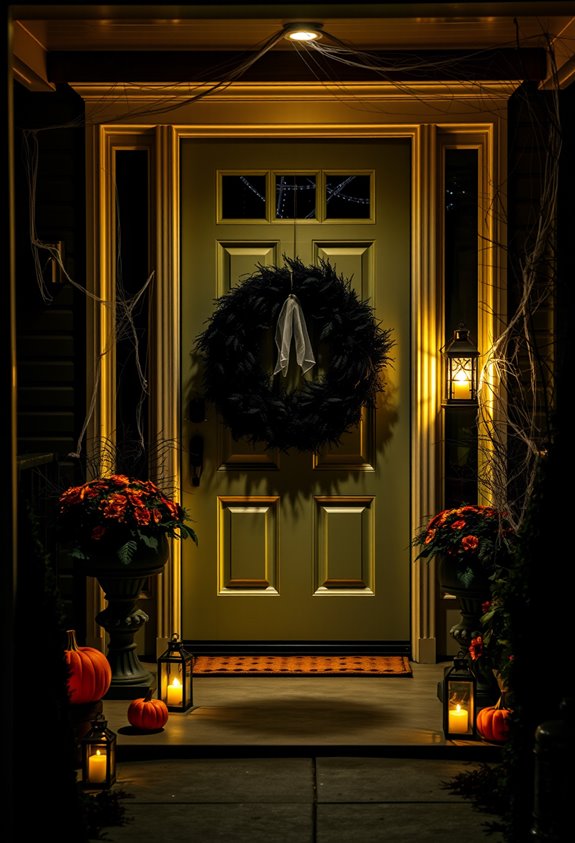
Your front door sets the tone before anyone even steps inside. It’s the first impression, and honestly, it matters more than people admit. A black or purple wreath signals Halloween immediately. No guesswork needed. Layer in some spider accents, fake cobwebs, and a few plastic bats, and suddenly your entrance looks genuinely haunted.
Want maximum impact fast? Slap on an eerie door cover. They transform the whole surface instantly. A ghostly face, a haunted-house facade — done. Dramatic, effortless, effective.
Don’t skip the lighting either. String lights frame the doorway beautifully. Flickering battery-operated candles add atmosphere without burning your house down. Lanterns soften everything just enough. Paper lanterns transformed into mini skulls using Mod Podge and black construction paper make for an especially striking illuminated entryway. Together, these elements create a front door that feels like it belongs to your neighborhood’s best Halloween house.
Style Your Entryway Console for Halloween
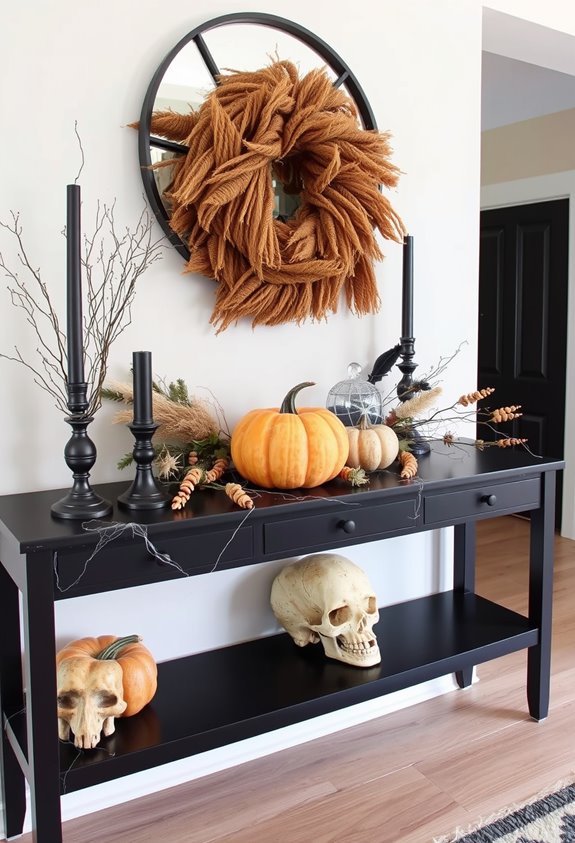
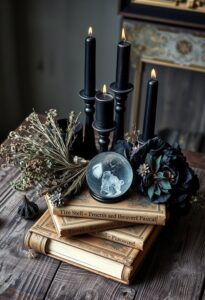
Once you step inside, the entryway console is your first real chance to make Halloween feel intentional. Pick a theme first. Whimsical, gothic, spooky chic — choose one and commit. A scattered console tells everyone you panicked at Target. Don’t be that person.
Build around a limited color palette: orange and black, black and white, or deep moody tones. Repeat those colors across pumpkins, candles, and frames. Cohesion matters.
Add height with candlesticks, lanterns, or a candelabra. Taller pieces go back, smaller ones up front. Layer it like you mean it.
Mix textures — velvet, wood, glass, dried branches. Throw in some metallic accents. A mirror or framed art above anchors everything together. Soft LED candlelight finishes the look and sets exactly the right mood.
Start with a base layer like a table runner or seasonal greenery to ground the entire display before placing anything else on the surface.
Make Your Hallway Feel Like a Haunted Corridor
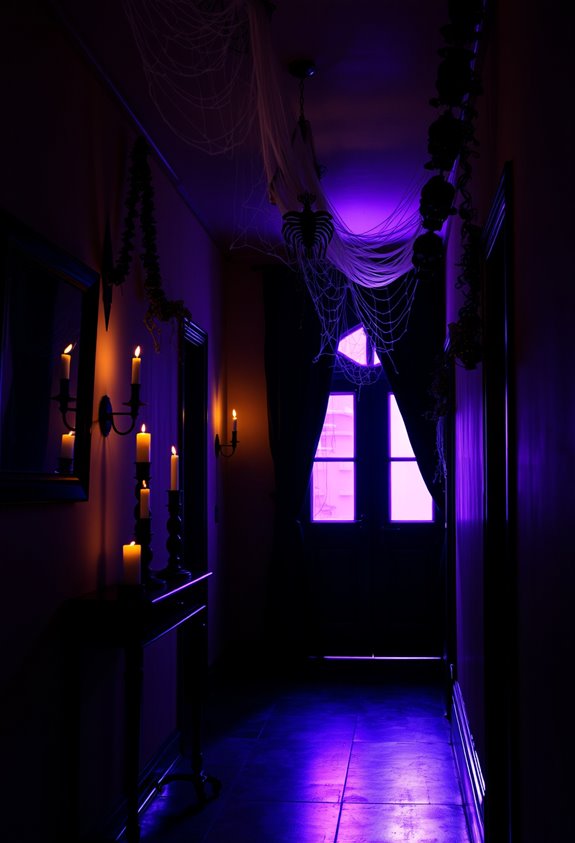
The entryway console sets the mood, but the hallway seals the deal. Swap out regular bulbs for dim orange, green, or purple ones. Add flickering LED candles along the floor. Suddenly, your boring hallway feels genuinely unsettling. That’s the goal.
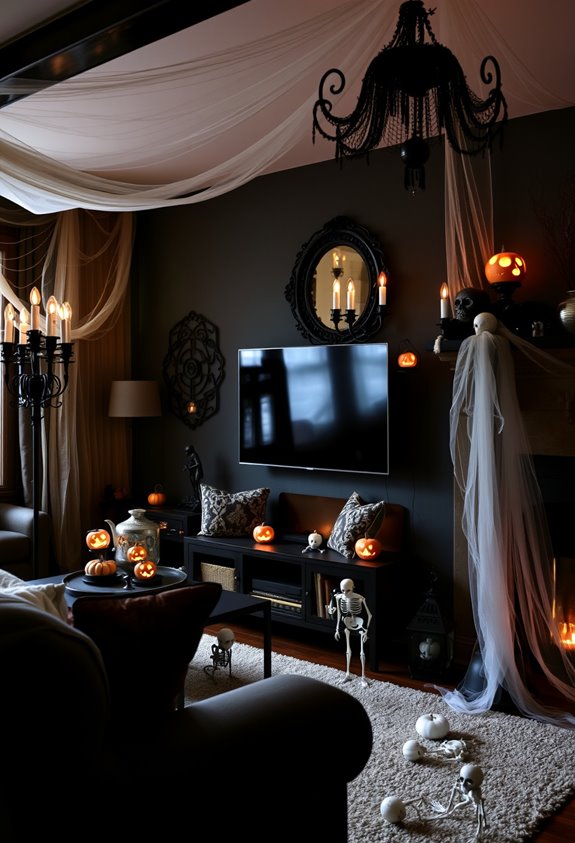
Cover walls with stretchy cobwebs and tuck plastic spiders into every corner. Hang cheesecloth or torn fabric from the ceiling so guests feel enclosed. Fishing wire makes lanterns appear to float. Simple, effective, creepy.
Don’t overlook mirrors. An antique-style mirror at face height catches candlelight and startles people mid-stride. Add cracked-mirror stickers for extra drama.
Finish with sound effects — creaking doors, distant whispers, faint footsteps. Keep the floor clear so the ceiling and walls do the heavy lifting. Narrow hallways intensify everything. Use that. For an especially immersive effect, drape cheesecloth from the ceiling and walls to create a ghost tunnel effect that makes the space feel larger and more enveloping than it actually is.
Staircase Halloween Decor That Earns a Double Take
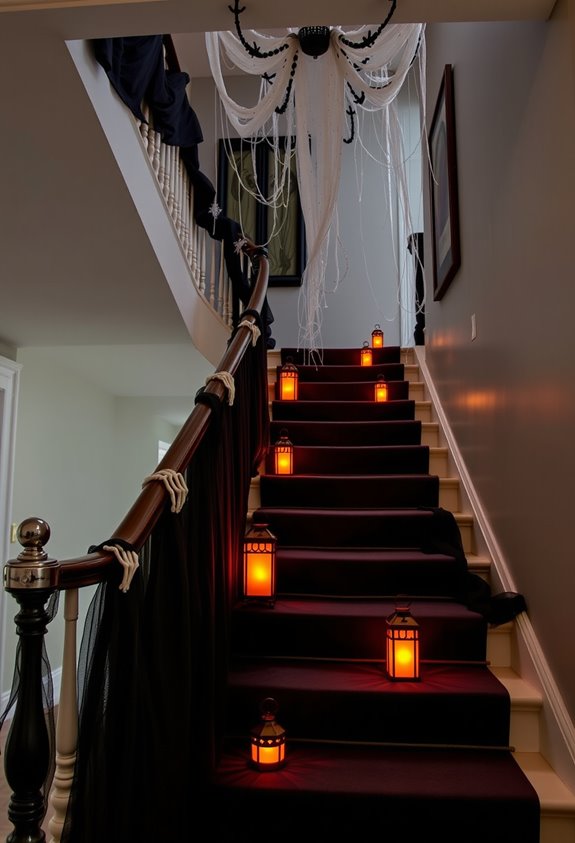
Staircases get overlooked. Big mistake. Your staircase is literally the spine of your home, and everyone walks past it. Don’t waste that.
Wrap faux spider webs around the banister, toss in some bats or black branches, and you’ve already got something worth noticing. Prop a skeleton figure on the railing and watch guests stop mid-conversation. It’s that effective.
Add string lights along the edges or lanterns on the steps for nighttime impact—flameless candles keep it safe in a high-traffic area. Cluster pumpkins at the bottom for visual weight. Stick paper bats on the risers. It costs almost nothing.
Black-and-orange keeps everything cohesive instead of chaotic. Your staircase can be the moment everyone remembers. Make it earn that attention. For a cleaner, more understated look, try lining the steps exclusively with white jack-o-lanterns and nothing else.
Turn Your Living Room Mantel Into a Halloween Focal Point
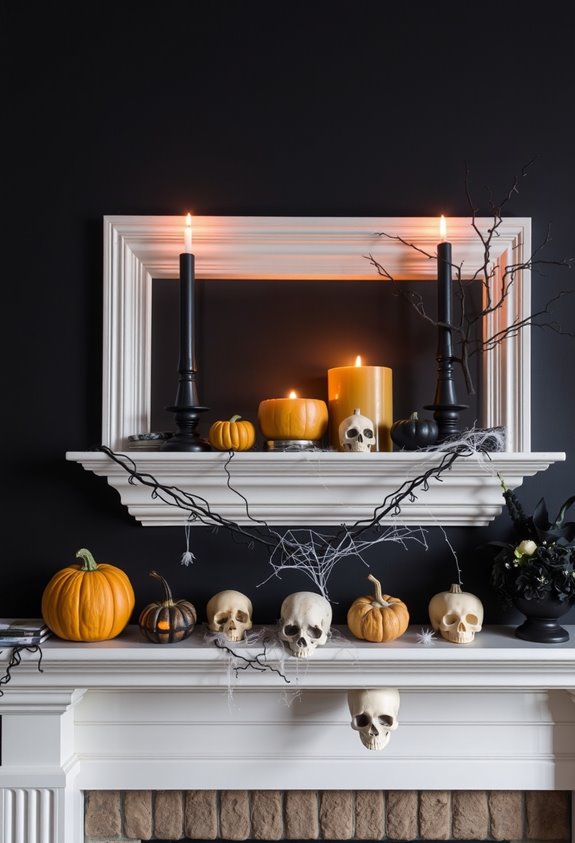
Your staircase is handled. Now the mantel needs attention. This is where Halloween décor either comes together or falls apart completely.
The mantel is your make-or-break moment. Nail it, and the whole room lands.
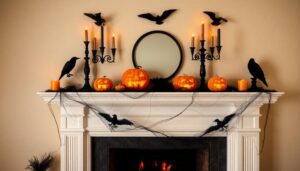
Start with one strong focal point. A gothic mirror, oversized skull print, or large pumpkin arrangement anchors everything else. Symmetry matters here. Matching candlesticks or pumpkins on both sides aren’t optional — they’re what makes the display look intentional instead of thrown together.
Layer taller items at the center, shorter ones toward the edges. Add garland spray-painted black or deep purple. Mix velvet, heirloom, and mini pumpkins for contrast. Stack different colors: orange, white, mustard, dark brown.
Lighting seals it. Flickering candles, matte-black bottles holding orange tapers, battery-operated options for a non-working hearth. Cobwebs, paper bats, and faux apothecary jars fill the gaps. Witch silhouettes near the hearth add an eerie, dramatic energy that interacts with surrounding candlelight to cast unsettling shadows across the walls.
Dining Room Halloween Tablescapes With a Dark Twist
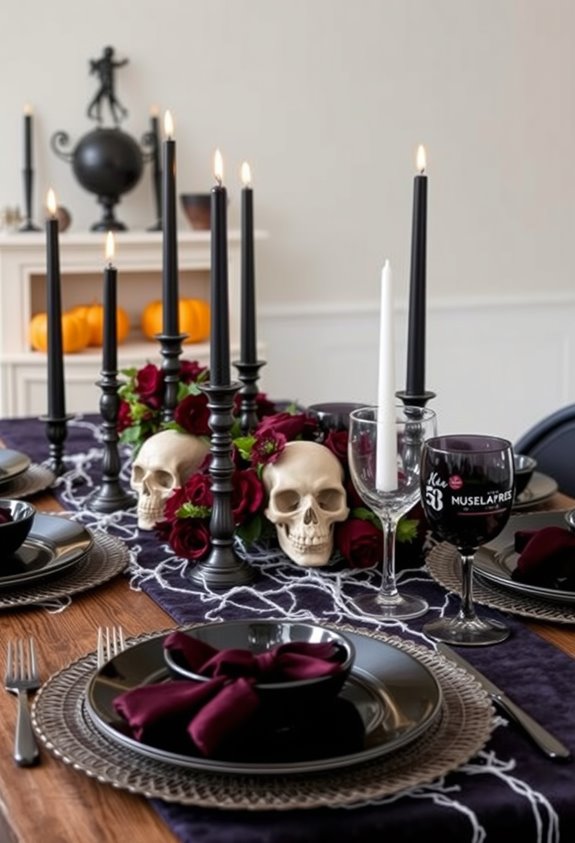
Once the mantel’s done, the dining room table is where Halloween décor either gets serious or turns into a sad pile of plastic spiders and dollar-store cobwebs. You’ve got a story to tell here. Every layer matters—from the black gauze runner to the skull goblets catching candlelight.
Start with texture. Stack the contrasts: rough cloth, smooth glassware, metallic accents. Then build up.
- Layer black, gray, or tattered fabric as your base before anything else touches the table
- Use three candle heights—short, medium, tall—to create dimension and dramatic shadows
- Pair black-and-white plates with gold silverware for a refined, scary-chic place setting
Skip scented candles if you’re serving food. Seriously. Nobody wants lavender competing with dinner. Swap your everyday glassware for skull goblets to add a macabre focal point that doubles as a conversation starter the moment guests sit down.
Kitchen Halloween Decor That’s Spooky Without Being Silly
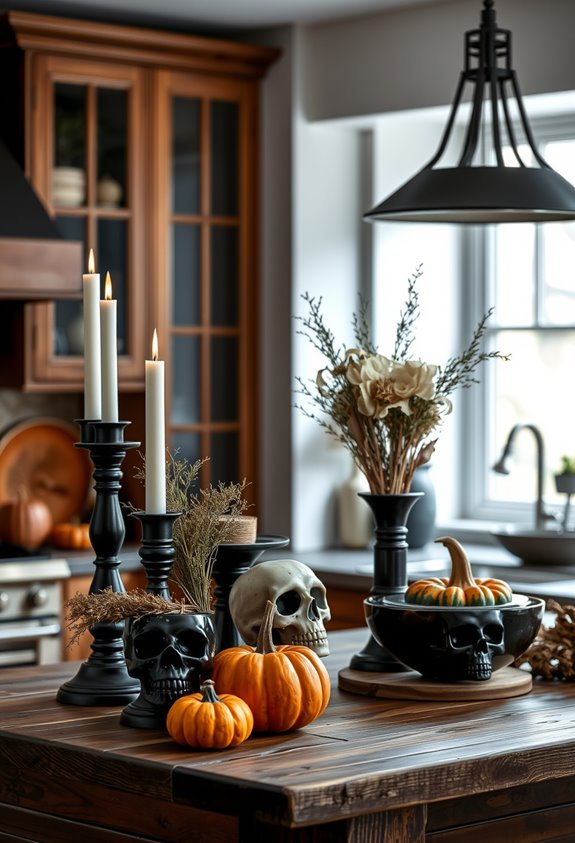
The kitchen gets overlooked. Don’t let that happen. This room deserves the same attention as the rest of the house, and it’s actually one of the easiest spaces to transform.
Start with lighting. Swap bright overheads for warm amber bulbs or flickering LED candles. Instant mood shift. Then hit the counters with mini pumpkins, apothecary jars filled with candy corn or dried herbs, and a cauldron for treats. It’s functional and creepy. Win-win.
Cabinets? Cut out paper eyes and teeth and stick them on the doors. Free. Effective. Slightly unhinged in the best way.
Finish with Halloween dish towels, a themed rug, and orange or purple string lights under the cabinets. You’re not overdoing it. You’re doing it right. For a more curated look, tuck small ghost tealight holders across shelves and add tealight candles inside for an instant warm glow that feels intentional, not chaotic.
Bedroom Halloween Decor That Doesn’t Kill the Vibe
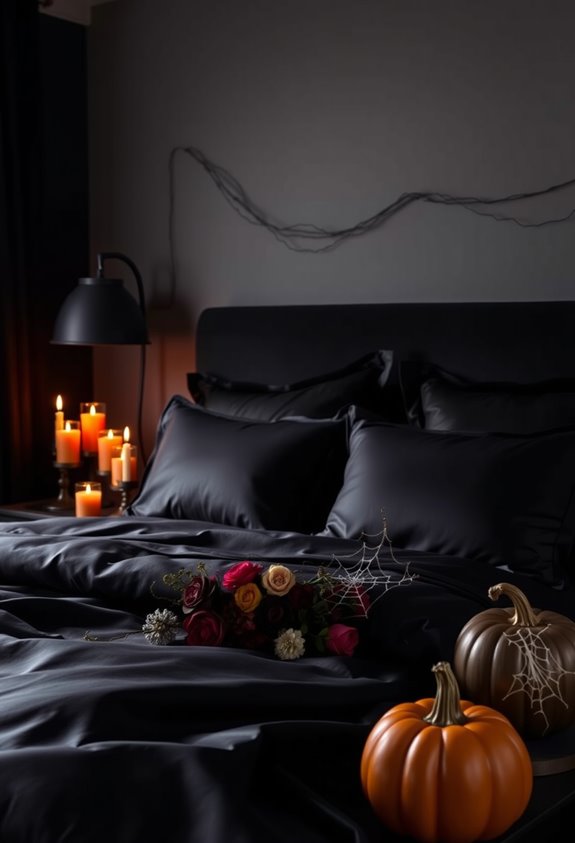
Bedrooms are personal. You don’t want jack-o-lanterns screaming “haunted funhouse” while you’re trying to sleep. The trick is mood, not mayhem.
Stick to deep, moody tones — burnt orange, charcoal, dark olive, black velvet. Swap your everyday bedding for darker textiles. Layer in velvet or knit throw pillows. Done. Instantly seasonal without looking like a Spirit Halloween clearance rack.
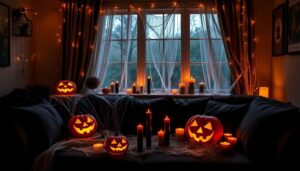
Lighting matters more than people admit. Ditch harsh overhead lights. Use fairy lights, flameless candles, and warm lamps instead. That combination creates eerie without feeling unsafe.
- Cluster mini pumpkins, amber bottles, and ceramic skulls on a dresser tray
- Hang bat decals above your headboard for effortless wall drama
- Add dark sheer fabric behind your bed for an instant moody backdrop
Keep it simple. Keep it yours. For a truly maximalist touch, try the floating candle effect by suspending candles above your bed for a dramatic, cinematic finish.
Bonus Rooms and Overlooked Corners Worth Decorating for Halloween
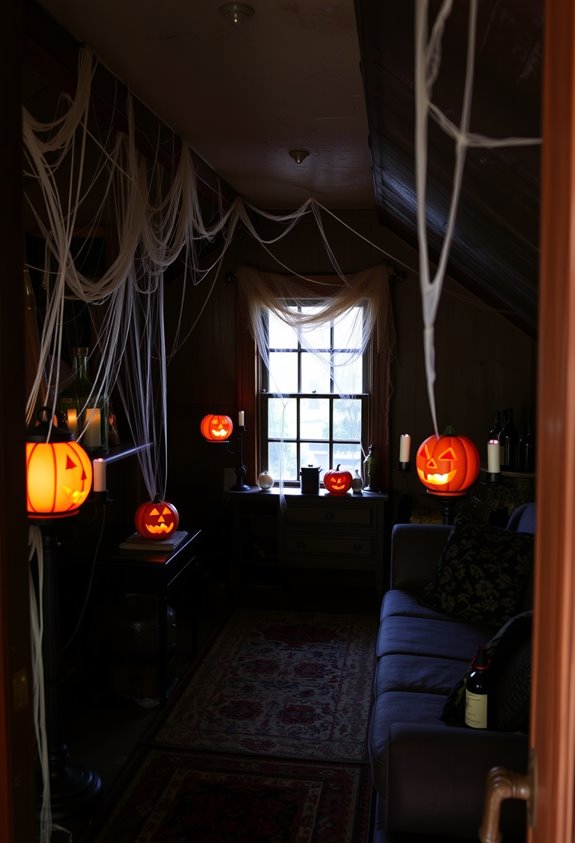
Beyond the living room and bedroom, there’s a whole house quietly waiting to get in on the house. Bonus rooms, finished attics, playrooms, home offices — don’t ignore them. You don’t have to fully transform them either. Pick one focal area per room and work from there.
Layered accents over existing décor keep things functional. Removable decals, battery lights, thrifted props. Low commitment, solid payoff.
Corners are underrated. A large faux spider, some twig-based webbing, a few clustered pumpkins — suddenly that dead corner near the fireplace is doing something. Staircases pull serious visual weight too. Pumpkins, crows, signs, black paper bats along the wall. Done.
Keep your palette tight: black, orange, metallic, dark floral. Cohesion across overlooked spaces is what separates a decorated house from a *themed* one. If bold Halloween colors feel like a stretch, lean into your home’s existing palette and use subtle seasonal nods to maintain aesthetic cohesion without forcing a color scheme that doesn’t fit.
Frequently Asked Questions
How Early in October Should Indoor Halloween Decorating Typically Begin?
You’ll want to kick off your indoor Halloween decorating during the first week of October. Starting here lets you enjoy the full seasonal vibe with your community without rushing or letting décor overstay its welcome.
Which Halloween Decorations Are Safest to Use Around Young Children?
You’ll keep little ones safe when you choose flameless LED candles, soft materials like felt or plush, and non-toxic decor with no small parts—because every family deserves festive fun without worry!
Can Halloween Decor Work in Small Apartments With Limited Display Space?
Yes, Halloween decor absolutely works in your small apartment! You’ll create a spooky atmosphere by using wall decals, string lights, and mini vignettes on shelves. You don’t need much space to make your home feel festively connected to the season.
How Do You Store Halloween Decorations to Keep Them Reusable Next Year?
Store your Halloween decorations in clear, labeled bins, wrapping fragile pieces in bubble wrap and keeping heavier items at the bottom. You’ll want to remove batteries, dry everything thoroughly, and place bins in a cool, dry spot.
What Budget Range Should Homeowners Expect for Decorating Multiple Rooms?
You’ll want to budget $75–$150 for multiple rooms, covering statement pieces and accents across shared spaces. For a fuller, room-to-room theme, stretching to $150–$300 lets you create the cohesive, immersive look everyone’s going for.
Conclusion
There’s a theory that Halloween decor only matters outside. Wrong. The rooms nobody sees from the street? That’s where the real atmosphere lives. You’ve got nine spots now — front door to forgotten corners. Use them. A single plastic skeleton on the porch doesn’t cut it anymore. Go room by room. Commit to the bit. Your house should feel haunted, not just decorated.