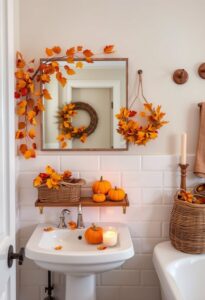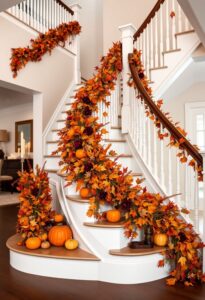
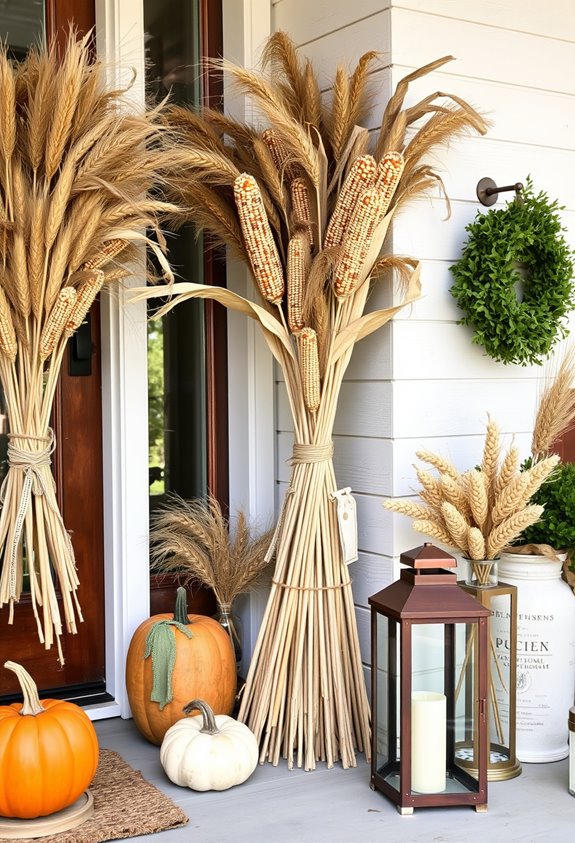
Corn stalks? Genuinely chic — and yes, that’s a real sentence. Pair them with pumpkins, hay bales, and lanterns flanking your front door and suddenly your porch looks intentional instead of accidental. Tuck them into entry urns, twist the husks into garlands and napkin rings, or bundle Indian corn for doors and fences. They’re cheap, seasonal, and surprisingly versatile. Stick around — there’s a lot more where that came from.
Corn Stalks as Porch Framing for a Grand Entrance
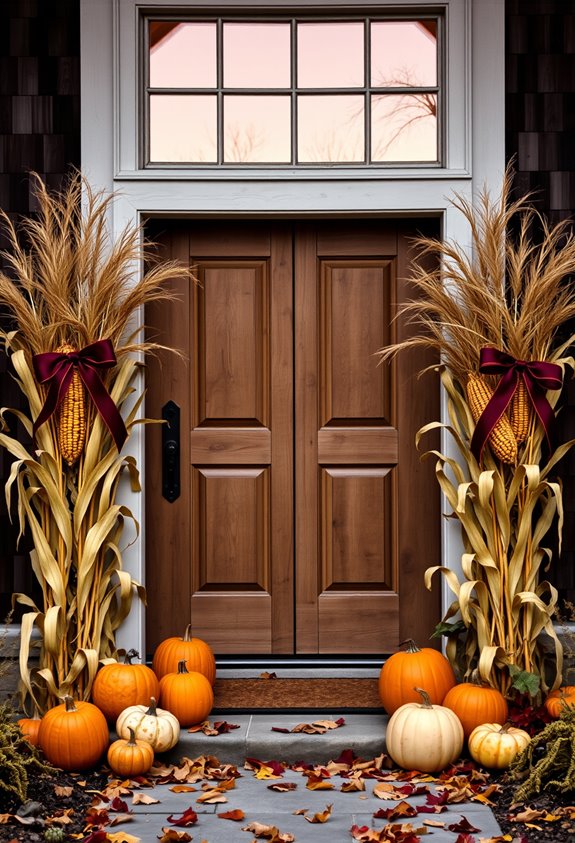
When it comes to fall porch decor, corn stalks are doing the heavy lifting. Literally. Place them on both sides of your front door, and suddenly your entrance looks intentional. Layered. Dramatic. That’s the whole point.
Tall stalks framed around porch posts or pillars create what designers actually call a *grand welcome* effect. Not an exaggeration. The vertical height makes your entrance read larger, and the dried, rustic texture contrasts beautifully against smoother porch surfaces. It’s visual tension that works.
Here’s the thing — everyone in your neighborhood is throwing out a plastic skeleton and calling it seasonal. You’re framing your doorway like it means something. Because it does. Corn stalks turn a basic porch into a full harvest statement. Simple, bold, effective. For even more structure and dimension, tie corn stalks directly to your porch columns to reinforce that vertical drama from every angle.
How to Style Corn Stalk Tops in Entry Urns
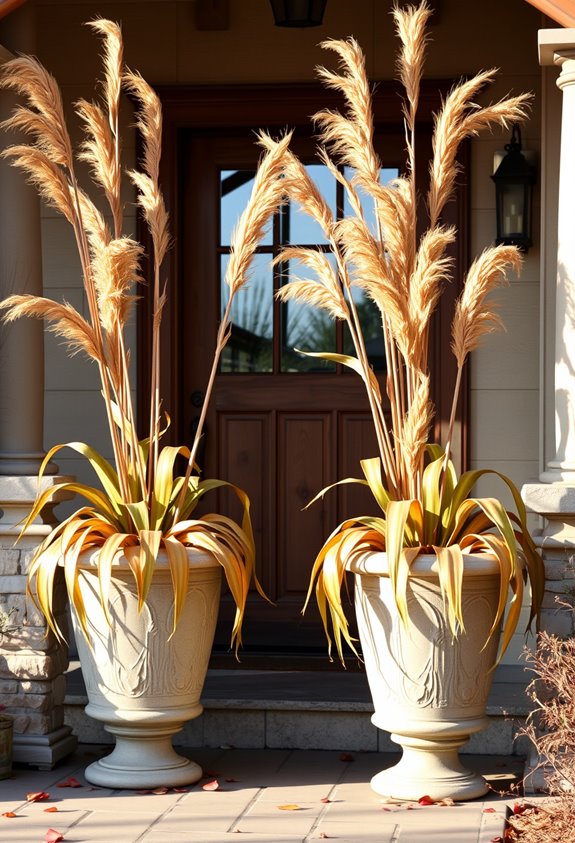
Entry urns are underrated. Everyone’s focused on the door, the wreath, the mat — meanwhile, your urns are just standing there, doing nothing. Fix that.
Cut your corn stalks so only the tops peek above the rim. You want height, not a haystack. Fan those tops outward, keep the base tight, and let the ends stay slightly uneven. That’s not messy — that’s intentional. Bundle several stalks together so it looks full, not forgotten.
Tie everything with raffia or twine at the base and middle. Wind will test you. Secure it properly.
Then layer in pumpkins, dried wheat, and pinecones around the base. Add burlap ribbon if you want polish. Spray the stalks with sealant so your hard work actually lasts past Tuesday.
Gather stalks in the middle and tie them with gingham wired ribbon to create a sash-like effect that gives the arrangement a polished, hourglass silhouette.
How to Make a Corn Husk Topiary With Simple Materials
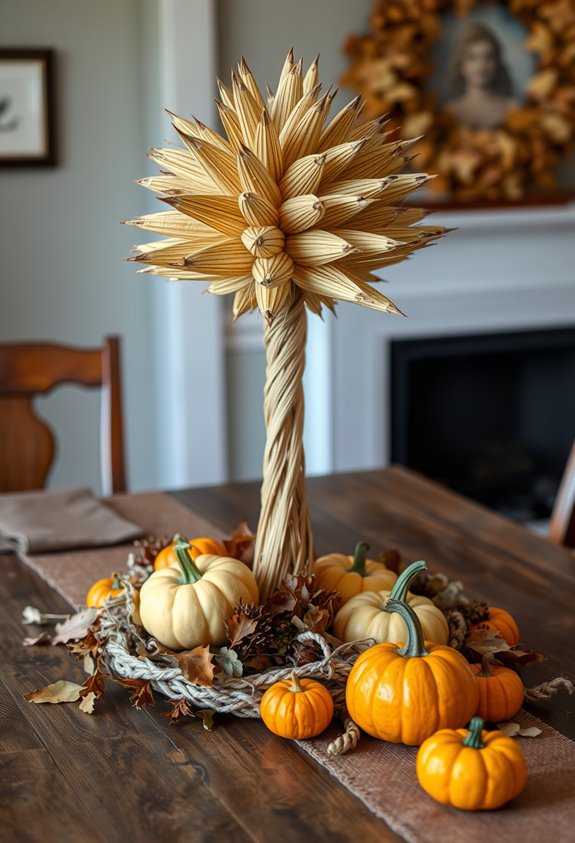
Corn husk topiaries look complicated. They’re not. You need a 12-inch Styrofoam cone, a 5-inch round wooden base, floral tape, hot glue, and floral picks. That’s it.
Cut your husks into 4–5 inch pieces, keep them slightly damp, and start wrapping from the bottom up. Secure each bundle with floral tape first, then anchor it to the cone with floral picks and hot glue. Overlap everything. Gaps are embarrassing.
Build two stacked rows halfway up, then continue layering until no foam shows. Fold short pieces over the top peak and glue them down.
Add twigs at different heights, a small pinecone at the top, and mini acorns around it. Fall rustic. Done. Everyone will think you’re wildly talented. If you have leftover husks, consider bending a wire hanger into a circle and wrapping husks onto it with jute rope to make a matching wreath.
Indian Corn Bundles for Doors, Fences, and Tables
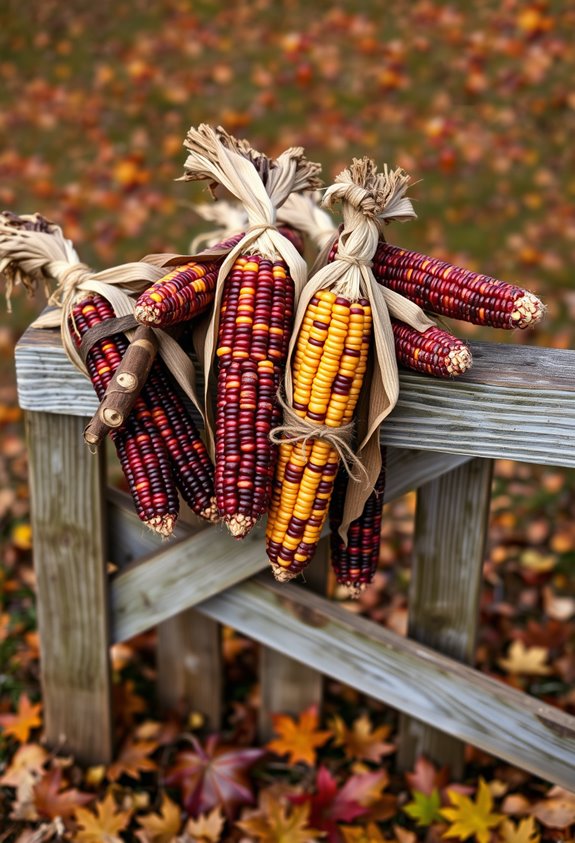
Front-door bundles are the easiest win in fall decorating. Grab three long ears of Indian corn, tie them with raffia, done. Add faux fall leaves near the stalks if you want a fuller look. Nobody’s judging either way.
Fence displays are just as simple. Lay two ears over the space between pickets, secure them, repeat across multiple sections for real visual impact. Pair with pumpkins and hay bales. Instant autumn moment.
Tables get the same treatment. Indian corn alongside pine cones, gourds, or small pumpkins creates a harvest centerpiece without much effort. You can even formalize it for Thanksgiving if that’s your thing.
The whole system works because repetition and scale matter. Match your bundle size to the space. For a more dramatic effect, try glass gem corn, whose translucent jewel-colored ears add serious visual impact to any arrangement. That’s basically the entire secret.
Corn Husk Garlands, Napkin Rings, and Trivets for Thanksgiving
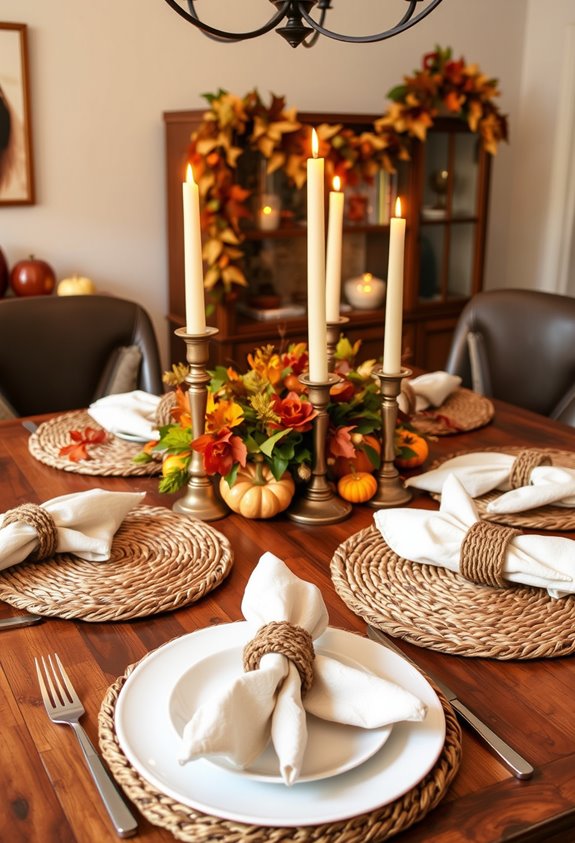
Husks don’t just belong on the cob. They belong on your mantel, your table, and honestly, your front door too. Corn husk garlands are a long-used fall craft — not some trendy Pinterest invention. Keep the husks damp while you work so they stay pliable. Build your garland on rope or twine, wrapping husks in repeating sections. Consistent 12-inch intervals keep things looking intentional rather than chaotic. Want color? Dye them. Thirty minutes gets you solid saturation.
Napkin rings are almost embarrassingly simple. Natural beige husks coordinate with wreaths, runners, and garlands for a unified look. No crowding, no fuss.
Trivets and coasters? Braid the husks, coil them, done. Low cost. Farmhouse-ready. Add ribbon or twine to personalize. For a wreath project, husks are typically torn into strips a couple inches wide before being shaped and glued into place. That’s it.
Yard Displays That Use Corn Stalks as Anchors
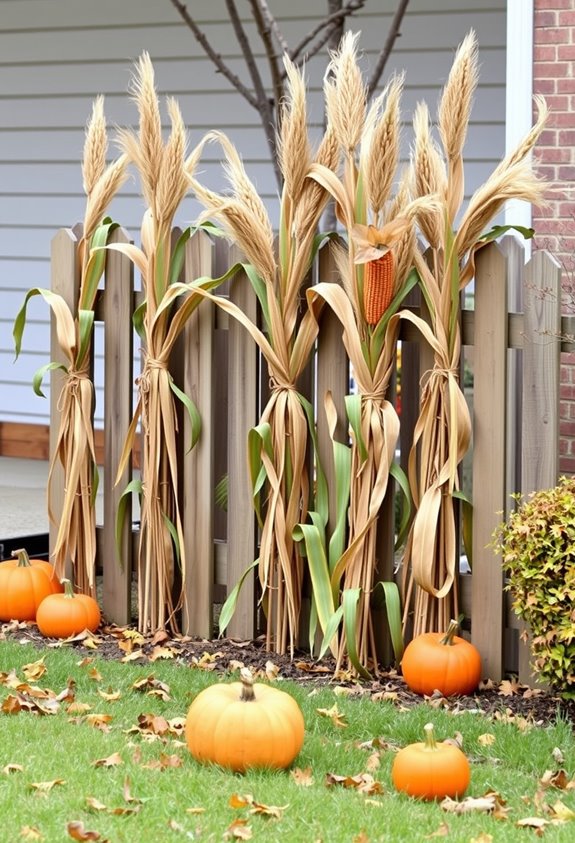
When your yard display tips over in the first October gust, the whole setup looks amateur. Don’t let that happen. Drive rebar into the ground and slip stalks right over it. Done.
Don’t let the first October gust wreck your display. Drive rebar, slip stalks over it, done.
For porch posts or light poles, tie bundles directly to the structure — three to six stalks, secured with twine at the top, middle, and bottom. Tethering to something solid beats freestanding every single time.
Fence rails work beautifully for long linear runs, especially when you space stalks six to eight inches apart. Want that classic farmhouse shock look? Cluster stalks around a hidden wooden stake. Nobody sees the support. They just see the vibe.
Secure everything properly, because wind doesn’t care how carefully you arranged things. A Command Hook placed upside down on the house gives you a reliable loop point for twine and keeps bundles from shifting when gusts hit.
The Best Plants and Props to Pair With Corn Stalks
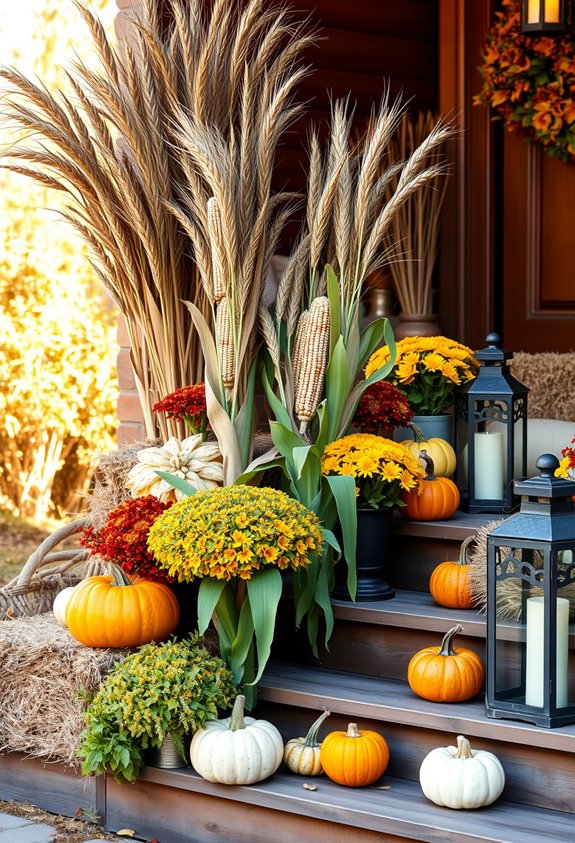
Corn stalks alone are just sticks. But pair them right, and suddenly you’ve got something worth photographing.
Pumpkins and gourds at the base? Classic for a reason. Trailing vines like nasturtiums or sprawling squash leaves add that low, full look that fills empty space without competing for height.
Marigolds bring punchy orange and yellow that actually belongs next to fall colors. Sunflowers pull it together beautifully. Don’t sleep on dried beans or colorful peppers tucked into the arrangement either.
For props, think wooden crates, hay bales, and lanterns. They anchor the whole scene. The goal is layering — tall stalks, mid-height flowers, low ground cover. That’s it. Simple formula, big visual payoff. Your front porch deserves better than one lonely stalk standing there awkwardly. In traditional gardening, maize, squash, and beans are grouped together because each supports the others — a time-tested combination that reflects exactly the kind of layered, purposeful pairing that makes fall displays feel so naturally complete.
Where to Source Corn Stalks Before Thanksgiving
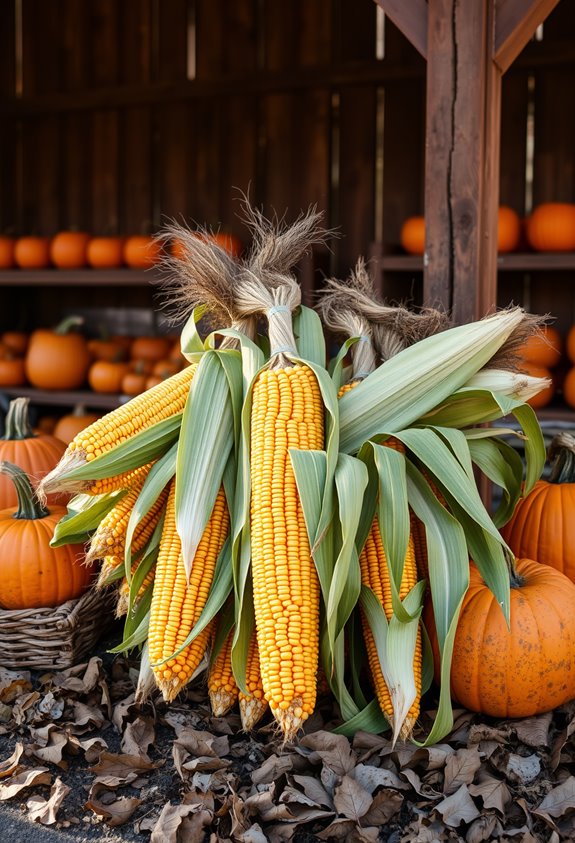
Now that you’ve got the perfect pairing figured out, none of it matters if you can’t actually find the stalks. Timing is everything here.
Here’s where to look:
- Farm stands and roadside markets — your easiest, most affordable bet during fall harvest season
- Garden centers — practical for a few bundles, but check early before Thanksgiving demand wipes them out
- Pumpkin patches — pre-bundled, rustic-ready, and already part of the fall aesthetic you’re chasing
- Online marketplaces — Amazon, Etsy, and eBay all carry options, though shipping bulky stalks gets pricey fast
- Direct farm purchase — freshest quality, exact quantities, and you can order in advance
Don’t wait. Cornstalks are seasonal. They sell out. Call ahead, order early, and actually secure what you need.
Frequently Asked Questions
How Long Do Corn Stalks Typically Last as Outdoor Decorations?
Weeks, not forever. Corn stalks typically last several weeks to a few months outdoors — think mid-September through Thanksgiving, and you’re golden.
Moisture kills them fast; dry air keeps them standing proud. Cool climates? They’ll hang on until spring. Warm and wet? Don’t count on it.
They’re seasonal players, not year-round MVPs. You get one solid decorating season, so make it count.
Are Corn Stalks Safe to Use Around Pets and Small Children?
They can be, but don’t get careless. The ASPCA flags corn plants as toxic to dogs, cats, and horses — saponins are the culprit. Pets can experience vomiting, depression, and hypersalivation.
Cobs and husks? Choking and intestinal blockage risks.
For small kids, dried stalks get brittle and splinter. Loose pieces become instant mouth magnets.
Keep displays secured, elevated, and out of reach.
If anyone ingests any part, get medical or veterinary help immediately.
Can Corn Stalk Decorations Be Composted After the Holiday Season Ends?
Yes, you can compost them.
Nearly 30% of household waste is organic material that could be composted instead of landfilled.
Corn stalks are carbon-rich gold for your pile.
But here’s the blunt part — strip off every ribbon, wire, and glitter piece first.
Contaminated stalks? Trash them.
Clean ones get chopped into smaller pieces, then mixed into your compost pile.
Smaller pieces break down faster.
It’s really that straightforward.
Do Corn Stalks Attract Pests Like Rodents or Insects Indoors?
Yes, corn stalks can absolutely attract pests indoors. Dried corn décor draws bugs and rodents — especially as it ages and deteriorates. Corn silk naturally emits scents that lure moth species like corn earworms.
Stalks can also harbor overwintering insects hiding inside husks. Once you bring them indoors, those pests find warm shelter and stay. Inspect for bite marks, mold, or visible bugs before bringing anything inside. Basically, cute décor can become a pest hotel.
How Do You Clean or Dry Corn Stalks Before Using Them Decoratively?
Want stalks that actually look good and not like you dragged them in from a ditch? Start by shaking off dirt and trimming about an inch from the bottom.
Strip loose, brittle husks. Tie them into bundles of four to eight stalks, then hang them upside down in a dry, ventilated space — garage, shed, basement.
Drying takes roughly a week. Golden color means they’re ready. Simple.